Division of Pharmacology and Experimental Therapeutics, Department of Biomedical Sciences & Biotechnologies, School of Medicine, University of Brescia, Istituto Nazionale di Neuroscienze Brescia, Italy.
Cell Death Dis. 2010 Nov 4;1(11):e96. doi: 10.1038/cddis.2010.76.
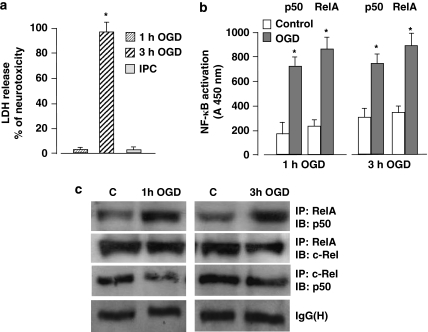
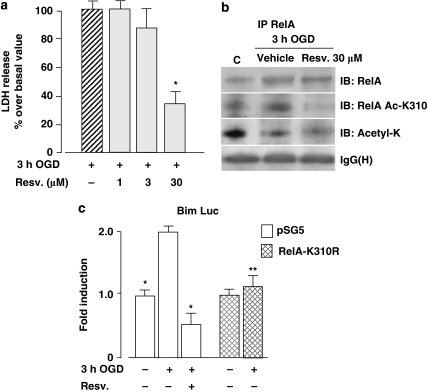
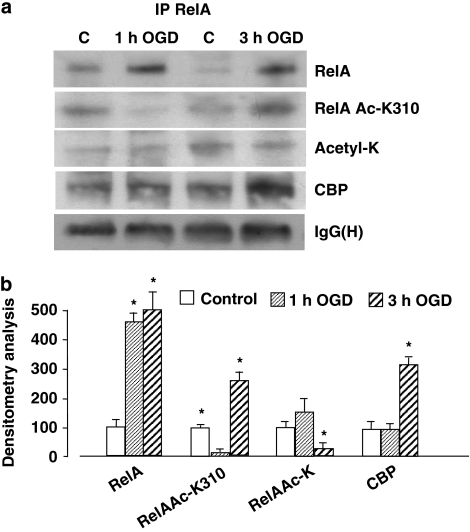
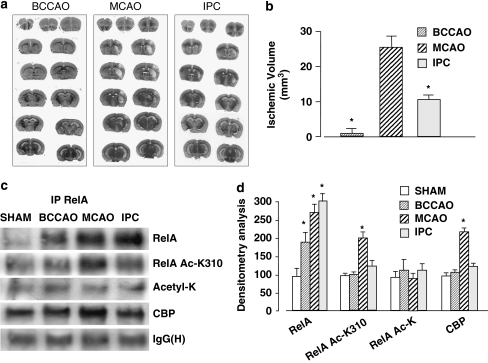
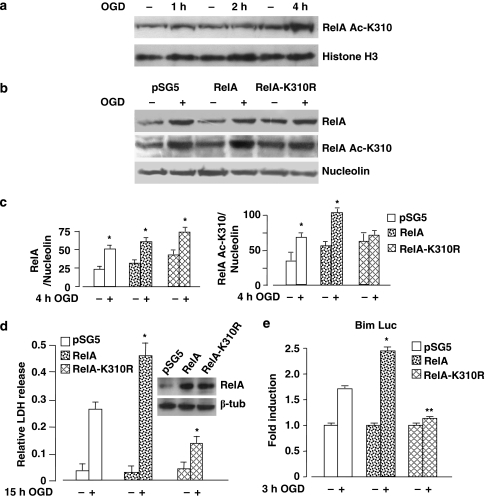
The activation of nuclear factor kappa B (NF-κB) p50/RelA is a key event in ischemic neuronal injury, as well as in brain ischemic tolerance. We tested whether epigenetic mechanisms affecting the acetylation state of RelA might discriminate between neuroprotective and neurotoxic activation of NF-κB during ischemia. NF-κB activation and RelA acetylation were investigated in cortices of mice subjected to preconditioning brain ischemia or lethal middle cerebral artery occlusion (MCAO) and primary cortical neurons exposed to preconditioning or lethal oxygen-glucose deprivation (OGD). In mice subjected to MCAO and in cortical neurons exposed to lethal OGD, activated RelA displayed a high level of Lys310 acetylation in spite of reduced total acetylation. Also, acetylated RelA on Lys310 interacted strongly with the CREB-binding protein (CBP). Conversely, RelA activated during preconditioning ischemia appeared deacetylated on Lys310. Overexpressing RelA increased Bim promoter activity and neuronal cell death both induced by lethal OGD, whereas overexpressing the acetylation-resistant RelA-K310R, carrying a mutation from Lys310 to arginine, prevented both responses. Pharmacological manipulation of Lys310 acetylation by the sirtuin 1 activator resveratrol repressed the activity of the Bim promoter and reduced the neuronal cell loss. We conclude that the acetylation of RelA in Lys310 dictates NF-κB-dependent pro-apoptotic responses and represents a suitable target to dissect pathological from neuroprotective NF-κB activation in brain ischemia.
核因子-κB(NF-κB)p50/RelA 的激活是缺血性神经元损伤以及脑缺血耐受中的关键事件。我们测试了影响 RelA 乙酰化状态的表观遗传机制是否可以区分缺血过程中 NF-κB 的神经保护和神经毒性激活。在经历预处理脑缺血或致死性大脑中动脉闭塞(MCAO)的小鼠皮质以及暴露于预处理或致死性氧葡萄糖剥夺(OGD)的原代皮质神经元中,研究了 NF-κB 的激活和 RelA 的乙酰化。在接受 MCAO 的小鼠中和在暴露于致死性 OGD 的皮质神经元中,尽管总乙酰化水平降低,但激活的 RelA 在 Lys310 上显示出高水平的乙酰化。此外,在 Lys310 上乙酰化的 RelA 与 CREB 结合蛋白(CBP)强烈相互作用。相反,在预处理缺血过程中激活的 RelA 在 Lys310 上呈现去乙酰化。过表达 RelA 增加了由致死性 OGD 诱导的 Bim 启动子活性和神经元细胞死亡,而过表达携带从 Lys310 突变为精氨酸的抗性 RelA-K310R(乙酰化抗性 RelA)则阻止了这两种反应。通过组蛋白去乙酰化酶 1 激活剂白藜芦醇对 Lys310 乙酰化的药理学操纵抑制了 Bim 启动子的活性并减少了神经元细胞丢失。我们得出结论,RelA 在 Lys310 上的乙酰化决定了 NF-κB 依赖性促凋亡反应,并且是在脑缺血中区分病理性和神经保护 NF-κB 激活的合适靶标。