Department of Pharmacology and Toxicology, Virginia Commonwealth University, 410 North 12th Street, Richmond, VA 23298, USA.
Psychopharmacology (Berl). 2011 Aug;216(3):431-9. doi: 10.1007/s00213-011-2235-2. Epub 2011 Mar 3.
Delta-opioid agonists enhance the antinociceptive efficacy of methadone and other mu-opioid agonists. However, relatively little is known about the degree to which delta agonists might enhance the abuse-related effects of mu agonists.
This study used a behavioral economic approach to examine effects of the delta agonist SNC80 [(+)-4-[(αR)-α-((2S,5R)-4-allyl-2,5-dimethyl-1-piperazinyl)-3-methoxybenzyl]-N,N-diethylbenzamide] on the reinforcing effects of methadone in a drug self-administration assay. Interactions between SNC80 and cocaine were also examined for comparison.
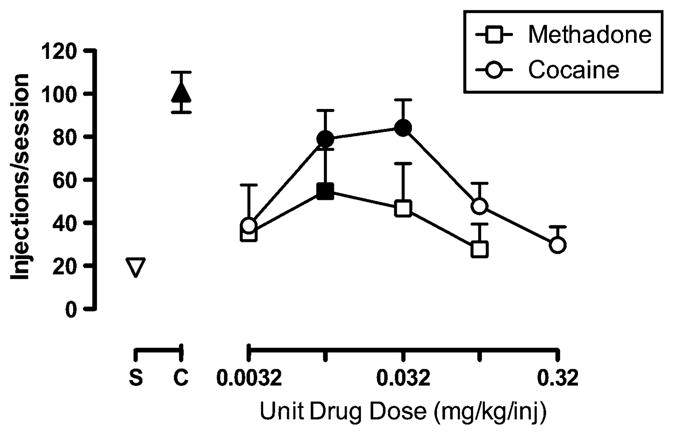
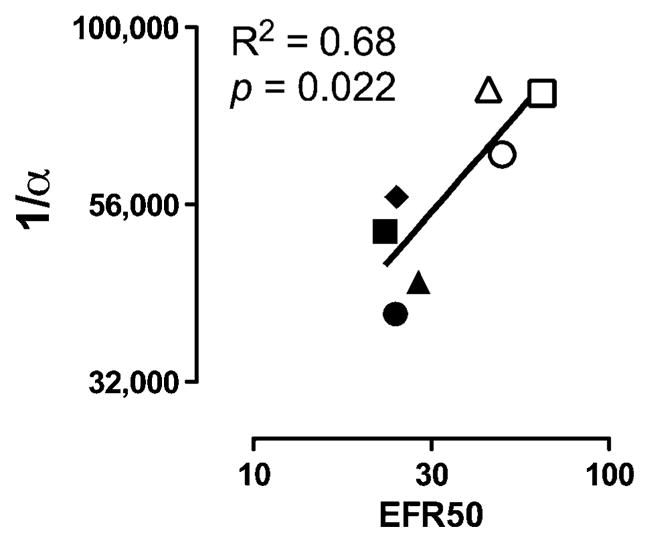
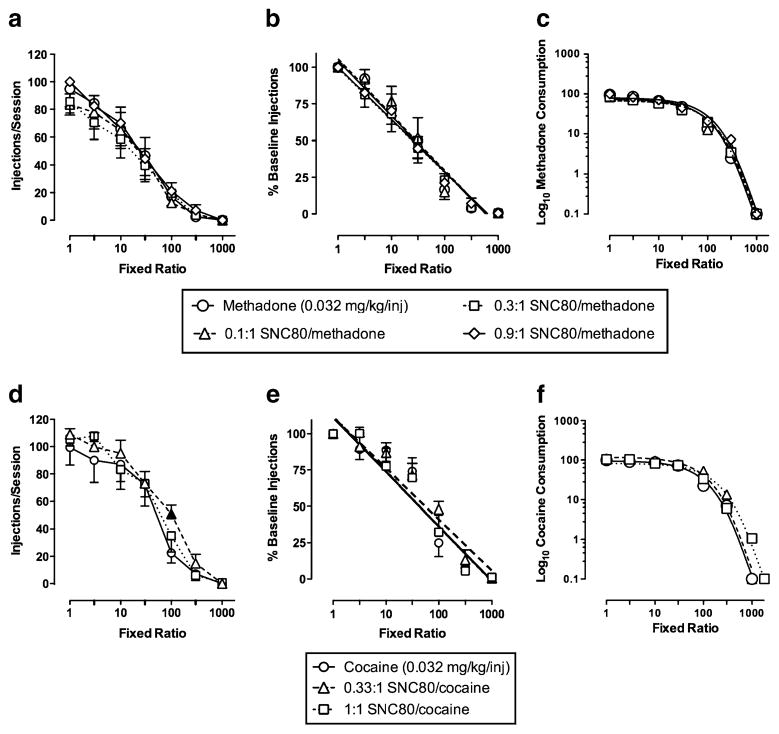
Rhesus monkeys (n = 4), surgically implanted with indwelling intravenous catheters, were tested in two phases. In phase 1, drug self-administration dose-effect curves for methadone (0.0032-0.1 mg/kg/injection (inj)) and cocaine (0.0032-0.32 mg/kg/inj) alone were determined under a fixed-ratio 10 (FR 10) schedule of reinforcement. In phase 2, FR values were increased every 3 days (FR 1-FR 1800) during availability of methadone alone (0.032 mg/kg/inj) and in combination with varying proportions of SNC80 (0.1:1, 0.3:1, and 0.9:1 SNC80/methadone) or of cocaine alone (0.032 mg/kg/inj) and in combination with varying proportions of SNC80 (0.33:1, 1:1, and 3:1 SNC80/cocaine). Demand curves related drug intake to FR price, and measures of reinforcement were derived.
Methadone and cocaine alone each functioned as a reinforcer. SNC80 did not alter measures of reinforcement for either methadone or cocaine.
SNC80 at proportions previously shown to enhance methadone-induced antinociception did not enhance the abuse-related effects of methadone. These results support the proposition that delta agonists may selectively enhance mu agonist analgesic effects without enhancing mu agonist abuse liability.
δ-阿片受体激动剂增强了美沙酮和其他μ-阿片受体激动剂的抗伤害作用。然而,人们对δ 受体激动剂在多大程度上增强μ 受体激动剂的滥用相关效应知之甚少。
本研究采用行为经济学方法,研究了δ 受体激动剂 SNC80[(+)-4-[(αR)-α-[[2S,5R]-4-烯丙基-2,5-二甲基-1-哌嗪基]-3-甲氧基苄基]-N,N-二乙基苯甲酰胺]对美沙酮在药物自我给药测定中的强化作用的影响。还比较了 SNC80 与可卡因之间的相互作用。
手术植入留置静脉导管的恒河猴(n=4)在两个阶段进行测试。在第 1 阶段,在固定比率 10(FR 10)强化方案下,单独测定了美沙酮(0.0032-0.1mg/kg/ 注射(inj))和可卡因(0.0032-0.32mg/kg/inj)的药物自我给药剂量-效应曲线。在第 2 阶段,在单独使用美沙酮(0.032mg/kg/inj)和与不同比例的 SNC80(0.1:1、0.3:1 和 0.9:1 SNC80/美沙酮)组合的情况下,FR 值每隔 3 天增加一次(FR 1-FR 1800),或与不同比例的可卡因(0.032mg/kg/inj)和 SNC80(0.33:1、1:1 和 3:1 SNC80/可卡因)组合。需求曲线将药物摄入与 FR 价格联系起来,并得出强化措施。
美沙酮和可卡因单独作为强化剂。SNC80 并未改变美沙酮或可卡因的强化措施。
先前显示增强美沙酮诱导的镇痛作用的 SNC80 比例并未增强美沙酮的滥用相关效应。这些结果支持这样的假设,即 δ 受体激动剂可能选择性地增强 μ 受体激动剂的镇痛作用,而不增强 μ 受体激动剂的滥用倾向。