• 文献检索
  • 文档翻译
  • 深度研究
  • 学术资讯
  • Suppr Zotero 插件Zotero 插件
  • 邀请有礼
  • 套餐&价格
  • 历史记录
应用&插件
Suppr Zotero 插件Zotero 插件浏览器插件Mac 客户端Windows 客户端微信小程序
定价
高级版会员购买积分包购买API积分包
服务
文献检索文档翻译深度研究API 文档MCP 服务
关于我们
关于 Suppr公司介绍联系我们用户协议隐私条款
关注我们

Suppr 超能文献

核心技术专利:CN118964589B侵权必究
粤ICP备2023148730 号-1Suppr @ 2026

文献检索

告别复杂PubMed语法,用中文像聊天一样搜索,搜遍4000万医学文献。AI智能推荐,让科研检索更轻松。

立即免费搜索

文件翻译

保留排版,准确专业,支持PDF/Word/PPT等文件格式,支持 12+语言互译。

免费翻译文档

深度研究

AI帮你快速写综述,25分钟生成高质量综述,智能提取关键信息,辅助科研写作。

立即免费体验

日本脑炎病毒感染中宿主反应的转录组特征。

Transcriptomic profile of host response in Japanese encephalitis virus infection.

机构信息

Division of Virology, Defence Research and Development Establishment, Jhansi Road, Gwalior-474002, India.

出版信息

Virol J. 2011 Mar 4;8:92. doi: 10.1186/1743-422X-8-92.

DOI:10.1186/1743-422X-8-92
PMID:21371334
原文链接:https://pmc.ncbi.nlm.nih.gov/articles/PMC3058095/
Abstract

BACKGROUND

Japanese encephalitis (JE) is one of the leading causes of acute encephalopathy with the highest mortality rate of 30-50%. The purpose of this study was to understand complex biological processes of host response during the progression of the disease. Virus was subcutaneously administered in mice and brain was used for whole genome expression profiling by cDNA microarray.

RESULTS

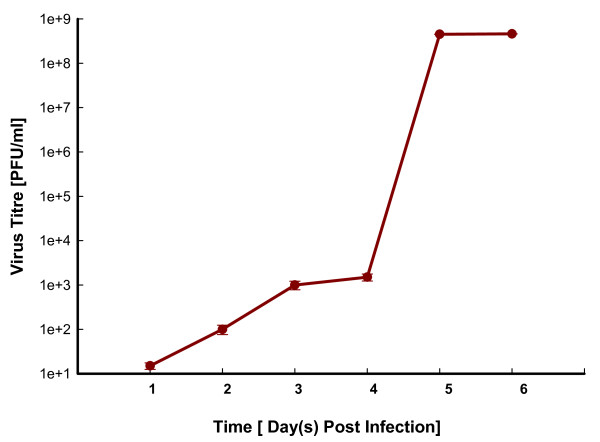
The comparison between viral replication efficiency and disease progression confirms the active role of host response in immunopathology and disease severity. The histopathological analysis confirms the severe damage in the brain in a time dependent manner. Interestingly, the transcription profile reveals significant and differential expression of various pattern recognition receptors, chemotactic genes and the activation of inflammasome. The increased leukocyte infiltration and aggravated CNS inflammation may be the cause of disease severity.

CONCLUSION

This is the first report that provides a detailed picture of the host transcriptional response in a natural route of exposure and opens up new avenues for potential therapeutic and prophylactic strategies against Japanese encephalitis virus.

摘要

背景

日本脑炎(JE)是急性脑病的主要病因之一,死亡率最高可达 30-50%。本研究旨在了解疾病进展过程中宿主反应的复杂生物学过程。病毒通过皮下注射到小鼠体内,然后用 cDNA 微阵列对大脑进行全基因组表达谱分析。

结果

病毒复制效率与疾病进展的比较证实了宿主反应在免疫病理学和疾病严重程度中的积极作用。组织病理学分析证实了大脑随时间推移而发生的严重损伤。有趣的是,转录谱揭示了各种模式识别受体、趋化基因的显著差异表达和炎症小体的激活。白细胞浸润增加和中枢神经系统炎症加重可能是疾病严重程度的原因。

结论

这是首次在自然暴露途径中提供宿主转录反应详细情况的报告,为针对日本脑炎病毒的潜在治疗和预防策略开辟了新途径。
https://cdn.ncbi.nlm.nih.gov/pmc/blobs/b362/3058095/1fe969729a17/1743-422X-8-92-4.jpg
https://cdn.ncbi.nlm.nih.gov/pmc/blobs/b362/3058095/72e0fa45c53d/1743-422X-8-92-1.jpg
https://cdn.ncbi.nlm.nih.gov/pmc/blobs/b362/3058095/312e356c160d/1743-422X-8-92-2.jpg
https://cdn.ncbi.nlm.nih.gov/pmc/blobs/b362/3058095/3cadf75c4c2a/1743-422X-8-92-3.jpg
https://cdn.ncbi.nlm.nih.gov/pmc/blobs/b362/3058095/1fe969729a17/1743-422X-8-92-4.jpg
https://cdn.ncbi.nlm.nih.gov/pmc/blobs/b362/3058095/72e0fa45c53d/1743-422X-8-92-1.jpg
https://cdn.ncbi.nlm.nih.gov/pmc/blobs/b362/3058095/312e356c160d/1743-422X-8-92-2.jpg
https://cdn.ncbi.nlm.nih.gov/pmc/blobs/b362/3058095/3cadf75c4c2a/1743-422X-8-92-3.jpg
https://cdn.ncbi.nlm.nih.gov/pmc/blobs/b362/3058095/1fe969729a17/1743-422X-8-92-4.jpg

相似文献

1
Transcriptomic profile of host response in Japanese encephalitis virus infection.日本脑炎病毒感染中宿主反应的转录组特征。
Virol J. 2011 Mar 4;8:92. doi: 10.1186/1743-422X-8-92.
2
Japanese encephalitis virus infection induces changes of mRNA profile of mouse spleen and brain.日本脑炎病毒感染诱导小鼠脾和脑的 mRNA 谱发生变化。
Virol J. 2011 Feb 24;8:80. doi: 10.1186/1743-422X-8-80.
3
MicroRNA-19b-3p Modulates Japanese Encephalitis Virus-Mediated Inflammation via Targeting RNF11.微小RNA-19b-3p通过靶向RNF11调节日本脑炎病毒介导的炎症反应。
J Virol. 2016 Apr 14;90(9):4780-4795. doi: 10.1128/JVI.02586-15. Print 2016 May.
4
Transcriptomic Analysis Suggests the M1 Polarization and Launch of Diverse Programmed Cell Death Pathways in Japanese Encephalitis Virus-Infected Macrophages.转录组分析提示日本脑炎病毒感染的巨噬细胞中 M1 极化和多种程序性细胞死亡途径的启动。
Viruses. 2020 Mar 24;12(3):356. doi: 10.3390/v12030356.
5
MicroRNA transcriptome profiling of mice brains infected with Japanese encephalitis virus by RNA sequencing.通过RNA测序对感染日本脑炎病毒的小鼠大脑进行微小RNA转录组分析。
Infect Genet Evol. 2016 Apr;39:249-257. doi: 10.1016/j.meegid.2016.01.028. Epub 2016 Feb 2.
6
Axl Deficiency Promotes the Neuroinvasion of Japanese Encephalitis Virus by Enhancing IL-1α Production from Pyroptotic Macrophages.Axl 缺陷通过增强巨噬细胞细胞焦亡产生的白细胞介素-1α促进日本脑炎病毒的神经侵袭。
J Virol. 2020 Aug 17;94(17). doi: 10.1128/JVI.00602-20.
7
Hsp40 Protein DNAJB6 Interacts with Viral NS3 and Inhibits the Replication of the Japanese Encephalitis Virus.热休克蛋白 40 蛋白 DNAJB6 与病毒 NS3 相互作用,抑制日本脑炎病毒的复制。
Int J Mol Sci. 2019 Nov 14;20(22):5719. doi: 10.3390/ijms20225719.
8
MicroRNA-15b Modulates Japanese Encephalitis Virus-Mediated Inflammation via Targeting RNF125.微小RNA-15b通过靶向RNF125调节日本脑炎病毒介导的炎症反应。
J Immunol. 2015 Sep 1;195(5):2251-62. doi: 10.4049/jimmunol.1500370. Epub 2015 Jul 22.
9
Japanese encephalitis virus NS1 and NS1' protein disrupts the blood-brain barrier through macrophage migration inhibitory factor-mediated autophagy.日本脑炎病毒 NS1 和 NS1' 蛋白通过巨噬细胞迁移抑制因子介导的自噬破坏血脑屏障。
J Virol. 2024 May 14;98(5):e0011624. doi: 10.1128/jvi.00116-24. Epub 2024 Apr 9.
10
Distinct dictation of Japanese encephalitis virus-induced neuroinflammation and lethality via triggering TLR3 and TLR4 signal pathways.日本脑炎病毒通过触发TLR3和TLR4信号通路对神经炎症和致死率进行不同的调控。
PLoS Pathog. 2014 Sep 4;10(9):e1004319. doi: 10.1371/journal.ppat.1004319. eCollection 2014 Sep.

引用本文的文献

1
The slow progression of Japanese encephalitis in aged mice is likely associated to B cell recruitment in the brain.老年小鼠中日本脑炎的缓慢进展可能与大脑中B细胞的募集有关。
Virol Sin. 2025 Aug;40(4):546-559. doi: 10.1016/j.virs.2025.05.013. Epub 2025 Jun 3.
2
Mice as an Animal Model for Japanese Encephalitis Virus Research: Mouse Susceptibility, Infection Route, and Viral Pathogenesis.小鼠作为日本脑炎病毒研究的动物模型:小鼠易感性、感染途径及病毒发病机制
Pathogens. 2023 May 14;12(5):715. doi: 10.3390/pathogens12050715.
3
GCRV NS38 counteracts SVCV proliferation by intracellular antagonization during co-infection.

本文引用的文献

1
Expression profile of Japanese encephalitis virus induced neuroinflammation and its implication in disease severity.日本脑炎病毒诱导的神经炎症表达谱及其在疾病严重程度中的意义。
J Clin Virol. 2010 Sep;49(1):4-10. doi: 10.1016/j.jcv.2010.06.009. Epub 2010 Jul 15.
2
Inflammatory cytokine-induced intercellular adhesion molecule-1 and vascular cell adhesion molecule-1 in mesenchymal stem cells are critical for immunosuppression.炎症细胞因子诱导间充质干细胞中细胞间黏附分子-1 和血管细胞黏附分子-1 的表达对于免疫抑制至关重要。
J Immunol. 2010 Mar 1;184(5):2321-8. doi: 10.4049/jimmunol.0902023. Epub 2010 Feb 3.
3
Immunomodulatory cytokines determine the outcome of Japanese encephalitis virus infection in mice.
GCRV NS38 通过在共感染过程中的细胞内拮抗作用来对抗 SVCV 的增殖。
Virol Sin. 2023 Feb;38(1):142-156. doi: 10.1016/j.virs.2022.12.003. Epub 2022 Dec 13.
4
JEV Infection Induces M-MDSC Differentiation Into CD3 Macrophages in the Brain.JEV 感染诱导脑内 M-MDSC 分化为 CD3 巨噬细胞。
Front Immunol. 2022 Apr 21;13:838990. doi: 10.3389/fimmu.2022.838990. eCollection 2022.
5
Network meta-analysis of transcriptome expression changes in different manifestations of dengue virus infection.基于转录组表达变化的不同临床表现的登革病毒感染的网络荟萃分析。
BMC Genomics. 2022 Feb 27;23(1):165. doi: 10.1186/s12864-022-08390-2.
6
High vaccination coverage, inadequate knowledge and high vector density: Findings from a community-based cross-sectional study on Japanese Encephalitis in Yangon, Myanmar.高疫苗接种率、知识不足和高病媒密度:缅甸仰光日本脑炎的基于社区的横断面研究结果。
F1000Res. 2020 Jun 30;9:6. doi: 10.12688/f1000research.21702.2. eCollection 2020.
7
Transcriptomic and network analyses reveal distinct nitrate responses in light and dark in rice leaves (Oryza sativa Indica var. Panvel1).转录组和网络分析揭示了水稻叶片(籼稻品种 Panvel1)中光暗条件下硝酸盐响应的明显差异。
Sci Rep. 2020 Jul 22;10(1):12228. doi: 10.1038/s41598-020-68917-z.
8
Beyond HIV infection: Neglected and varied impacts of CCR5 and CCR5Δ32 on viral diseases.超越 HIV 感染:CCR5 和 CCR5Δ32 对病毒病的被忽视和多样影响。
Virus Res. 2020 Sep;286:198040. doi: 10.1016/j.virusres.2020.198040. Epub 2020 May 30.
9
Identifying novel biomarkers of the pediatric influenza infection by weighted co-expression network analysis.通过加权共表达网络分析鉴定小儿流感感染的新型生物标志物。
Virol J. 2019 Oct 29;16(1):124. doi: 10.1186/s12985-019-1231-8.
10
PD1CCR2CD8 T Cells Infiltrate the Central Nervous System during Acute Japanese Encephalitis Virus Infection.PD1CCR2CD8 T 细胞在急性日本脑炎病毒感染期间浸润中枢神经系统。
Virol Sin. 2019 Oct;34(5):538-548. doi: 10.1007/s12250-019-00134-z. Epub 2019 Jun 18.
免疫调节细胞因子决定了日本脑炎病毒感染在小鼠中的结果。
J Med Virol. 2010 Feb;82(2):304-10. doi: 10.1002/jmv.21688.
4
Japanese encephalitis virus induce immuno-competency in neural stem/progenitor cells.日本脑炎病毒诱导神经干细胞/祖细胞产生免疫能力。
PLoS One. 2009 Dec 2;4(12):e8134. doi: 10.1371/journal.pone.0008134.
5
Chemokine profiling of Japanese encephalitis virus-infected mouse neuroblastoma cells by microarray and real-time RT-PCR: implication in neuropathogenesis.利用微阵列和实时 RT-PCR 对日本脑炎病毒感染的小鼠神经母细胞瘤细胞进行趋化因子分析:对神经发病机制的影响。
Virus Res. 2010 Jan;147(1):107-12. doi: 10.1016/j.virusres.2009.10.018. Epub 2009 Nov 5.
6
Theiler's virus infection induces TLR3-dependent upregulation of TLR2 critical for proinflammatory cytokine production.泰勒氏病毒感染可诱导Toll样受体3(TLR3)依赖性的Toll样受体2(TLR2)上调,这对于促炎细胞因子的产生至关重要。
Glia. 2009 Aug 15;57(11):1216-26. doi: 10.1002/glia.20843.
7
Ecology and geographical expansion of Japanese encephalitis virus.日本脑炎病毒的生态学与地理扩散
Annu Rev Entomol. 2009;54:17-35. doi: 10.1146/annurev.ento.54.110807.090510.
8
CLEC5A is critical for dengue-virus-induced lethal disease.CLEC5A对登革病毒诱导的致死性疾病至关重要。
Nature. 2008 May 29;453(7195):672-6. doi: 10.1038/nature07013. Epub 2008 May 21.
9
The macrophage-inducible C-type lectin, mincle, is an essential component of the innate immune response to Candida albicans.巨噬细胞诱导性C型凝集素(mincle)是对白色念珠菌固有免疫反应的重要组成部分。
J Immunol. 2008 Jun 1;180(11):7404-13. doi: 10.4049/jimmunol.180.11.7404.
10
Toll-like receptors regulation of viral infection and disease.Toll样受体对病毒感染和疾病的调控
Adv Drug Deliv Rev. 2008 Apr 29;60(7):786-94. doi: 10.1016/j.addr.2007.11.003. Epub 2007 Dec 28.