Shemiakin-Ovchinnikov Institute of Bioorganic Chemistry, RAS, Moscow, Russia.
EMBO Mol Med. 2011 Apr;3(4):201-7. doi: 10.1002/emmm.201100129. Epub 2011 Mar 4.
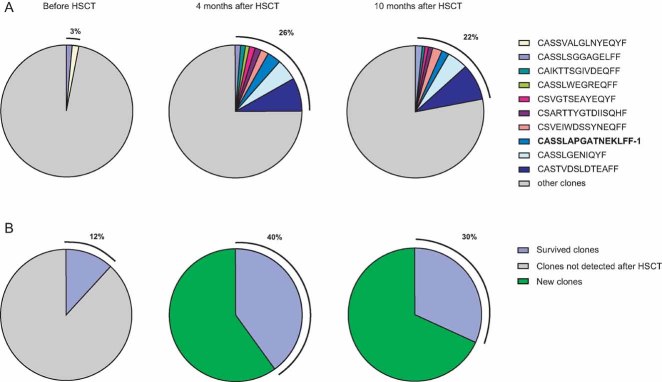
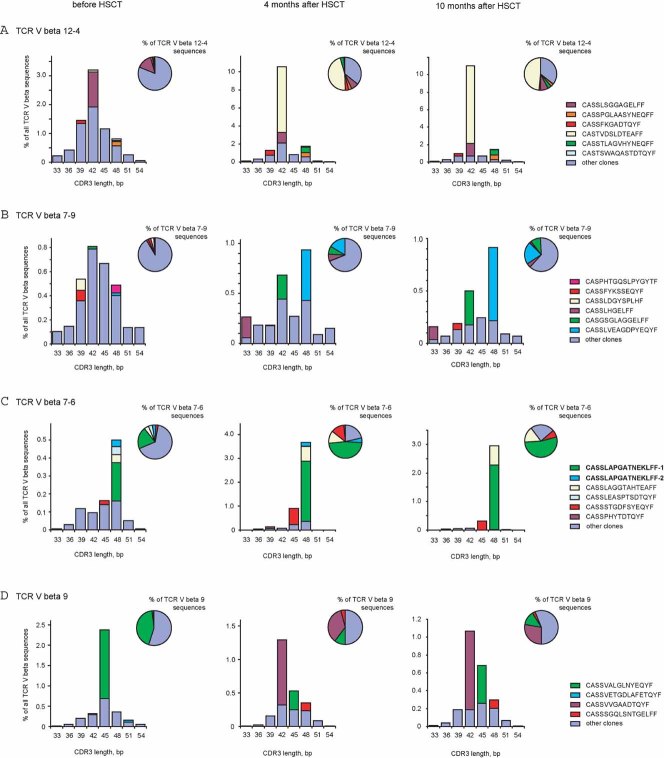
Autologous haematopoietic stem cell transplantation is highly efficient for the treatment of systemic autoimmune diseases, but its consequences for the immune system remain poorly understood. Here, we describe an optimized RNA-based technology for unbiased amplification of T cell receptor beta-chain libraries and use it to perform the first detailed, quantitative tracking of T cell clones during 10 months after transplantation. We show that multiple clones survive the procedure, contribute to the immune response to activated infections, and form a new skewed and stable T cell receptor repertoire.
自体造血干细胞移植对于治疗系统性自身免疫性疾病非常有效,但对其对免疫系统的影响仍知之甚少。在这里,我们描述了一种优化的基于 RNA 的技术,用于对 T 细胞受体β链文库进行无偏扩增,并使用该技术在移植后 10 个月内首次对 T 细胞克隆进行详细、定量的跟踪。我们表明,多个克隆在该过程中存活下来,有助于对激活感染的免疫反应,并形成一个新的偏斜和稳定的 T 细胞受体库。