Massachusetts General Hospital Cancer Center, Harvard Medical School, 55 Fruit Street, Boston, MA 02114, USA.
Nat Rev Clin Oncol. 2011 May;8(5):292-301. doi: 10.1038/nrclinonc.2011.30. Epub 2011 Mar 8.
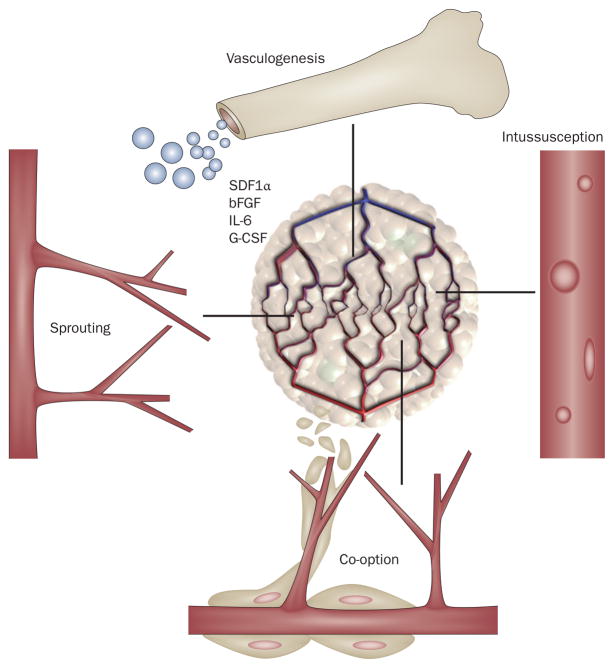
Hepatocellular carcinoma (HCC), the most common primary liver tumor, is notoriously resistant to systemic therapies, and often recurs even after aggressive local therapies. HCCs rely on the formation of new blood vessels for growth, and VEGF is critical in this process. A hallmark of new vessel formation in tumors is their structural and functional abnormality. This leads to an abnormal tumor microenvironment characterized by low oxygen tension. The liver is perfused by both arterial and venous blood and the resulting abnormal microenvironment selects for more-aggressive malignancies. Anti-VEGF therapy with sorafenib was the first systemic therapy to demonstrate improved survival in patients with advanced-stage HCC. This important development in the treatment of HCC raises hope as well as critical questions on the future development of targeted agents including other antiangiogenic agents, which hold promise to further increase survival in this aggressive disease.
肝细胞癌 (HCC) 是最常见的原发性肝脏肿瘤,其对全身治疗具有明显的耐药性,即使在积极的局部治疗后,也常常复发。HCC 的生长依赖于新血管的形成,而 VEGF 在这个过程中至关重要。肿瘤中新血管形成的一个标志是其结构和功能异常。这导致肿瘤微环境异常,表现为低氧张力。肝脏由动脉和静脉血灌注,由此产生的异常微环境选择了更具侵袭性的恶性肿瘤。索拉非尼的抗 VEGF 治疗是第一种能够改善晚期 HCC 患者生存的全身治疗方法。这一 HCC 治疗领域的重要进展既带来了希望,也提出了关于靶向药物(包括其他抗血管生成药物)未来发展的关键问题,这些药物有望进一步提高这种侵袭性疾病的生存率。