Department of Pathology, Emory University School of Medicine, Atlanta, GA 30033, USA.
Lab Invest. 2011 Jun;91(6):852-8. doi: 10.1038/labinvest.2011.48. Epub 2011 Mar 14.
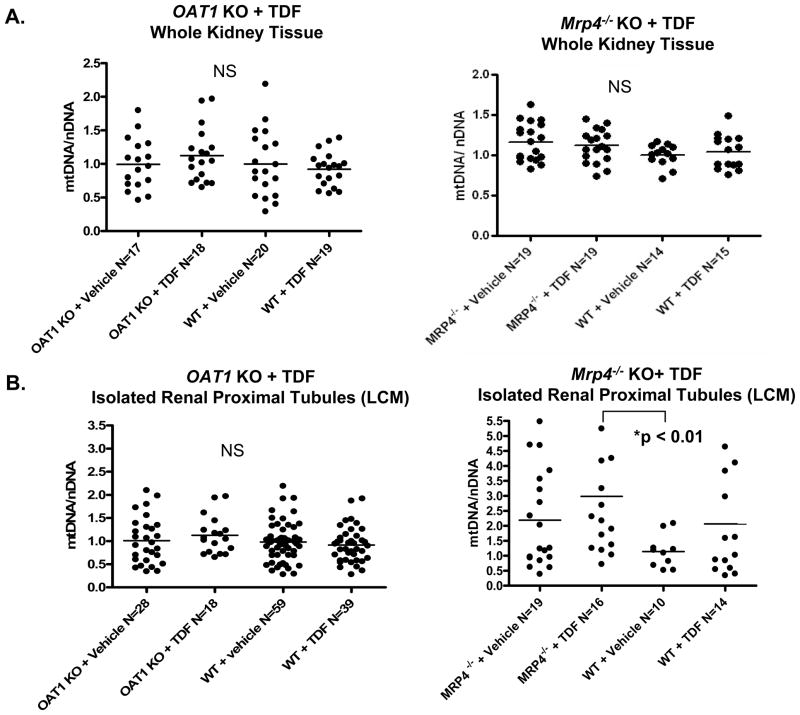
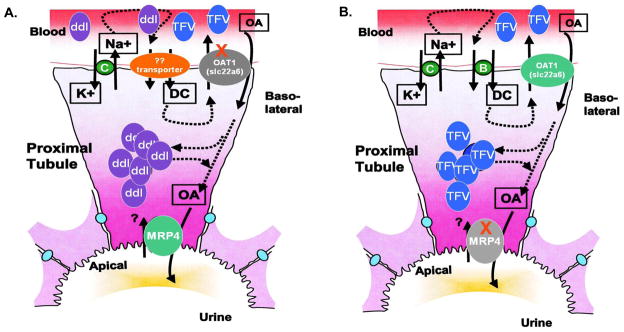
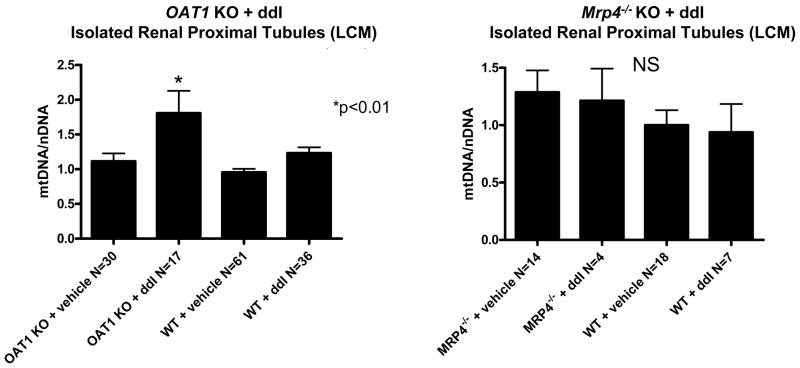
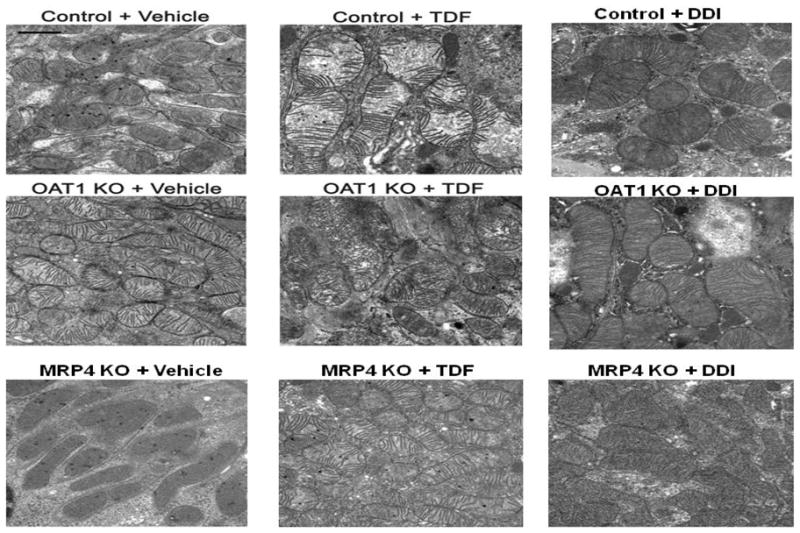
Tenofovir disoproxil fumarate (TDF) is an oral prodrug and acyclic nucleotide analog of adenosine monophosphate that inhibits HIV-1 (HIV) reverse transcriptase. A growing subset of TDF-treated HIV(+) individuals presented with acute renal failure, suggesting tenofovir-associated kidney-specific toxicity. Our previous studies using an HIV transgenic mouse model (TG) demonstrated specific changes in renal proximal tubular mitochondrial DNA (mtDNA) abundance. Nucleosides are regulated in biological systems via transport and metabolism in cellular compartments. In this study, the role(s) of organic anion transporter type 1 (OAT1) and multidrug-resistant protein type 4 (MRP4) in transport and regulation of tenofovir in proximal tubules were assessed. Renal toxicity was assessed in kidney tissues from OAT1 knockout (KO) or MRP4 KO compared with wild-type (WT, C57BL/6) mice following treatment with TDF (0.11 mg/day), didanosine (ddI, a related adenosine analog, 0.14 mg/day) or vehicle (0.1 M NaOH) daily gavage for 5 weeks. Laser-capture microdissection (LCM) was used to isolate renal proximal tubules for molecular analyses. mtDNA abundance and ultrastructural pathology were analyzed. mtDNA abundance in whole kidneys from both KO and WT was unchanged regardless of treatment. Renal proximal tubular mtDNA abundance from OAT1 KO also remained unchanged, suggesting prevention of TDF toxicity due to loss of tenofovir transport into proximal tubules. In contrast, renal proximal tubules from MRP4 KO exhibited increased mtDNA abundance following TDF treatment compared with WT littermates, suggesting compensation. Renal proximal tubules from TDF-treated WT and MRP4 KO exhibited increased numbers of irregular mitochondria with sparse, fragmented cristae compared with OAT1 KO. Treatment with ddI had a compensatory effect on mtDNA abundance in OAT1 KO but not in MRP4 KO. Both OAT1 and MRP4 have a direct role in transport and efflux of tenofovir, regulating levels of tenofovir in proximal tubules. Disruption of OAT1 activity prevents tenofovir toxicity but loss of MRP4 can lead to increased renal proximal tubular toxicity. These data help to explain mechanisms of human TDF renal toxicity.
富马酸替诺福韦二吡呋酯(TDF)是一种口服前药和腺嘌呤单磷酸的无环核苷酸类似物,可抑制 HIV-1(HIV)逆转录酶。越来越多的 TDF 治疗的 HIV(+)个体出现急性肾衰竭,表明替诺福韦相关的肾特异性毒性。我们之前使用 HIV 转基因小鼠模型(TG)的研究表明,肾近端小管线粒体 DNA(mtDNA)丰度存在特异性变化。核苷在生物系统中通过细胞区室中的运输和代谢进行调节。在这项研究中,评估了有机阴离子转运蛋白 1(OAT1)和多药耐药蛋白 4(MRP4)在肾近端小管中替诺福韦的运输和调节中的作用。与野生型(WT,C57BL/6)小鼠相比,在替诺福韦(0.11mg/天)、双脱氧肌苷(ddI,一种相关的腺嘌呤类似物,0.14mg/天)或载体(0.1M NaOH)每日灌胃治疗 5 周后,在 OAT1 敲除(KO)或 MRP4 KO 肾组织中评估肾毒性。激光捕获显微切割(LCM)用于分离肾近端小管进行分子分析。分析 mtDNA 丰度和超微结构病理学。无论治疗如何,KO 和 WT 整个肾脏的 mtDNA 丰度均无变化。OAT1 KO 的肾近端小管 mtDNA 丰度也保持不变,表明由于替诺福韦进入近端小管的转运丢失而防止了 TDF 毒性。相比之下,与 WT 同窝仔相比,MRP4 KO 的肾近端小管在 TDF 治疗后 mtDNA 丰度增加,表明代偿。与 OAT1 KO 相比,替诺福韦治疗的 WT 和 MRP4 KO 的肾近端小管表现出不规则线粒体数量增加,且嵴稀疏、碎片化。ddI 治疗对 OAT1 KO 的 mtDNA 丰度有代偿作用,但对 MRP4 KO 没有作用。OAT1 和 MRP4 均在替诺福韦的转运和外排中起直接作用,调节近端小管中替诺福韦的水平。OAT1 活性的破坏可防止替诺福韦毒性,但 MRP4 的丧失可导致肾近端小管毒性增加。这些数据有助于解释人类 TDF 肾毒性的机制。