Department of Behavioral Physiology and Sociobiology, Biocenter, University of Würzburg, Würzburg, Germany.
PLoS One. 2011 Mar 9;6(3):e17667. doi: 10.1371/journal.pone.0017667.
Acquisition of information about food sources is essential for animals that forage collectively like social insects. Foragers deliver two commodities to the nest, food and information, and they may favor the delivery of one at the expenses of the other. We predict that information needs should be particularly high at the beginning of foraging: the decision to return faster to the nest will motivate a grass-cutting ant worker to reduce its loading time, and so to leave the source with a partial load.
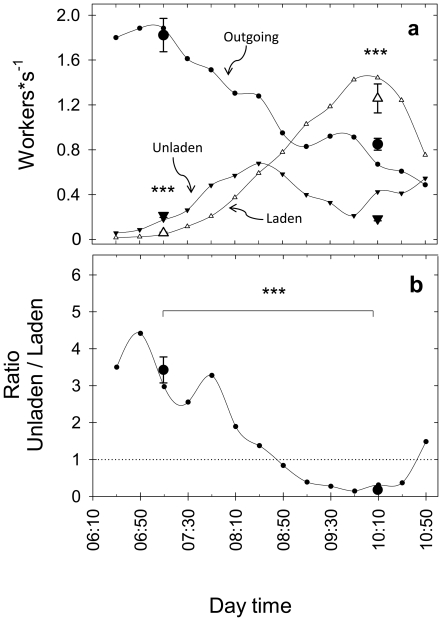
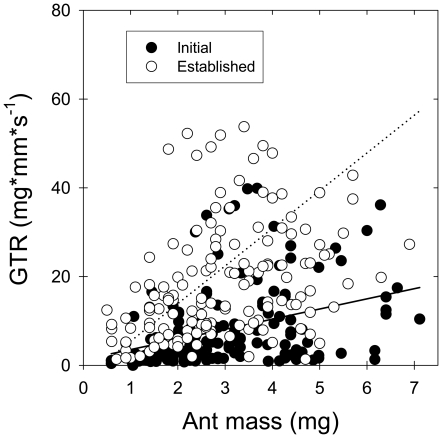
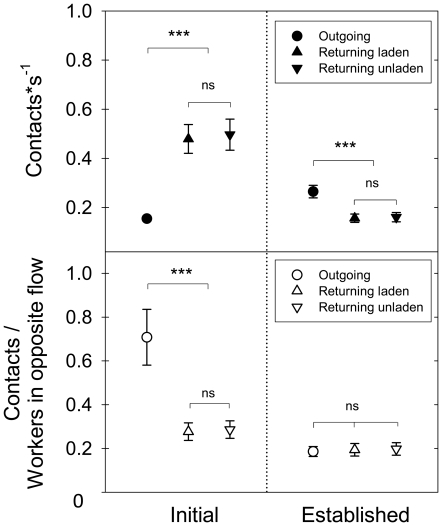
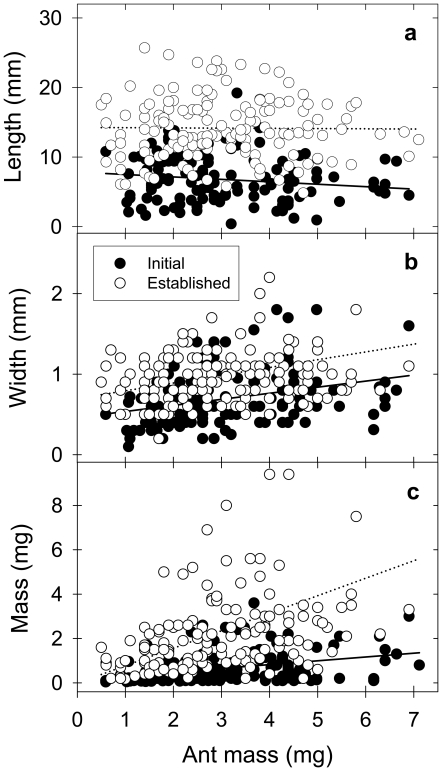
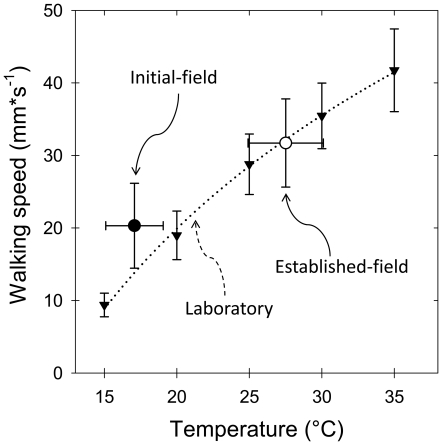
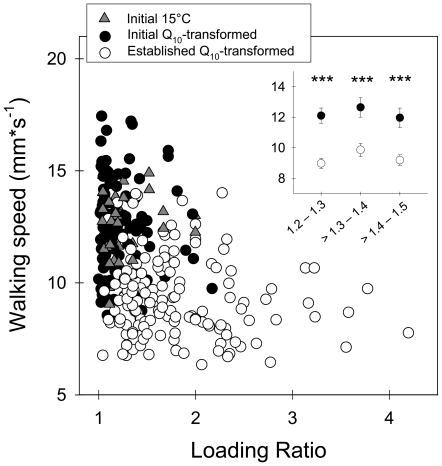
Field results showed that at the initial foraging phase, most grass-cutting ant foragers (Acromyrmex heyeri) returned unladen to the nest, and experienced head-on encounters with outgoing workers. Ant encounters were not simply collisions in a probabilistic sense: outgoing workers contacted in average 70% of the returning foragers at the initial foraging phase, and only 20% at the established phase. At the initial foraging phase, workers cut fragments that were shorter, narrower, lighter and tenderer than those harvested at the established one. Foragers walked at the initial phase significantly faster than expected for the observed temperatures, yet not at the established phase. Moreover, when controlling for differences in the fragment-size carried, workers still walked faster at the initial phase. Despite the higher speed, their individual transport rate of vegetable tissue was lower than that of similarly-sized workers foraging later at the same patch.
CONCLUSIONS/SIGNIFICANCE: At the initial foraging phase, workers compromised their individual transport rates of material in order to return faster to the colony. We suggest that the observed flexible cutting rules and the selection of partial loads at the beginning of foraging are driven by the need of information transfer, crucial for the establishment and maintenance of a foraging process to monopolize a discovered resource.
对于像社会性昆虫那样集体觅食的动物来说,获取食物来源的信息是至关重要的。觅食者向巢穴输送两种商品,食物和信息,它们可能会优先输送其中一种而牺牲另一种。我们预测,在觅食的初始阶段,信息需求应该特别高:更快地返回巢穴的决定将促使割草蚁工蚁减少其装载时间,从而使蚁群带着部分负载离开蚁巢。
实地研究结果表明,在初始觅食阶段,大多数割草蚁觅食者(Acromyrmex heyeri)会空载返回巢穴,并与外出的工蚁发生正面碰撞。蚂蚁的相遇并不是概率意义上的简单碰撞:外出的工蚁平均在初始觅食阶段会接触到 70%的返回觅食者,而在稳定阶段则只有 20%。在初始觅食阶段,工蚁切割的碎片比稳定阶段更短、更窄、更轻、更嫩。在初始觅食阶段,工蚁的行走速度明显快于观察到的温度所预期的速度,但在稳定阶段则不然。此外,即使考虑到携带的碎片尺寸差异,工蚁在初始阶段仍然走得更快。尽管速度更快,但它们个体输送的植物组织的速度仍低于在同一斑块上稍后觅食的、体型相似的工蚁。
结论/意义:在初始觅食阶段,工蚁牺牲了它们个体的物质输送率,以更快地返回蚁群。我们认为,观察到的灵活切割规则和在觅食初始阶段选择部分负载是由信息传递的需要驱动的,这对建立和维持一个垄断已发现资源的觅食过程至关重要。