Department of Pathology, Wayne State University, Detroit, Michigan, United States of America.
PLoS One. 2011 Mar 9;6(3):e17850. doi: 10.1371/journal.pone.0017850.
The existence of cancer stem cells (CSCs) or cancer stem-like cells in a tumor mass is believed to be responsible for tumor recurrence because of their intrinsic and extrinsic drug-resistance characteristics. Therefore, targeted killing of CSCs would be a newer strategy for the prevention of tumor recurrence and/or treatment by overcoming drug-resistance. We have developed a novel synthetic compound-CDF, which showed greater bioavailability in animal tissues such as pancreas, and also induced cell growth inhibition and apoptosis, which was mediated by inactivation of NF-κB, COX-2, and VEGF in pancreatic cancer (PC) cells.
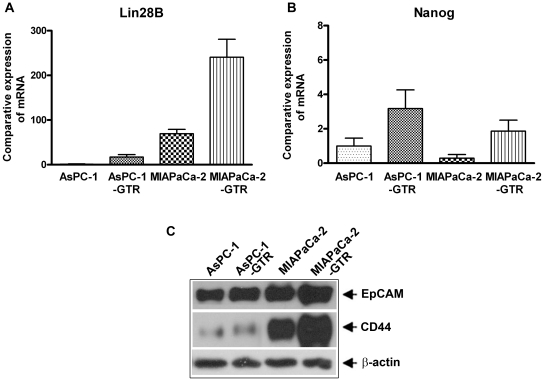
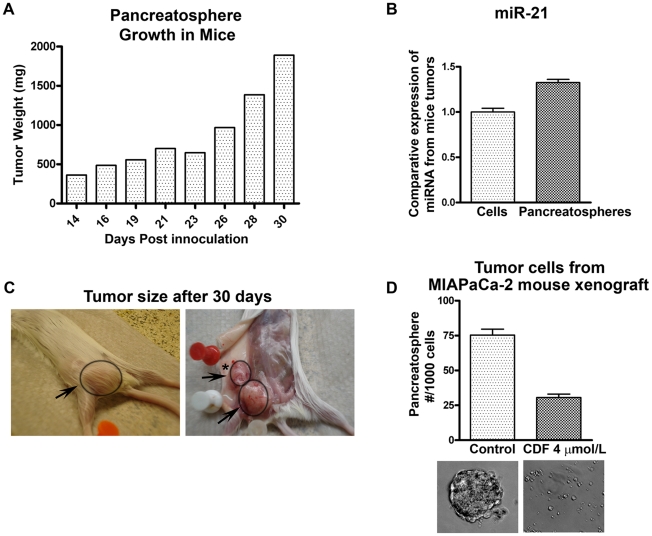
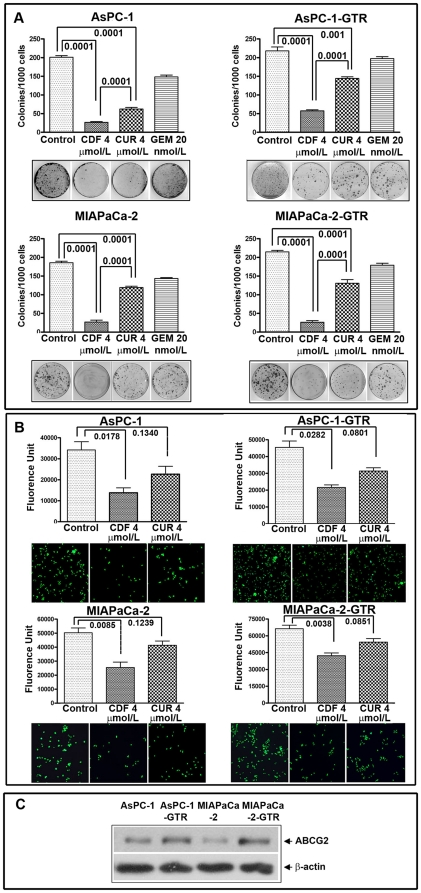
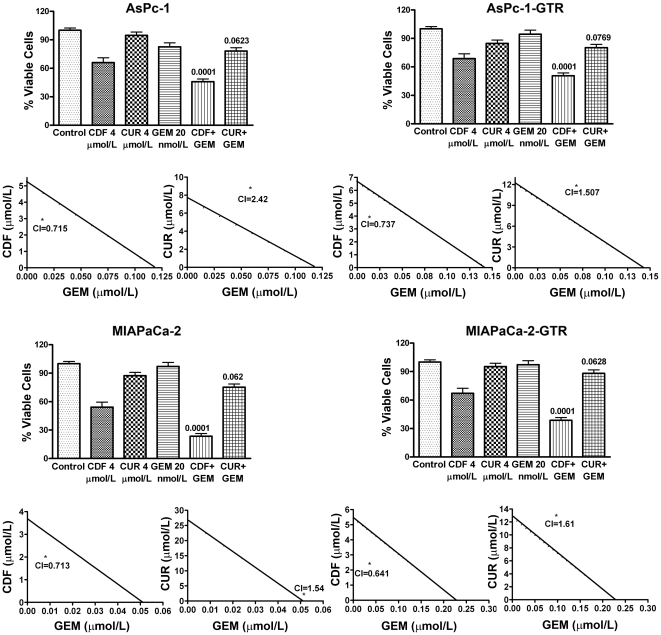
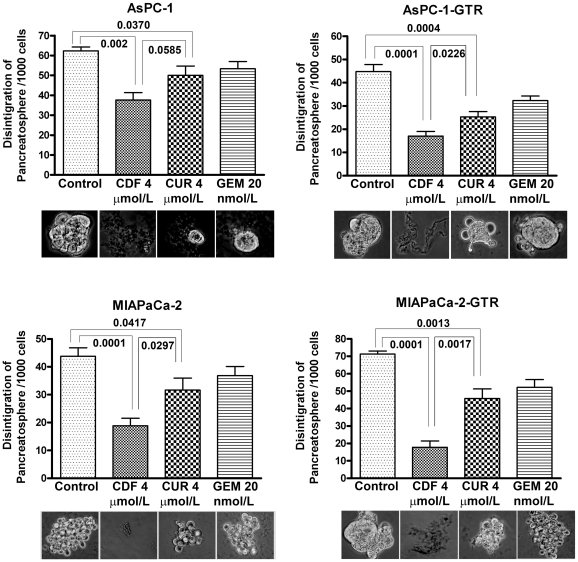
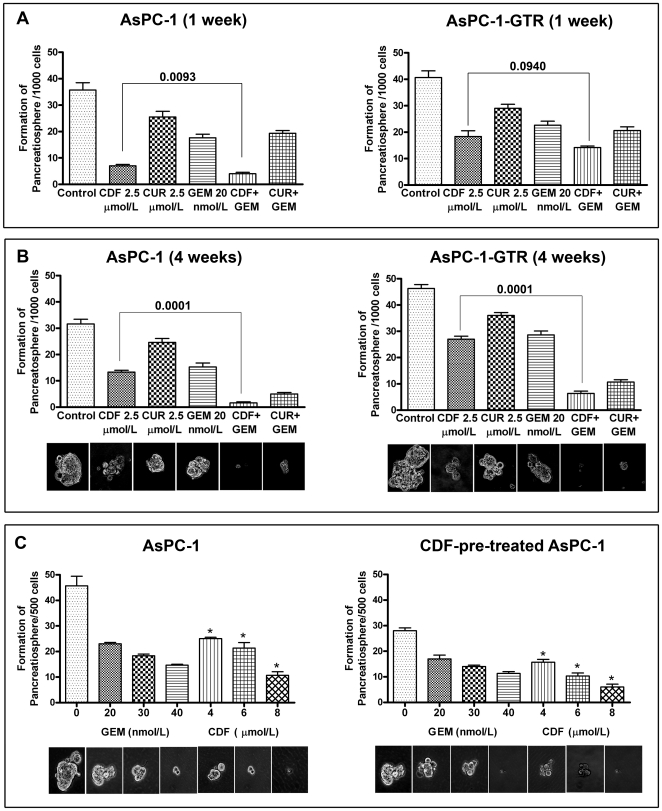
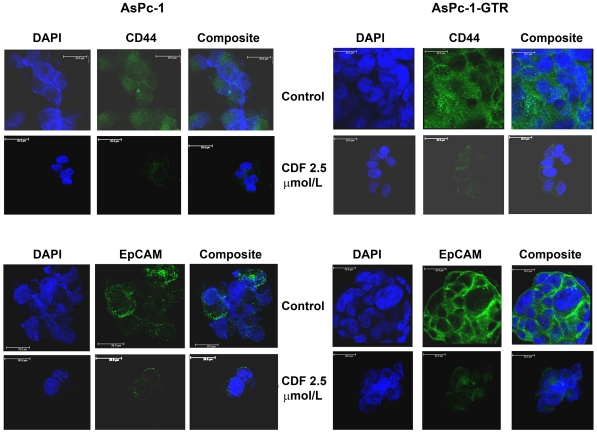
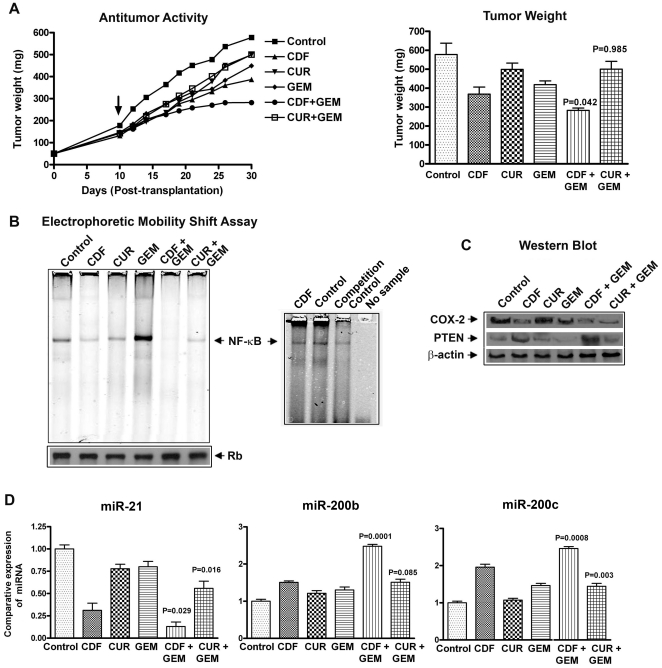
METHODOLOGY/PRINCIPAL FINDINGS: In the current study we showed, for the first time, that CDF could significantly inhibit the sphere-forming ability (pancreatospheres) of PC cells consistent with increased disintegration of pancreatospheres, which was associated with attenuation of CSC markers (CD44 and EpCAM), especially in gemcitabine-resistant (MIAPaCa-2) PC cells containing high proportion of CSCs consistent with increased miR-21 and decreased miR-200. In a xenograft mouse model of human PC, CDF treatment significantly inhibited tumor growth, which was associated with decreased NF-κB DNA binding activity, COX-2, and miR-21 expression, and increased PTEN and miR-200 expression in tumor remnants.
CONCLUSIONS/SIGNIFICANCE: These results strongly suggest that the anti-tumor activity of CDF is associated with inhibition of CSC function via down-regulation of CSC-associated signaling pathways. Therefore, CDF could be useful for the prevention of tumor recurrence and/or treatment of PC with better treatment outcome in the future.
肿瘤组织中存在癌症干细胞(CSC)或类癌干细胞,被认为是肿瘤复发的原因,因为它们具有内在和外在的耐药特性。因此,靶向杀伤 CSC 将是一种防止肿瘤复发和/或克服耐药性进行治疗的新策略。我们开发了一种新型合成化合物 CDF,它在胰腺等动物组织中具有更高的生物利用度,并且还通过失活 NF-κB、COX-2 和 VEGF 诱导胰腺癌细胞的细胞生长抑制和凋亡。
方法/主要发现:在目前的研究中,我们首次表明,CDF 可以显著抑制胰腺癌细胞的球体形成能力(胰腺球体),这与胰腺球体的解体增加一致,这与 CSC 标志物(CD44 和 EpCAM)的衰减有关,特别是在含有高比例 CSC 的吉西他滨耐药(MIAPaCa-2)胰腺癌细胞中,miR-21 增加,miR-200 减少。在人胰腺癌细胞的异种移植小鼠模型中,CDF 治疗显著抑制肿瘤生长,这与 NF-κB DNA 结合活性、COX-2 和 miR-21 表达降低以及肿瘤残余物中 PTEN 和 miR-200 表达增加有关。
结论/意义:这些结果强烈表明,CDF 的抗肿瘤活性与通过下调 CSC 相关信号通路抑制 CSC 功能有关。因此,CDF 可用于预防肿瘤复发和/或治疗胰腺肿瘤,未来可能会有更好的治疗效果。