Saha Kalyani, Sarkar Deotima, Khan Uzma, Karmakar Bipul Chandra, Paul Sangita, Mukhopadhyay Asish K, Dutta Shanta, Bhattacharya Sushmita
Department of Biochemistry, National Institute of Cholera and Enteric Diseases, Indian Council of Medical Research (ICMR-NICED), P-33, CIT Rd, Subhas Sarobar Park, Phool Bagan, Beleghata, Kolkata 700010, India.
Department of Microbiology, National Institute of Cholera and Enteric Diseases (ICMR-NICED), Indian Council of Medical Research, P-33, CIT Rd, Subhas Sarobar Park, Phool Bagan, Beleghata, Kolkata 700010, India.
Pathogens. 2022 Jun 1;11(6):641. doi: 10.3390/pathogens11060641.
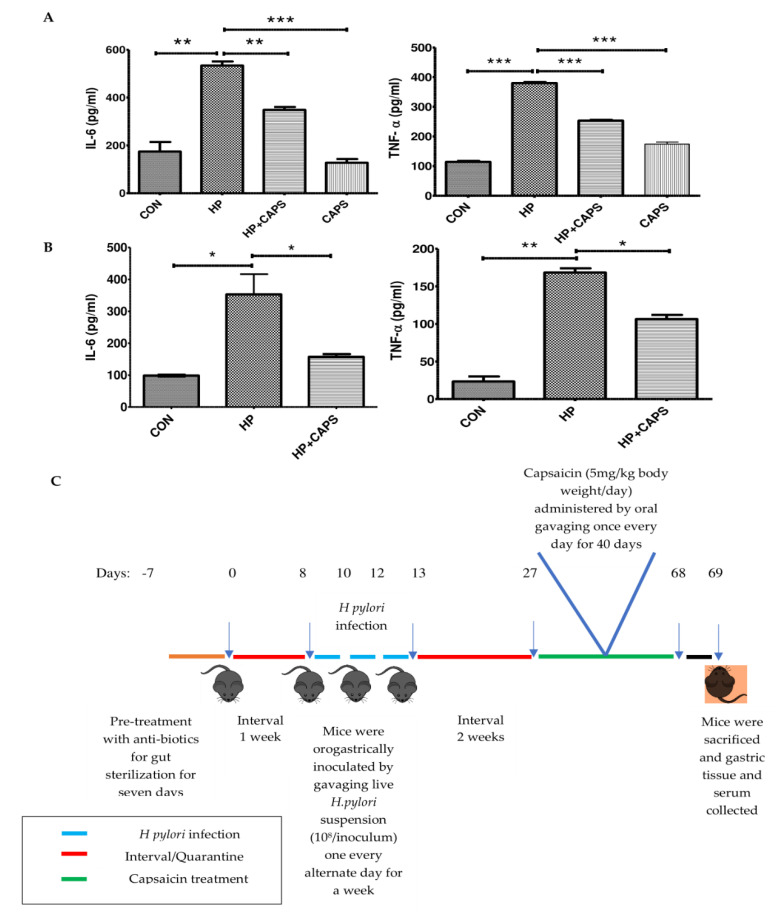
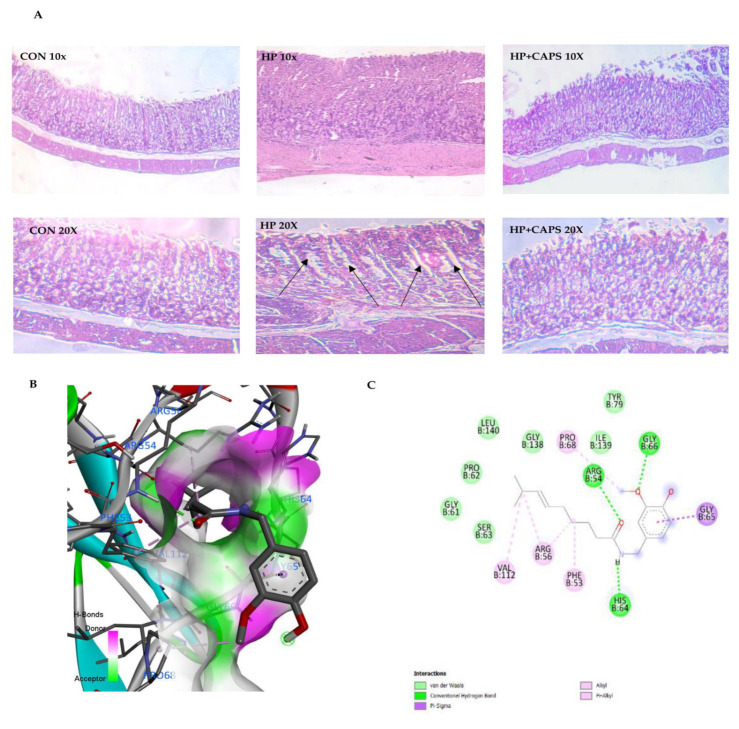
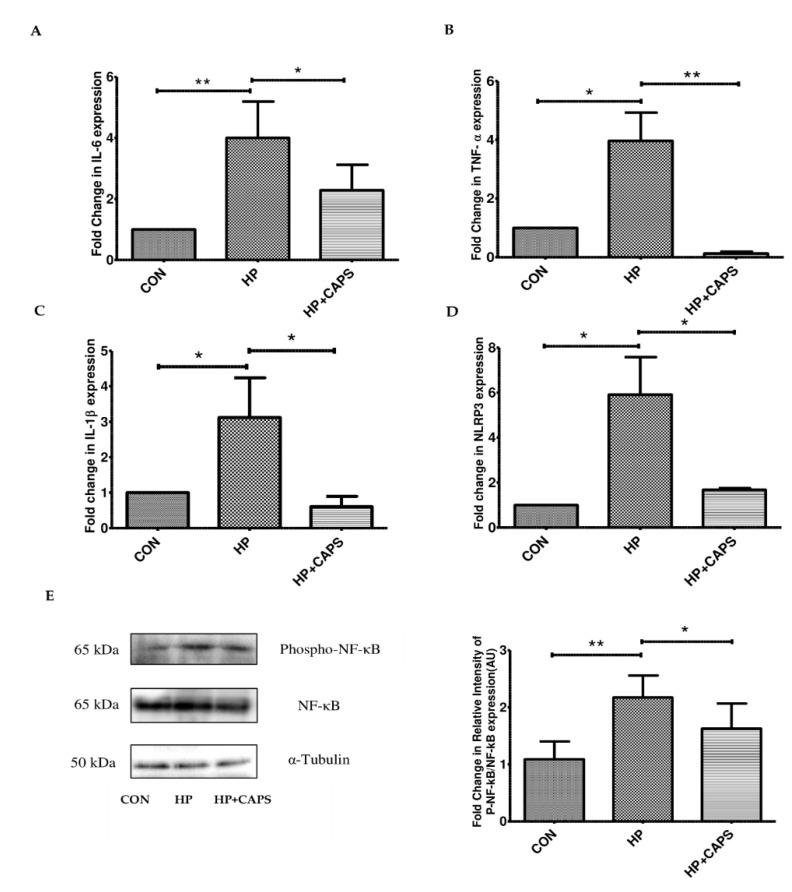
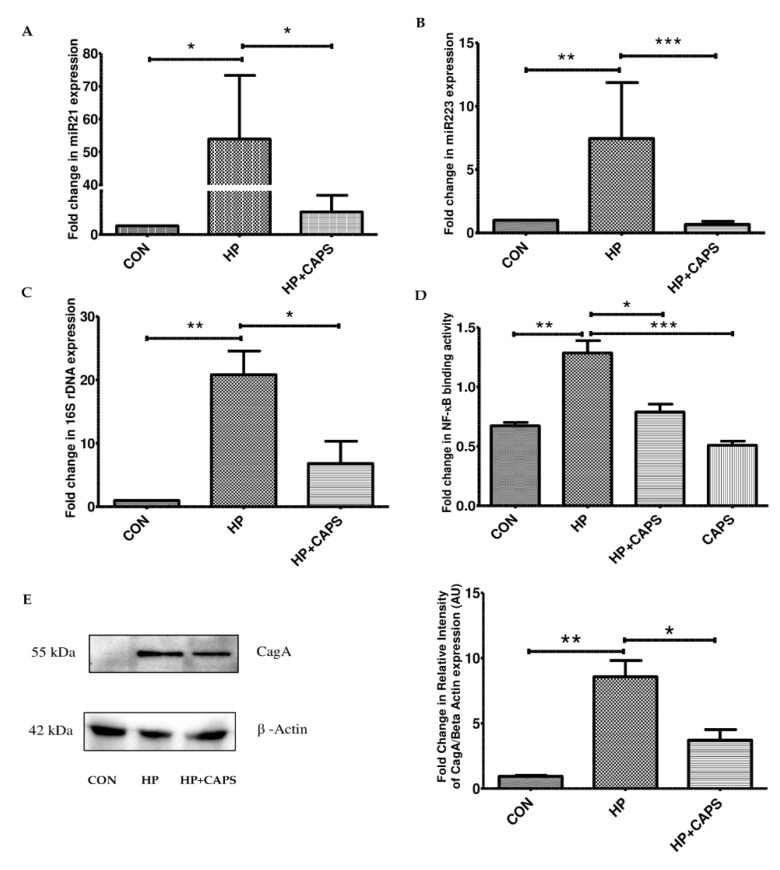
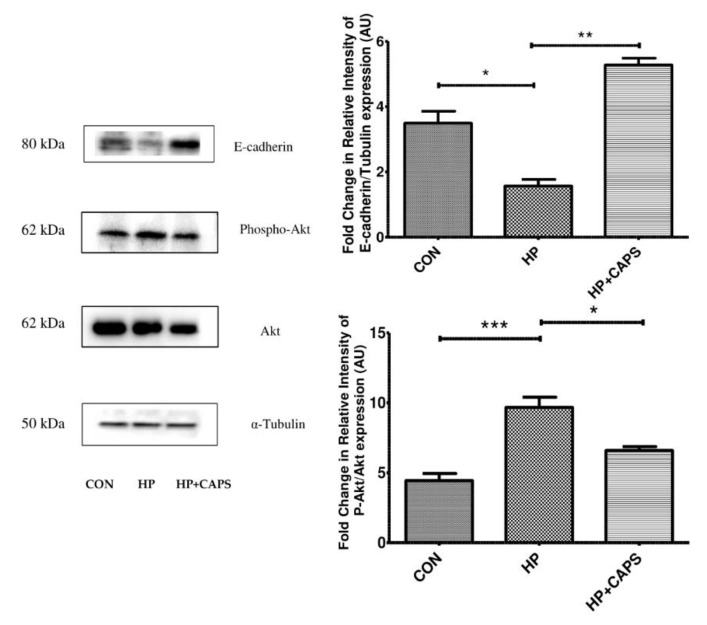
infection is considered as one of the strongest risk factors for gastric disorders. Infection triggers several host pathways to elicit inflammation, which further proceeds towards gastric complications. The NF-kB pathway plays a central role in the upregulation of the pro-inflammatory cytokines during infection. It also regulates the transcriptional network of several inflammatory cytokine genes. Hence, targeting NF-kB could be an important strategy to reduce pathogenesis. Moreover, treatment of needs attention as current therapeutics lack efficacy due to antibiotic resistance, highlighting the need for alternative therapeutic approaches. In this study, we investigated the effects of capsaicin, a known NF-kB inhibitor in reducing inflammation and gastric complications during infection. We observed that capsaicin reduced NF-kB activation and upregulation of cytokine genes in an in vivo mice model. Moreover, it affected NF-kB-miRNA interplay to repress inflammation and gastric damages. Capsaicin reduced the expression level of mir21 and mir223 along with the pro-inflammatory cytokines. The repression of miRNA further affected downstream targets such as e-cadherin and Akt. Our data represent the first evidence that treatment with capsaicin inhibits inflammation and induces antimicrobial activity during infection. This alternative approach might open a new avenue in treating infection, thus reducing gastric problems.
感染被认为是胃部疾病最强的风险因素之一。感染引发宿主的多种途径引发炎症,进而发展为胃部并发症。NF-κB通路在感染期间促炎细胞因子的上调中起核心作用。它还调节多种炎性细胞因子基因的转录网络。因此,靶向NF-κB可能是减少发病机制的重要策略。此外,由于目前的治疗方法因抗生素耐药性而缺乏疗效,治疗需要关注,这凸显了替代治疗方法的必要性。在本研究中,我们研究了辣椒素(一种已知的NF-κB抑制剂)在减少幽门螺杆菌感染期间的炎症和胃部并发症方面的作用。我们观察到辣椒素在体内小鼠模型中降低了NF-κB的激活和细胞因子基因的上调。此外,它影响NF-κB与微小RNA的相互作用以抑制炎症和胃损伤。辣椒素降低了mir21和mir223以及促炎细胞因子的表达水平。微小RNA的抑制进一步影响了下游靶点,如E-钙黏蛋白和Akt。我们的数据首次证明,辣椒素治疗在幽门螺杆菌感染期间可抑制炎症并诱导抗菌活性。这种替代方法可能为治疗幽门螺杆菌感染开辟一条新途径,从而减少胃部问题。