Division of Infectious Disease, Department of Medicine, Vanderbilt University School of Medicine, Nashville, Tennessee, United States of America.
PLoS One. 2011 Mar 11;6(3):e17787. doi: 10.1371/journal.pone.0017787.
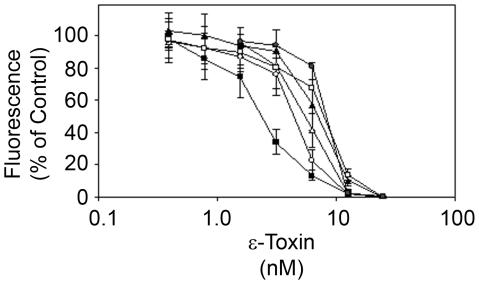
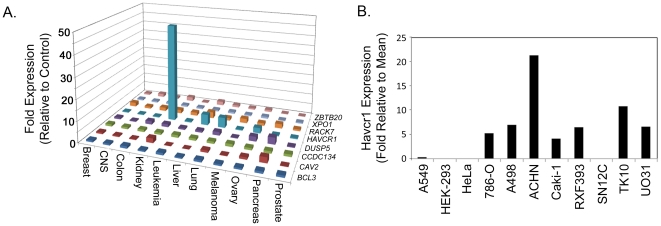
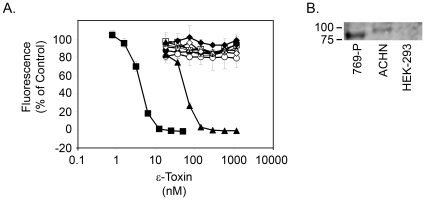
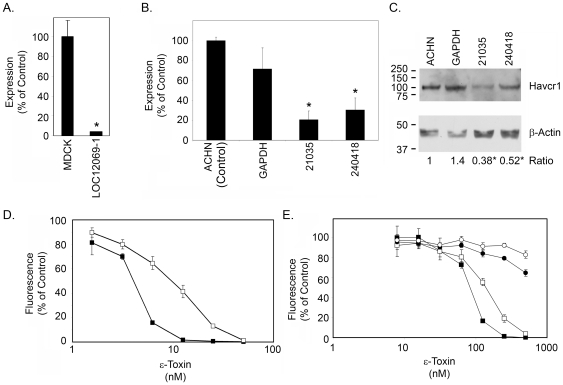
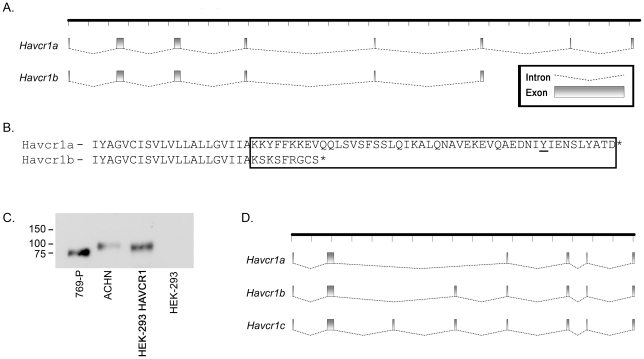
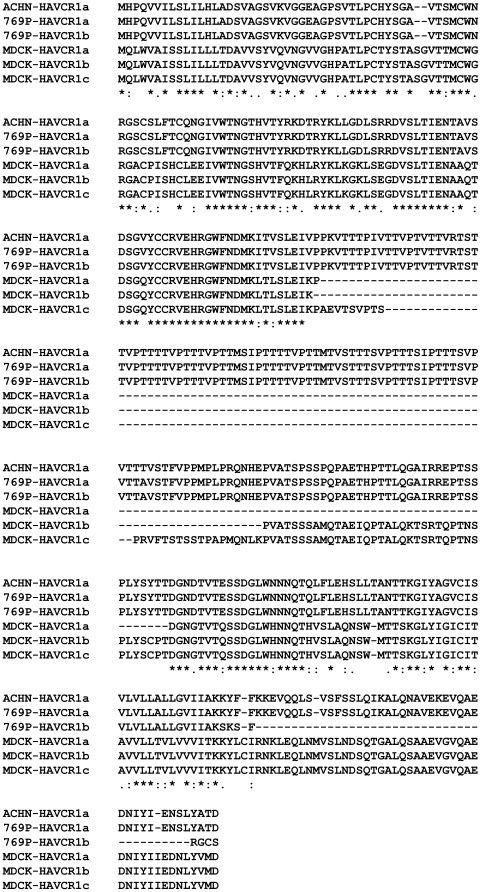
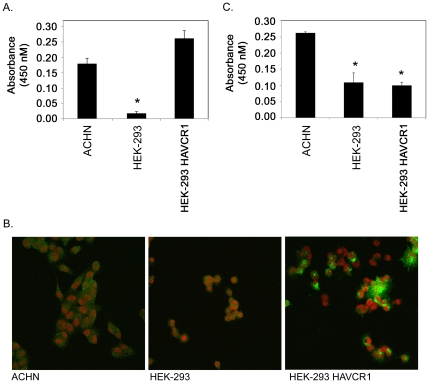
The Clostridium perfringens ε-toxin is an extremely potent toxin associated with lethal toxemias in domesticated ruminants and may be toxic to humans. Intoxication results in fluid accumulation in various tissues, most notably in the brain and kidneys. Previous studies suggest that the toxin is a pore-forming toxin, leading to dysregulated ion homeostasis and ultimately cell death. However, mammalian host factors that likely contribute to ε-toxin-induced cytotoxicity are poorly understood. A library of insertional mutant Madin Darby canine kidney (MDCK) cells, which are highly susceptible to the lethal affects of ε-toxin, was used to select clones of cells resistant to ε-toxin-induced cytotoxicity. The genes mutated in 9 surviving resistant cell clones were identified. We focused additional experiments on one of the identified genes as a means of validating the experimental approach. Gene expression microarray analysis revealed that one of the identified genes, hepatitis A virus cellular receptor 1 (HAVCR1, KIM-1, TIM1), is more abundantly expressed in human kidney cell lines than it is expressed in human cells known to be resistant to ε-toxin. One human kidney cell line, ACHN, was found to be sensitive to the toxin and expresses a larger isoform of the HAVCR1 protein than the HAVCR1 protein expressed by other, toxin-resistant human kidney cell lines. RNA interference studies in MDCK and in ACHN cells confirmed that HAVCR1 contributes to ε-toxin-induced cytotoxicity. Additionally, ε-toxin was shown to bind to HAVCR1 in vitro. The results of this study indicate that HAVCR1 and the other genes identified through the use of gene-trap mutagenesis and RNA interference strategies represent important targets for investigation of the process by which ε-toxin induces cell death and new targets for potential therapeutic intervention.
产气荚膜梭菌 ε 毒素是一种与家养反刍动物致死性毒血症密切相关的极其有效的毒素,对人类可能有毒性。中毒会导致各种组织,尤其是大脑和肾脏中的液体积聚。先前的研究表明,该毒素是一种形成孔的毒素,导致离子内环境稳态失调,最终导致细胞死亡。然而,哺乳动物宿主中可能有助于 ε 毒素诱导细胞毒性的因素知之甚少。插入突变 Madin-Darby 犬肾 (MDCK) 细胞文库,这些细胞对 ε 毒素的致死作用高度敏感,用于选择对 ε 毒素诱导的细胞毒性有抗性的细胞克隆。鉴定出在 9 个存活的抗性细胞克隆中发生突变的基因。我们将更多的实验集中在鉴定出的一个基因上,作为验证实验方法的一种手段。基因表达微阵列分析表明,鉴定出的一个基因,即甲型肝炎病毒细胞受体 1 (HAVCR1,KIM-1,TIM1),在人肾细胞系中的表达比在已知对 ε 毒素具有抗性的人细胞中的表达更为丰富。一种人肾细胞系 ACHN 被发现对毒素敏感,并表达比其他对毒素具有抗性的人肾细胞系表达的 HAVCR1 蛋白更大的同工型。在 MDCK 和 ACHN 细胞中的 RNA 干扰研究证实 HAVCR1 有助于 ε 毒素诱导的细胞毒性。此外,在体外实验中证明 ε 毒素与 HAVCR1 结合。这项研究的结果表明,HAVCR1 和通过基因陷阱诱变和 RNA 干扰策略鉴定的其他基因是研究 ε 毒素诱导细胞死亡的过程以及为潜在治疗干预寻找新靶点的重要目标。