MRC Laboratory of Molecular Biology, Hills Road, Cambridge CB2 0QH, UK.
Cell. 2011 Apr 1;145(1):79-91. doi: 10.1016/j.cell.2011.02.047.
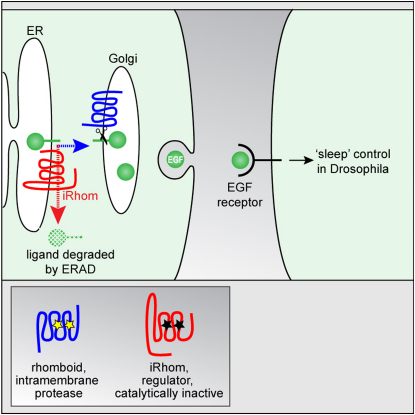
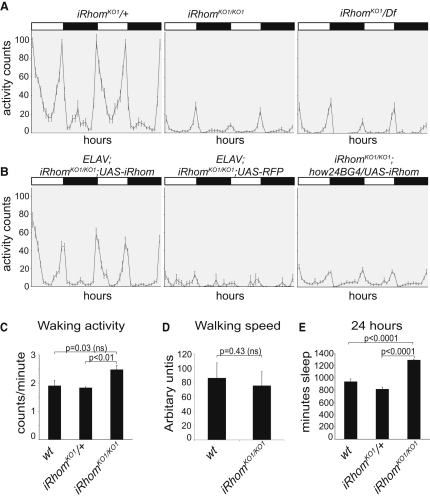
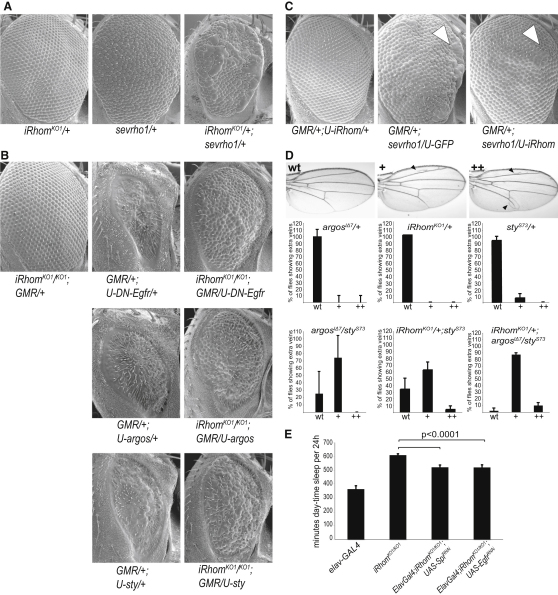
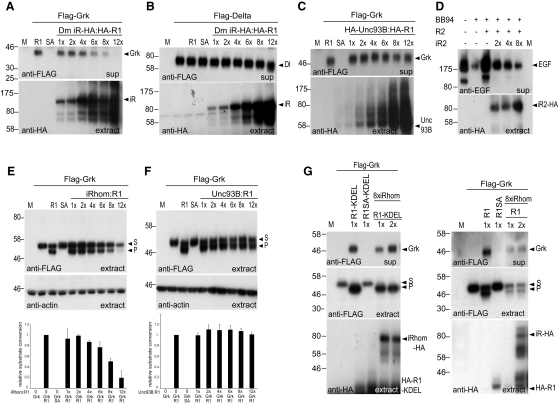
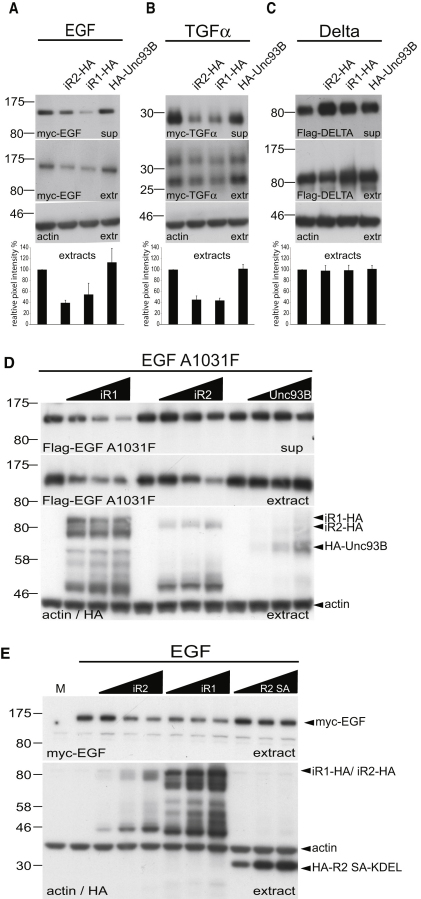
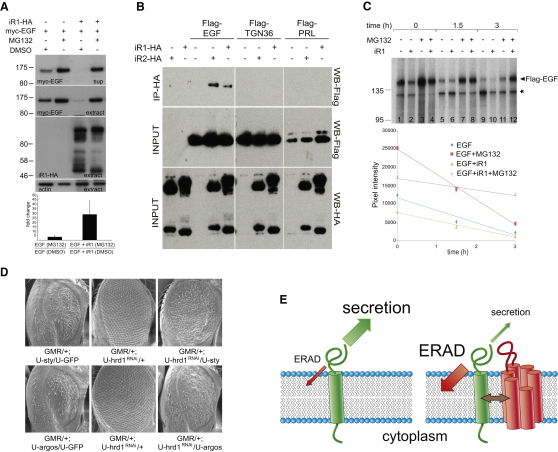
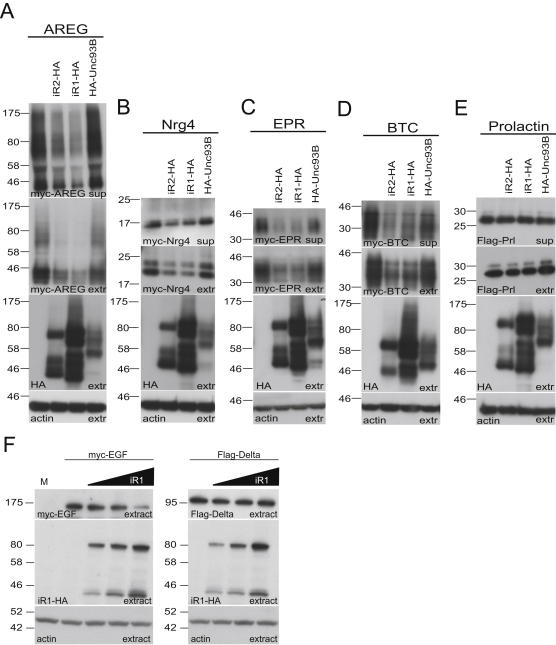
Intramembrane proteolysis governs many cellular control processes, but little is known about how intramembrane proteases are regulated. iRhoms are a conserved subfamily of proteins related to rhomboid intramembrane serine proteases that lack key catalytic residues. We have used a combination of genetics and cell biology to determine that these "pseudoproteases" inhibit rhomboid-dependent signaling by the epidermal growth factor receptor pathway in Drosophila, thereby regulating sleep. iRhoms prevent the cleavage of potential rhomboid substrates by promoting their destabilization by endoplasmic reticulum (ER)-associated degradation; this mechanism has been conserved in mammalian cells. The exploitation of the intrinsic quality control machinery of the ER represents a new mode of regulation of intercellular signaling. Inactive cognates of enzymes are common, but their functions are mostly unclear; our data indicate that pseudoenzymes can readily evolve into regulatory proteins, suggesting that this may be a significant evolutionary mechanism.
跨膜蛋白水解作用调控着许多细胞控制过程,但人们对跨膜蛋白酶如何被调控知之甚少。iRhoms 是一类与 Rhomboid 跨膜丝氨酸蛋白酶相关的保守蛋白亚家族,它们缺乏关键的催化残基。我们综合运用遗传学和细胞生物学的方法来确定,这些“假蛋白酶”通过在果蝇中抑制表皮生长因子受体途径的 Rhomboid 依赖性信号传导,从而调控睡眠。iRhoms 通过促进内质网(ER)相关降解来稳定潜在的 Rhomboid 底物,从而阻止 Rhomboid 的切割;这种机制在哺乳动物细胞中得到了保守。对 ER 固有质量控制机制的利用代表了细胞间信号转导的一种新调控模式。酶的无活性同源物很常见,但它们的功能大多不清楚;我们的数据表明,假酶可以很容易地进化成调节蛋白,这表明这可能是一个重要的进化机制。