State Key Laboratory of Biomembrane and Membrane Biotechnology, Institute of Zoology, Chinese Academy of Sciences, Beijing 100101, PR China.
Nucleic Acids Res. 2011 Aug;39(14):6229-37. doi: 10.1093/nar/gkr164. Epub 2011 Mar 25.
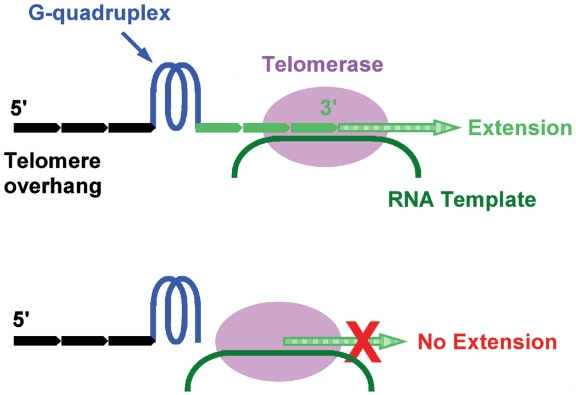
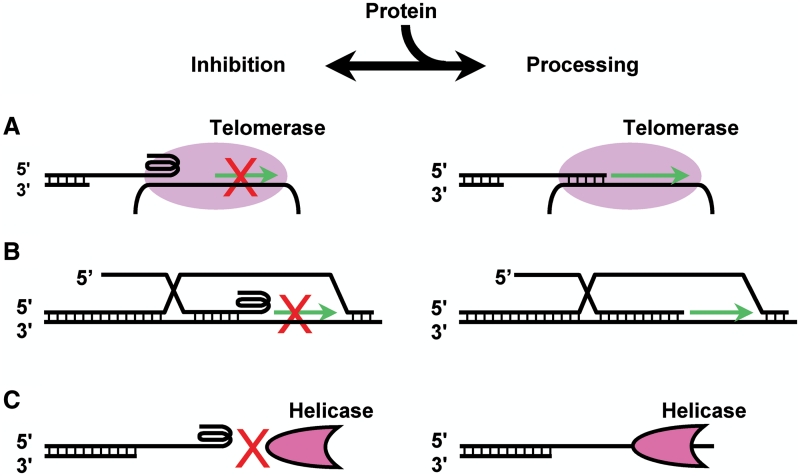
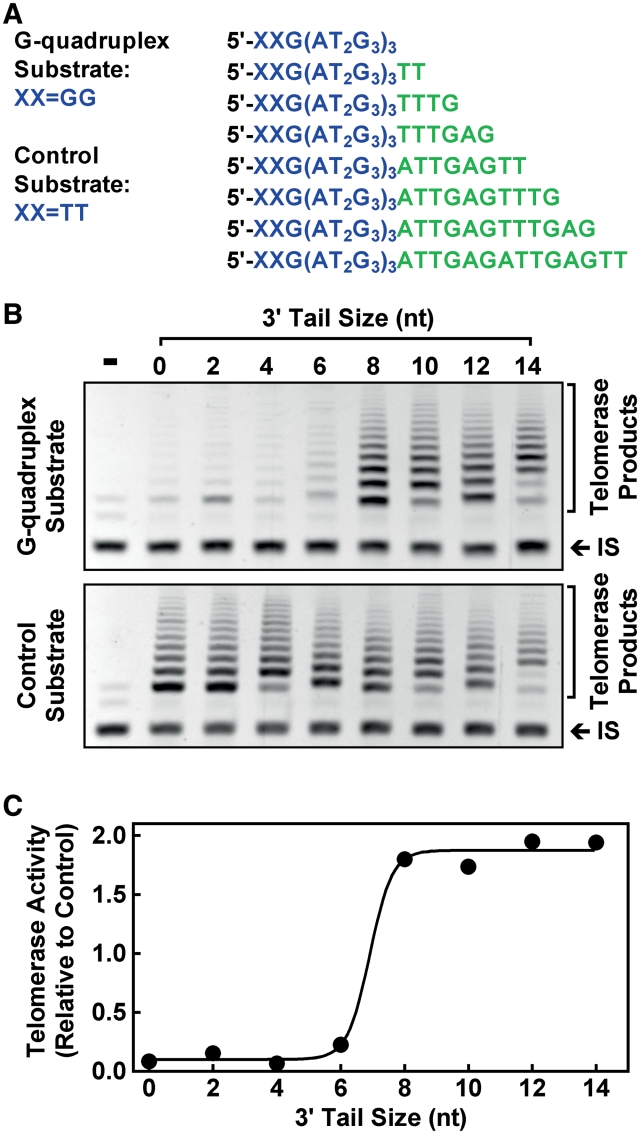
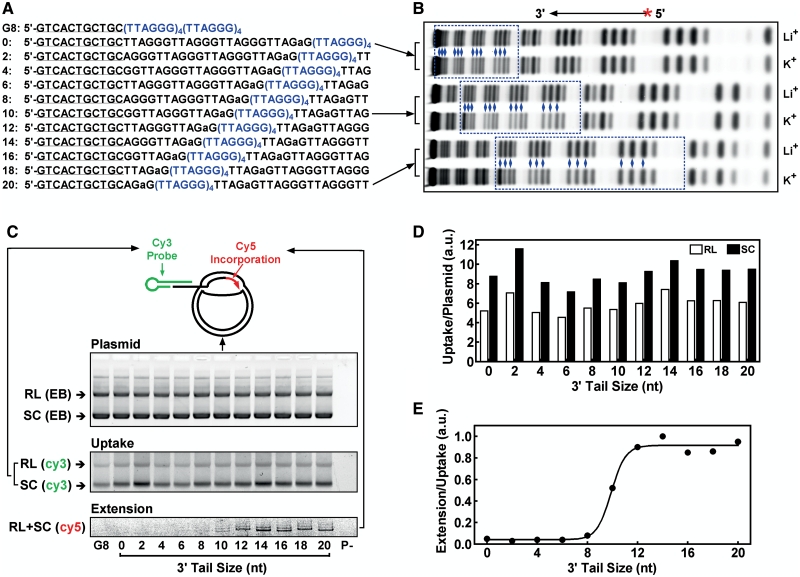
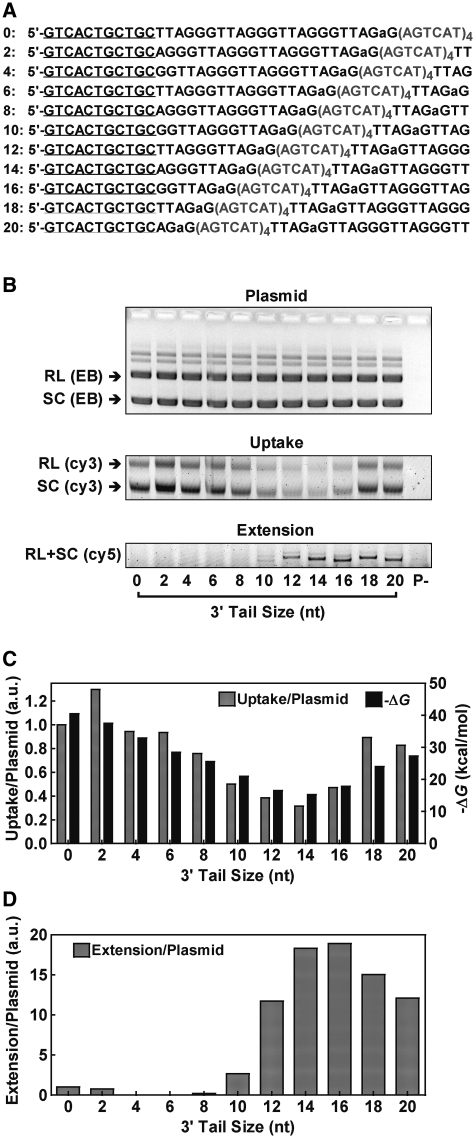
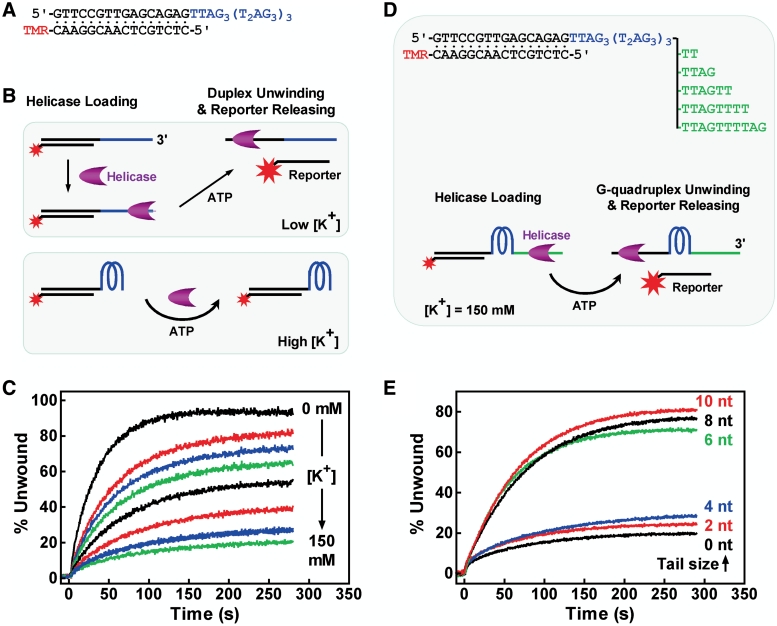
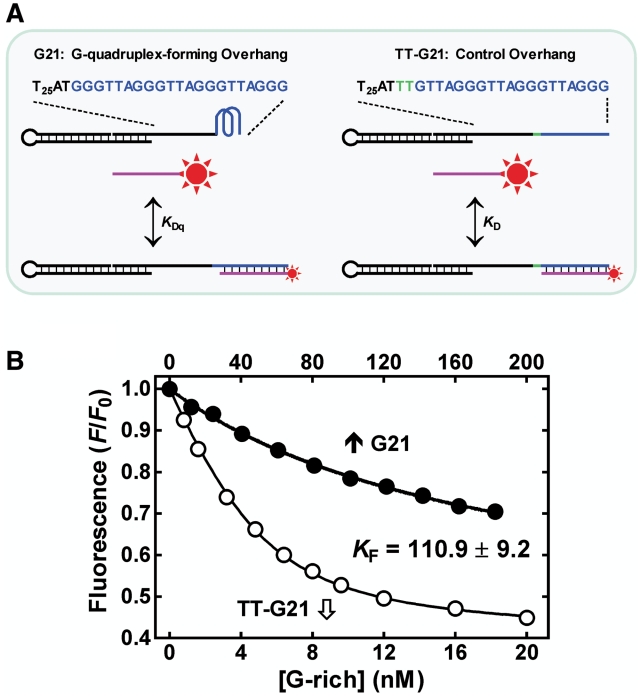
Telomere G-quadruplex is emerging as a promising anti-cancer target due to its inhibition to telomerase, an enzyme expressed in more than 85% tumors. Telomerase-mediated telomere extension and some other reactions require a free 3' telomere end in single-stranded form. G-quadruplex formation near the 3' end of telomere DNA can leave a 3' single-stranded tail of various sizes. How these terminal structures affect reactions at telomere end is not clear. In this work, we studied the 3' tail size-dependence of telomere extension by either telomerase or the alternative lengthening of telomere (ALT) mechanism as well as telomere G-quadruplex unwinding. We show that these reactions require a minimal tail of 8, 12 and 6 nt, respectively. Since we have shown that G-quadruplex tends to form at the farthest 3' distal end of telomere DNA leaving a tail of no more than 5 nt, these results imply that G-quadruplex formation may play a role in regulating reactions at the telomere ends and, as a result, serve as effective drug target for intervening telomere function.
端粒 G-四链体作为一种有前途的抗癌靶点而备受关注,因为它可以抑制端粒酶,而端粒酶在超过 85%的肿瘤中表达。端粒酶介导的端粒延伸和其他一些反应需要游离的 3'端以单链形式存在。端粒 DNA 的 3'端附近的 G-四链体形成可能会留下各种大小的 3'单链尾巴。这些末端结构如何影响端粒末端的反应尚不清楚。在这项工作中,我们研究了端粒酶或端粒的替代延长(ALT)机制介导的端粒延伸以及端粒 G-四链体解旋对 3'端尾巴大小的依赖性。我们表明,这些反应分别需要最小长度为 8、12 和 6 个核苷酸的 3'端尾巴。由于我们已经表明,G-四链体倾向于在端粒 DNA 的最远端 3'端形成,留下不超过 5 个核苷酸的尾巴,这些结果表明 G-四链体的形成可能在调节端粒末端的反应中发挥作用,因此可作为干预端粒功能的有效药物靶点。