Department of Neurology, University of California, San Francisco, San Francisco Veterans Affairs Medical Center, USA.
Ann Neurol. 2011 Mar;69(3):509-20. doi: 10.1002/ana.22162. Epub 2010 Nov 23.
Dopaminergic neuronal death in Parkinson's disease (PD) is accompanied by oxidative stress and preceded by glutathione depletion. The development of disease-modifying therapies for PD has been hindered by a paucity of animal models that mimic these features and demonstrate an age-related progression. The EAAC1(-/-) mouse may be useful in this regard, because EAAC1(-/-) mouse neurons have impaired neuronal cysteine uptake, resulting in reduced neuronal glutathione content and chronic oxidative stress. Here we aimed to (1) characterize the age-related changes in nigral dopaminergic neurons in the EAAC1(-/-) mouse, and (2) use the EAAC1(-/-) mouse to evaluate N-acetylcysteine, a membrane-permeable cysteine pro-drug, as a potential disease-modifying intervention for PD.
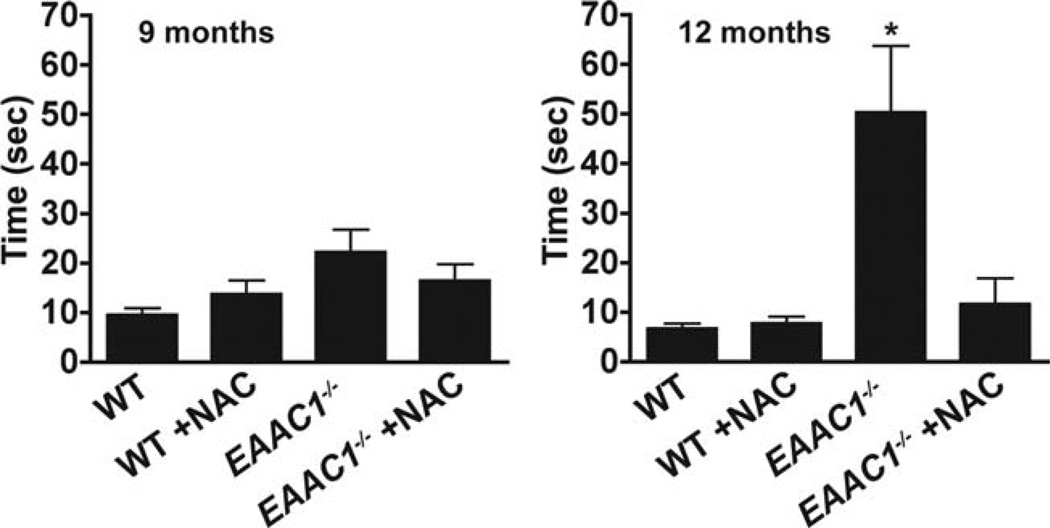
Wild-type mice, EAAC1(-/-) mice, and EAAC1(-/-) mice chronically treated with N-acetylcysteine were evaluated at serial time points for evidence of oxidative stress, dopaminergic cell death, and motor abnormalities.
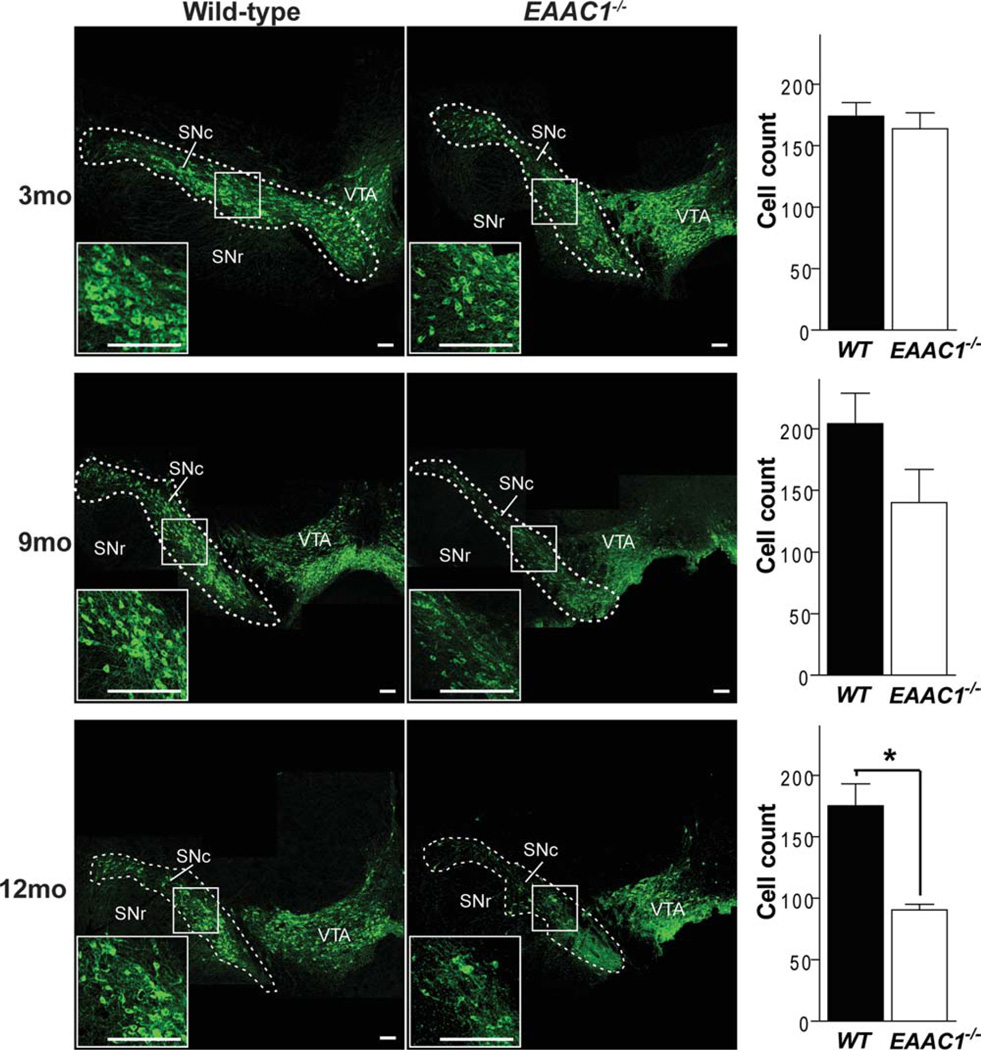
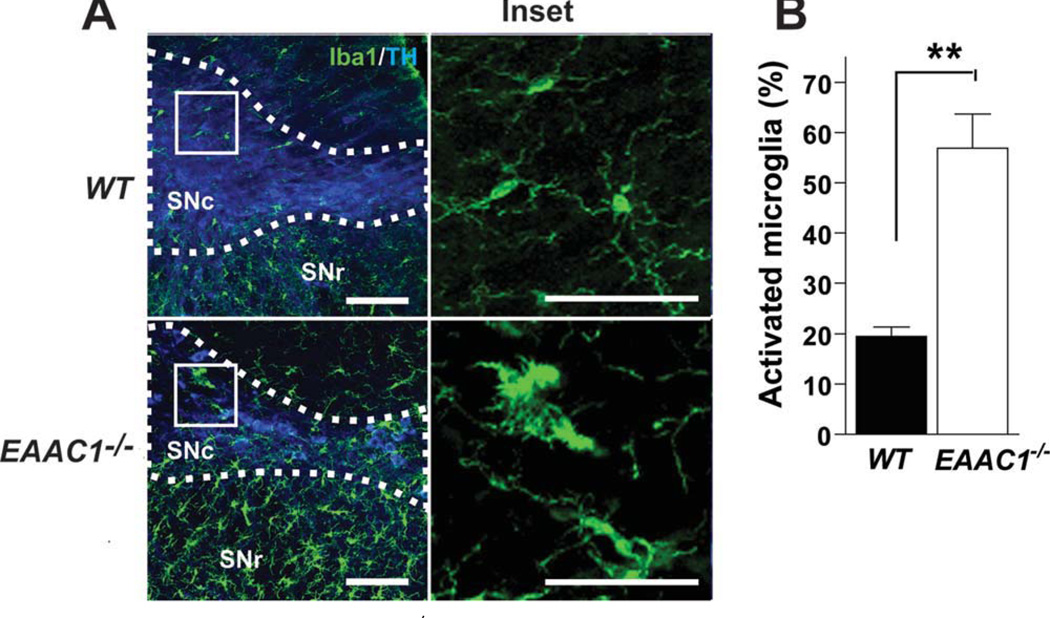
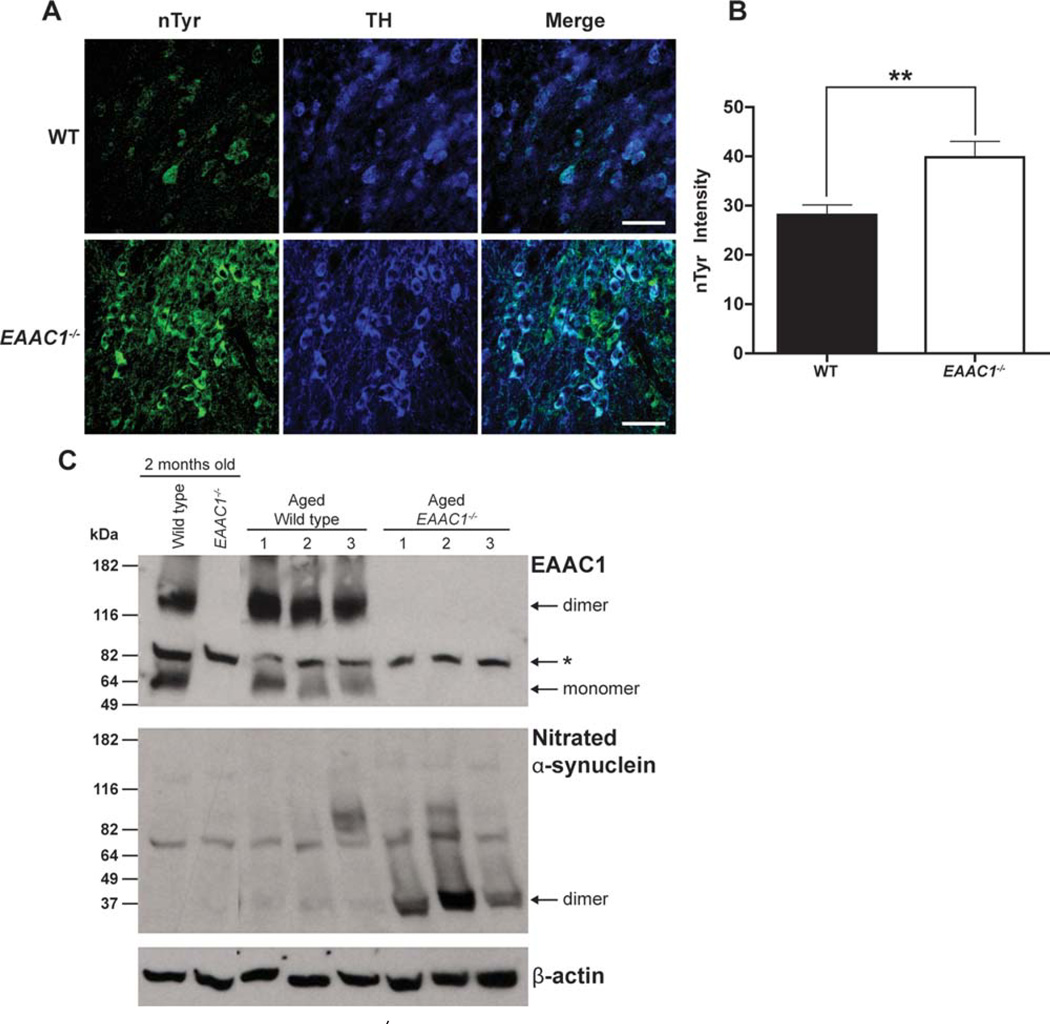
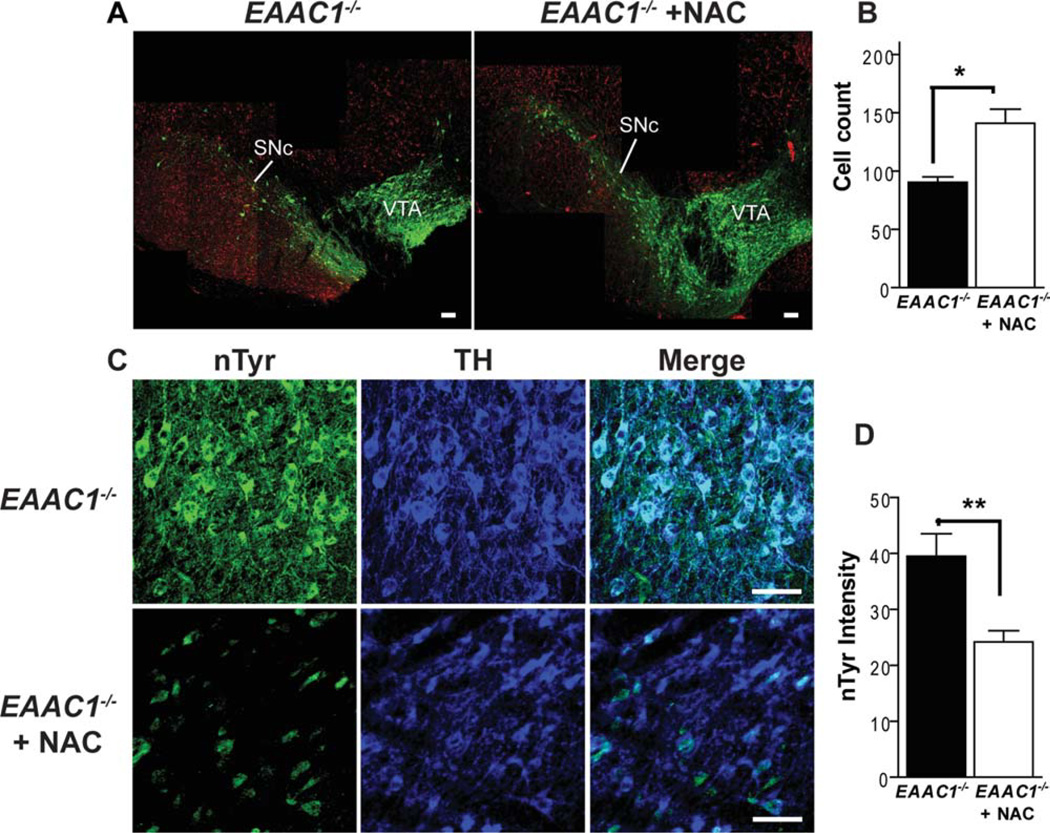
EAAC1(-/-) mice showed age-dependent loss of dopaminergic neurons in the substantia nigra pars compacta, with more than 40% of these neurons lost by age 12 months. This neuronal loss was accompanied by increased nitrotyrosine formation, nitrosylated α-synuclein, and microglial activation. These changes were substantially reduced in mice that received N-acetylcysteine.
These findings suggest that the EAAC1(-/-) mouse may be a useful model of the chronic neuronal oxidative stress that occurs in PD. The salutary effects of N-acetylcysteine in this mouse model provide an impetus for clinical evaluation of glutathione repletion in PD.
帕金森病 (PD) 中的多巴胺能神经元死亡伴随着氧化应激,并且在谷胱甘肽耗竭之前发生。由于缺乏模拟这些特征并表现出与年龄相关进展的动物模型,因此 PD 的疾病修饰疗法的发展受到了阻碍。EAAC1(-/-) 小鼠在这方面可能很有用,因为 EAAC1(-/-) 小鼠神经元的神经元半胱氨酸摄取受损,导致神经元谷胱甘肽含量降低和慢性氧化应激。在这里,我们旨在 (1) 描述 EAAC1(-/-) 小鼠黑质多巴胺能神经元的年龄相关变化,(2) 使用 EAAC1(-/-) 小鼠来评估 N-乙酰半胱氨酸,一种膜通透性半胱氨酸前药,作为 PD 的潜在疾病修饰干预措施。
在连续时间点评估野生型小鼠、EAAC1(-/-) 小鼠和慢性给予 N-乙酰半胱氨酸的 EAAC1(-/-) 小鼠,以评估氧化应激、多巴胺能细胞死亡和运动异常的证据。
EAAC1(-/-) 小鼠表现出黑质致密部多巴胺能神经元的年龄依赖性丧失,这些神经元中有超过 40%在 12 个月时丧失。这种神经元丧失伴随着硝基酪氨酸形成、硝化 α-突触核蛋白和小胶质细胞激活的增加。接受 N-乙酰半胱氨酸的小鼠这些变化明显减少。
这些发现表明,EAAC1(-/-) 小鼠可能是 PD 中发生的慢性神经元氧化应激的有用模型。N-乙酰半胱氨酸在这种小鼠模型中的有益作用为 PD 中谷胱甘肽补充的临床评估提供了动力。