Department of Tumor Biology, Institute for Cancer Research, The Norwegian Radium Hospital, Oslo University Hospital, Oslo, Norway.
BMC Med Genomics. 2011 Mar 31;4:28. doi: 10.1186/1755-8794-4-28.
The immune contribution to cancer progression is complex and difficult to characterize. For example in tumors, immune gene expression is detected from the combination of normal, tumor and immune cells in the tumor microenvironment. Profiling the immune component of tumors may facilitate the characterization of the poorly understood roles immunity plays in cancer progression. However, the current approaches to analyze the immune component of a tumor rely on incomplete identification of immune factors.
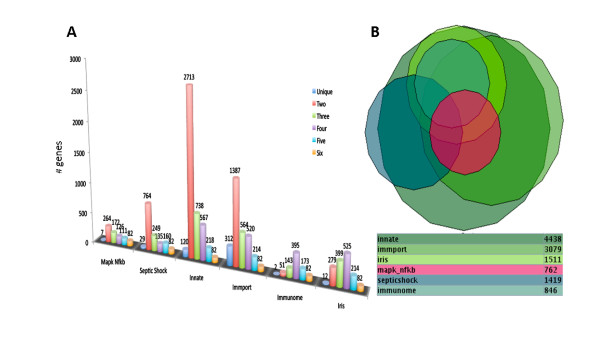
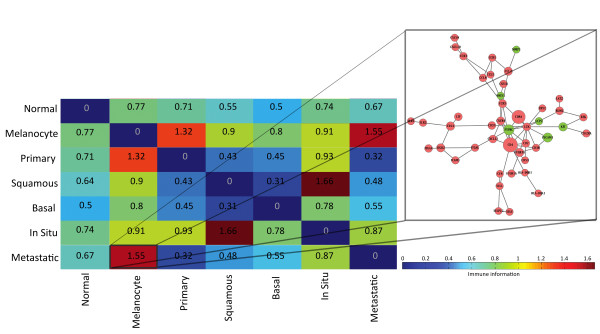
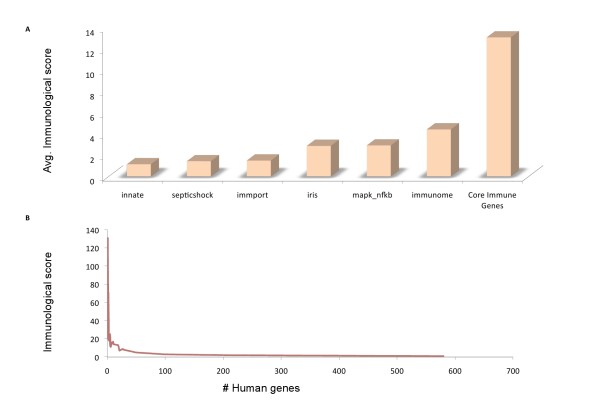
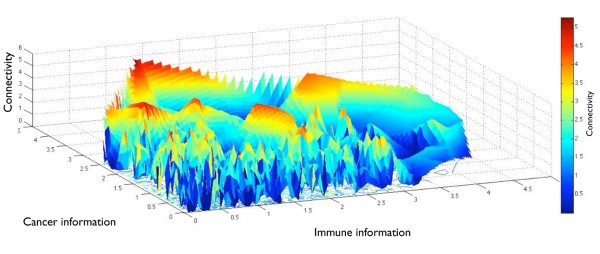
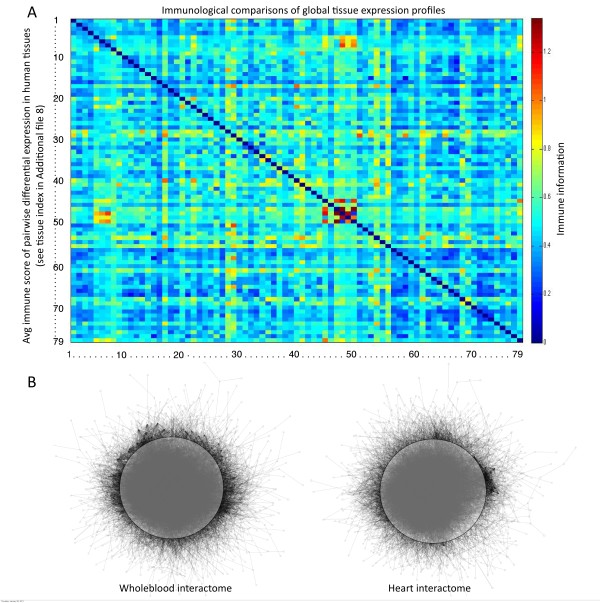
To facilitate a more comprehensive approach, we created a ranked immunological relevance score for all human genes, developed using a novel strategy that combines text mining and information theory. We used this score to assign an immunological grade to gene expression profiles, and thereby quantify the immunological component of tumors. This immunological relevance score was benchmarked against existing manually curated immune resources as well as high-throughput studies. To further characterize immunological relevance for genes, the relevance score was charted against both the human interactome and cancer information, forming an expanded interactome landscape of tumor immunity. We applied this approach to expression profiles in melanomas, thus identifying and grading their immunological components, followed by identification of their associated protein interactions.
The power of this strategy was demonstrated by the observation of early activation of the adaptive immune response and the diversity of the immune component during melanoma progression. Furthermore, the genome-wide immunological relevance score classified melanoma patient groups, whose immunological grade correlated with clinical features, such as immune phenotypes and survival.
The assignment of a ranked immunological relevance score to all human genes extends the content of existing immune gene resources and enriches our understanding of immune involvement in complex biological networks. The application of this approach to tumor immunity represents an automated systems strategy that quantifies the immunological component in complex disease. In so doing, it stratifies patients according to their immune profiles, which may lead to effective computational prognostic and clinical guides.
免疫对癌症进展的贡献是复杂的,难以描述。例如,在肿瘤中,免疫基因表达是从肿瘤微环境中正常、肿瘤和免疫细胞的组合中检测到的。对肿瘤的免疫成分进行分析可以促进对免疫在癌症进展中所扮演的作用的深入理解。然而,目前分析肿瘤免疫成分的方法依赖于对免疫因子的不完全识别。
为了实现更全面的方法,我们创建了一个针对所有人类基因的免疫相关性排序评分,该评分是使用一种新的策略开发的,该策略结合了文本挖掘和信息理论。我们使用这个评分来为基因表达谱分配免疫等级,从而量化肿瘤的免疫成分。这个免疫相关性评分与现有的人工编辑免疫资源以及高通量研究进行了基准测试。为了进一步描述基因的免疫相关性,我们将相关性评分与人类相互作用组和癌症信息进行了比较,形成了一个扩展的肿瘤免疫相互作用组图谱。我们将这种方法应用于黑色素瘤的表达谱,从而鉴定和分级它们的免疫成分,然后鉴定它们相关的蛋白质相互作用。
这种策略的有效性通过观察到适应性免疫反应的早期激活和黑色素瘤进展过程中免疫成分的多样性得到了证明。此外,全基因组免疫相关性评分将黑色素瘤患者分组,其免疫等级与免疫表型和生存等临床特征相关。
为所有人类基因分配一个免疫相关性排序评分扩展了现有免疫基因资源的内容,并丰富了我们对免疫在复杂生物网络中所起作用的理解。将这种方法应用于肿瘤免疫代表了一种自动化的系统策略,它量化了复杂疾病中的免疫成分。通过这种方式,它根据患者的免疫谱对其进行分层,这可能导致有效的计算预后和临床指南。