Chen Yunliang, Leask Andrew, Abraham David J, Kennedy Laura, Shi-Wen Xu, Denton Christopher P, Black Carol M, Verjee Liaquat S, Eastwood Mark
School of Life Sciences, University of Westminster, London, UK.
Canadian Institute of Health Research Group in Skeletal Development and Remodelling, Division of Oral Biology and Department of Physiology and Pharmacology, Schulich School of Dentistry, University of Western Ontario, London, Ontario, Canada.
Fibrogenesis Tissue Repair. 2011 Mar 31;4(1):9. doi: 10.1186/1755-1536-4-9.
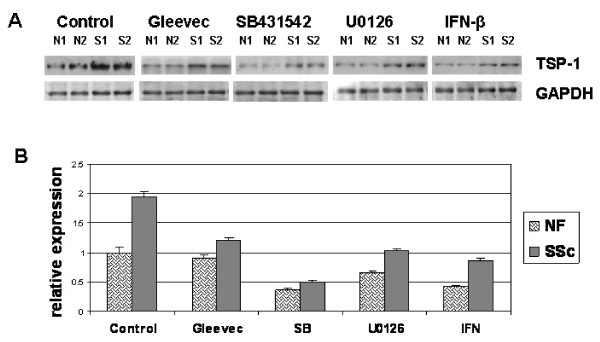
The mechanism underlying the ability of fibroblasts to contract a collagen gel matrix is largely unknown. Fibroblasts from scarred (lesional) areas of patients with the fibrotic disease scleroderma show enhanced ability to contract collagen relative to healthy fibroblasts. Thrombospondin 1 (TSP1), an activator of latent transforming growth factor (TGF)β, is overexpressed by scleroderma fibroblasts. In this report we investigate whether activation of latent TGFβ by TSP1 plays a key role in matrix contraction by normal and scleroderma fibroblasts.
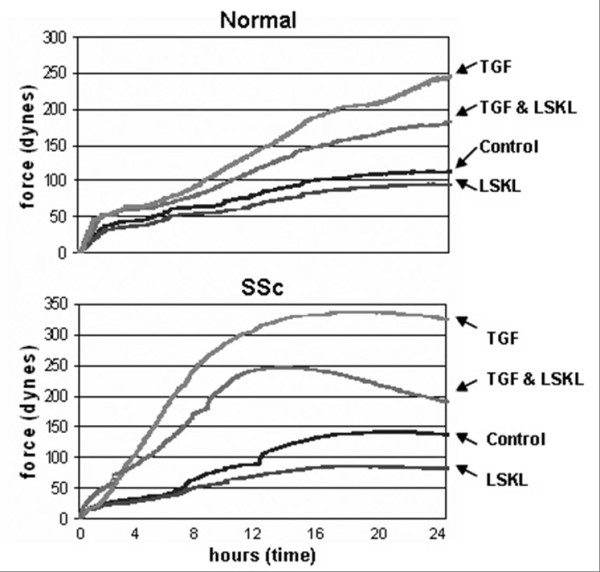
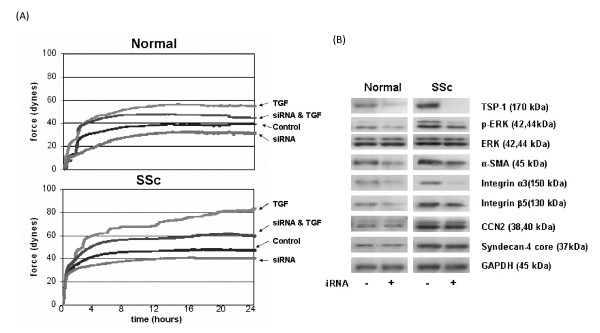
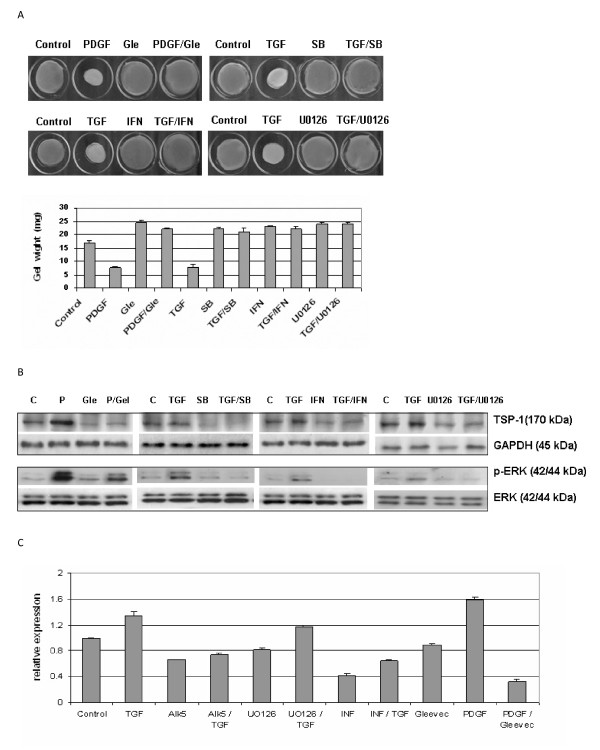
We use the fibroblast populated collagen lattices (FPCL) model of matrix contraction to show that interfering with TSP1/TGFβ binding and knockdown of TSP1 expression suppressed the contractile ability of normal and scleroderma fibroblasts basally and in response to TGFβ. Previously, we have shown that ras/mitogen-activated protein kinase kinase (MEK)/extracellular signal-regulated kinase (ERK) mediates matrix contraction basally and in response to TGFβ.
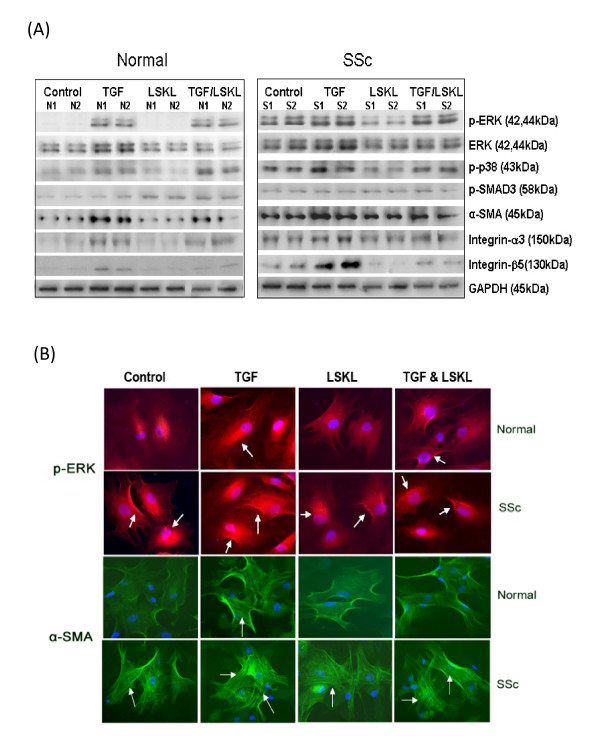
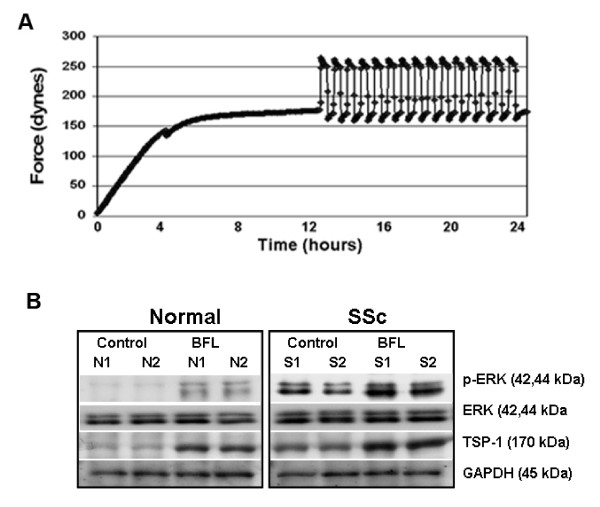
During mechanical stimulation in the FPCL system, using a multistation tensioning-culture force monitor (mst-CFM), TSP1 expression and p-ERK activation in fibroblasts are enhanced. Inhibiting TSP1 activity reduced the elevated activation of MEK/ERK and expression of key fibrogenic proteins. TSP1 also blocked platelet-derived growth factor (PDGF)-induced contractile activity and MEK/ERK activation.
TSP1 is a key mediator of matrix contraction of normal and systemic sclerosis fibroblasts, via MEK/ERK.
成纤维细胞收缩胶原凝胶基质的潜在机制尚不清楚。与健康成纤维细胞相比,纤维化疾病硬皮病患者瘢痕(病变)区域的成纤维细胞收缩胶原的能力增强。血小板反应蛋白1(TSP1)是潜伏转化生长因子(TGF)β的激活剂,在硬皮病成纤维细胞中过度表达。在本报告中,我们研究TSP1对潜伏TGFβ的激活是否在正常和硬皮病成纤维细胞的基质收缩中起关键作用。
我们使用基质收缩的成纤维细胞填充胶原晶格(FPCL)模型来表明,干扰TSP1/TGFβ结合和敲低TSP1表达可抑制正常和硬皮病成纤维细胞的基础收缩能力以及对TGFβ的反应性收缩能力。此前,我们已经表明,ras/丝裂原活化蛋白激酶激酶(MEK)/细胞外信号调节激酶(ERK)在基础状态下以及对TGFβ的反应中介导基质收缩。
在FPCL系统的机械刺激过程中,使用多站张紧培养力监测仪(mst-CFM),成纤维细胞中TSP1表达和p-ERK激活增强。抑制TSP1活性可降低MEK/ERK的过度激活和关键纤维化蛋白的表达。TSP1还可阻断血小板衍生生长因子(PDGF)诱导的收缩活性和MEK/ERK激活。
TSP1是正常和系统性硬化症成纤维细胞基质收缩的关键介质,通过MEK/ERK发挥作用。