Departmento de Genética, Evolução e Bioagentes, Universidade Estadual de Campinas, Campinas, São Paulo, Brazil.
PLoS One. 2011 Mar 25;6(3):e17849. doi: 10.1371/journal.pone.0017849.
Experimental autoimmune encephalomyelitis (EAE) is used as an animal model for human multiple sclerosis (MS), which is an inflammatory demyelinating autoimmune disease of the central nervous system characterized by activation of Th1 and/or Th17 cells. Human autoimmune diseases can be either exacerbated or suppressed by infectious agents. Recent studies have shown that regulatory T cells play a crucial role in the escape mechanism of Plasmodium spp. both in humans and in experimental models. These cells suppress the Th1 response against the parasite and prevent its elimination. Regulatory T cells have been largely associated with protection or amelioration in several autoimmune diseases, mainly by their capacity to suppress proinflammatory response.
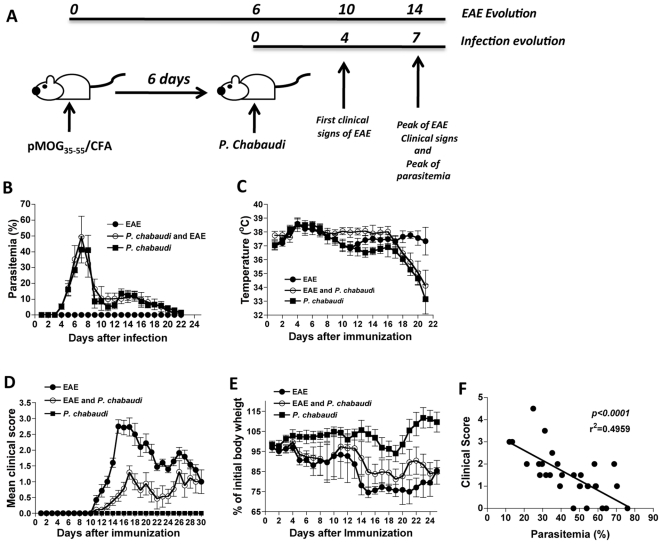
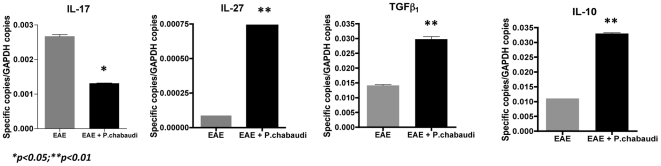
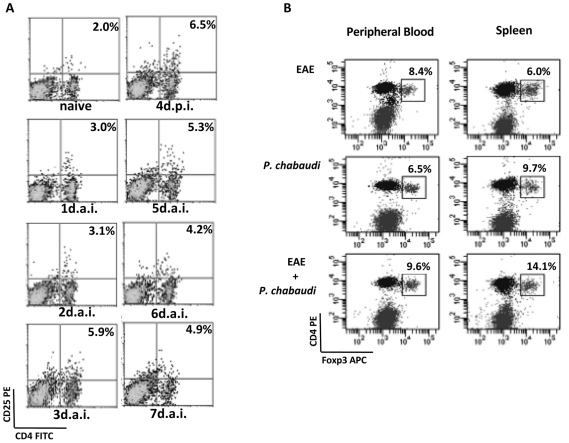
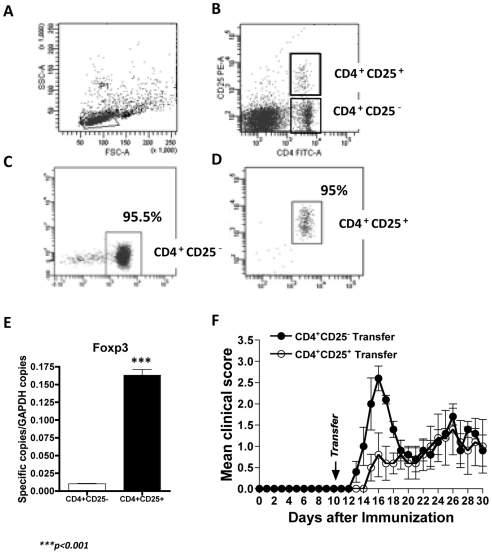
METHODOLOGY/PRINCIPAL FINDINGS: In this study, we verified that CD4(+)CD25(+) regulatory T cells (T regs) generated during malaria infection (6 days after EAE induction) interfere with the evolution of EAE. We observed a positive correlation between the reduction of EAE clinical symptoms and an increase of parasitemia levels. Suppression of the disease was also accompanied by a decrease in the expression of IL-17 and IFN-γ and increases in the expression of IL-10 and TGF-β1 relative to EAE control mice. The adoptive transfer of CD4(+)CD25(+) cells from P. chabaudi-infected mice reduced the clinical evolution of EAE, confirming the role of these T regs.
CONCLUSIONS/SIGNIFICANCE: These data corroborate previous findings showing that infections interfere with the prevalence and evolution of autoimmune diseases by inducing regulatory T cells, which regulate EAE in an apparently non-specific manner.
实验性自身免疫性脑脊髓炎(EAE)被用作人类多发性硬化症(MS)的动物模型,MS 是一种中枢神经系统的炎症性脱髓鞘自身免疫性疾病,其特征是 Th1 和/或 Th17 细胞的激活。人类自身免疫性疾病可能会被感染因子加剧或抑制。最近的研究表明,调节性 T 细胞在疟原虫属的逃避机制中发挥着至关重要的作用,无论是在人类还是在实验模型中。这些细胞抑制了针对寄生虫的 Th1 反应,并防止了寄生虫的清除。调节性 T 细胞在多种自身免疫性疾病中主要通过其抑制促炎反应的能力而与保护或改善相关。
方法/主要发现:在这项研究中,我们验证了在疟疾感染期间(EAE 诱导后 6 天)产生的 CD4+CD25+调节性 T 细胞(Tregs)会干扰 EAE 的发展。我们观察到 EAE 临床症状的减轻与寄生虫血症水平的升高之间存在正相关。与 EAE 对照组小鼠相比,疾病的抑制伴随着 IL-17 和 IFN-γ表达的降低以及 IL-10 和 TGF-β1 表达的增加。从感染疟原虫的小鼠中过继转移 CD4+CD25+细胞可降低 EAE 的临床进展,证实了这些 Tregs 的作用。
结论/意义:这些数据与先前的研究结果相吻合,表明感染通过诱导调节性 T 细胞来干扰自身免疫性疾病的流行和发展,这些 T 细胞以一种明显非特异性的方式调节 EAE。