Department of Investigational Cancer Therapeutics, The University of Texas M. D. Anderson Cancer Center, Houston, Texas 77030, USA.
Cancer. 2011 Apr 15;117(8):1661-9. doi: 10.1002/cncr.25701. Epub 2010 Nov 8.
Sequential treatment with azacitidine can induce re-expression of epigenetically silenced genes through genomic DNA hypomethylation and reverse carboplatin resistance of epithelial ovarian cancer cells. A phase 1b-2a clinical trial of this sequential combination of azacitidine and carboplatin was initiated in patients with platinum-resistant or platinum-refractory epithelial ovarian cancer.
Patients with pathologically confirmed intermediate-grade or high-grade epithelial ovarian cancer who developed disease progression within 6 months (resistant disease, n = 18 patients) or during a platinum-based therapy (refractory disease, n = 12 patients) were eligible. All patients had measurable disease.
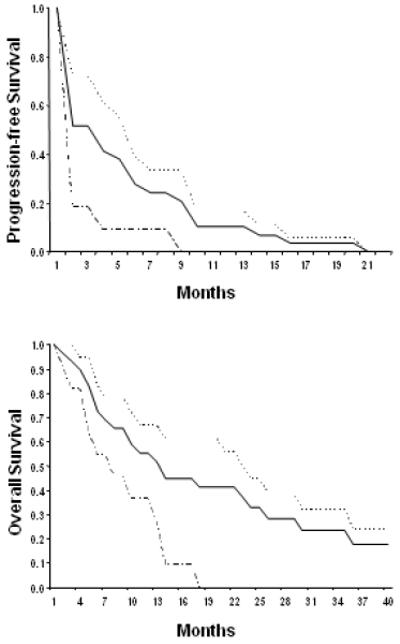
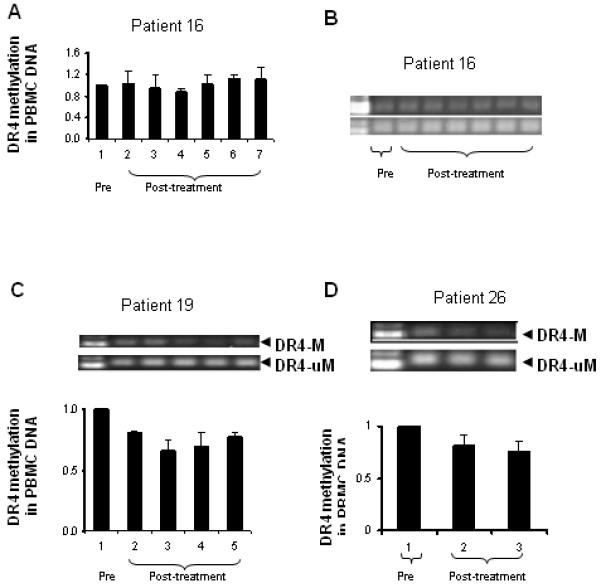
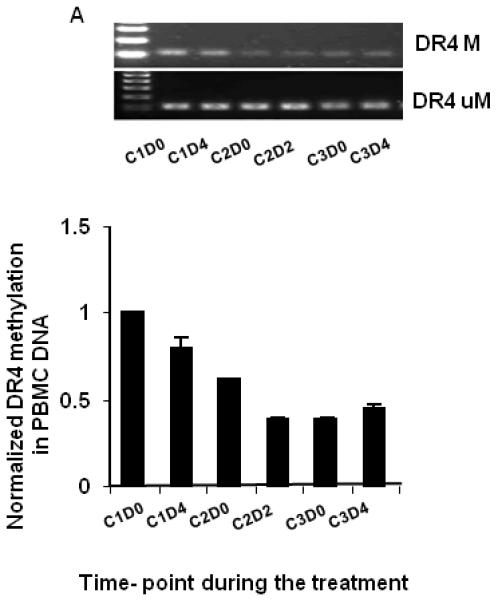
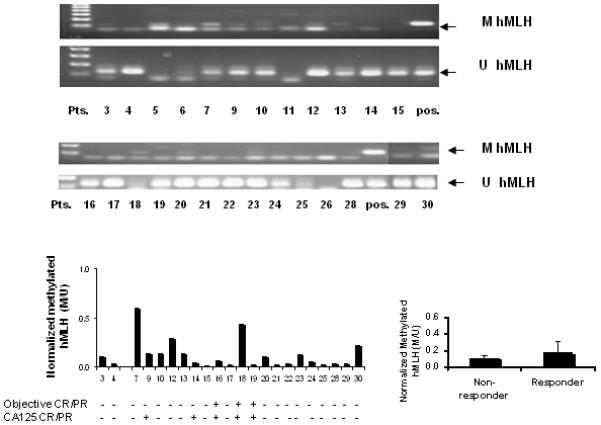
Thirty patients received a total of 163 cycles of treatment. This regimen produced 1 complete response, 3 partial responses (overall response rate [ORR], 13.8%), and 10 cases of stable disease among 29 evaluable patients. For those patients who achieved clinical benefits, the median duration of the treatment was 7.5 months. The median progression-free survival (PFS) and overall survival (OS) for all patients were 3.7 months and 14 months, respectively. Patients with platinum-resistant disease achieved an ORR of 22%, with a median PFS of 5.6 months and a median OS of 23 months. The predominant toxicities were fatigue and myelosuppression. Correlative studies indicated that DR4 methylation in peripheral blood leukocytes was decreased during treatment in 3 of 4 objective responders (75%), but in only 5 of 13 nonresponders (38%).
To the authors' knowledge, the results of the current study provide the first clinical evidence that a hypomethylating agent may partially reverse platinum resistance in patients with ovarian cancer. Further clinical evaluation of hypomethylating agents in combination with carboplatin is warranted.
阿扎胞苷序贯治疗可通过基因组 DNA 低甲基化使表观遗传沉默基因重新表达,逆转上皮性卵巢癌细胞对卡铂的耐药性。我们启动了一项 1b-2a 期临床试验,评估阿扎胞苷联合卡铂序贯治疗铂耐药或铂难治性上皮性卵巢癌患者的疗效和安全性。
纳入标准为病理证实的中高级别上皮性卵巢癌患者,在 6 个月内(耐药组,n=18 例)或铂类治疗期间(难治组,n=12 例)疾病进展。所有患者均有可测量病灶。
30 例患者共接受了 163 个周期的治疗。29 例可评价患者中,1 例达完全缓解,3 例达部分缓解(总缓解率[ORR]为 13.8%),10 例疾病稳定。有临床获益的患者中位治疗持续时间为 7.5 个月。所有患者的中位无进展生存期(PFS)和总生存期(OS)分别为 3.7 个月和 14 个月。铂耐药组的 ORR 为 22%,中位 PFS 为 5.6 个月,中位 OS 为 23 个月。主要毒性为乏力和骨髓抑制。相关性研究表明,4 例客观缓解者中有 3 例(75%)在治疗过程中外周血白细胞 DR4 甲基化降低,但 13 例无缓解者中只有 5 例(38%)降低。
据作者所知,本研究结果首次提供了临床证据,表明低甲基化剂可能部分逆转卵巢癌患者的铂耐药性。有必要进一步评估低甲基化剂联合卡铂的疗效。