Chablais Fabian, Veit Julia, Rainer Gregor, Jaźwińska Anna
Department of Medicine, Unit of Anatomy, University of Fribourg, Fribourg, Switzerland.
BMC Dev Biol. 2011 Apr 7;11:21. doi: 10.1186/1471-213X-11-21.
In humans, myocardial infarction is characterized by irreversible loss of heart tissue, which becomes replaced with a fibrous scar. By contrast, teleost fish and urodele amphibians are capable of heart regeneration after a partial amputation. However, due to the lack of a suitable infarct model, it is not known how these animals respond to myocardial infarction.
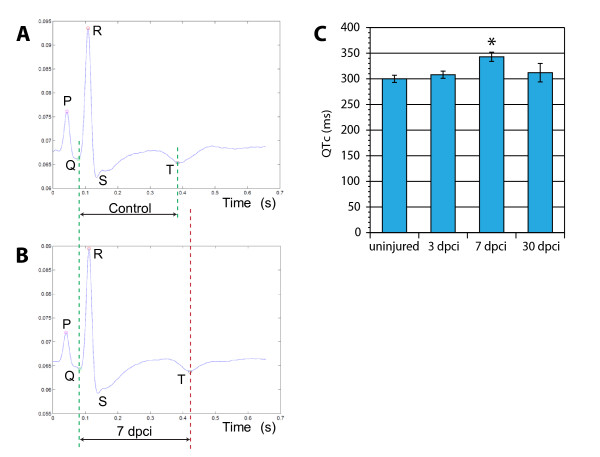
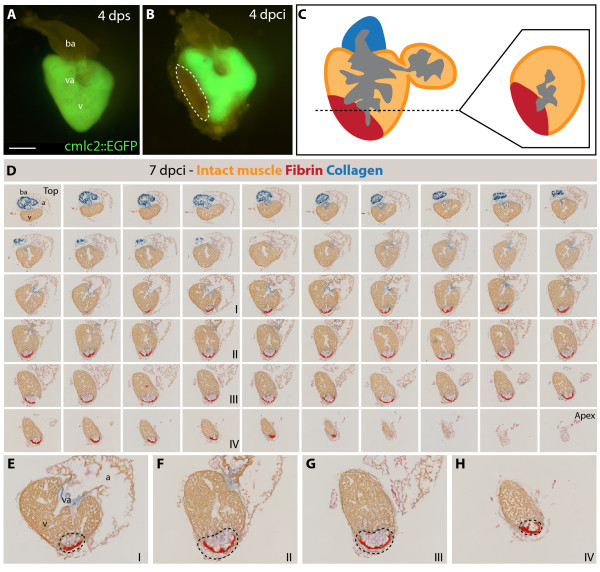
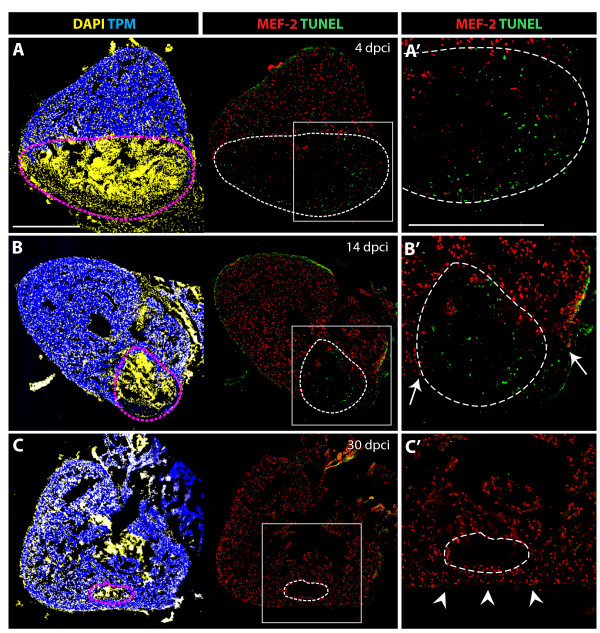
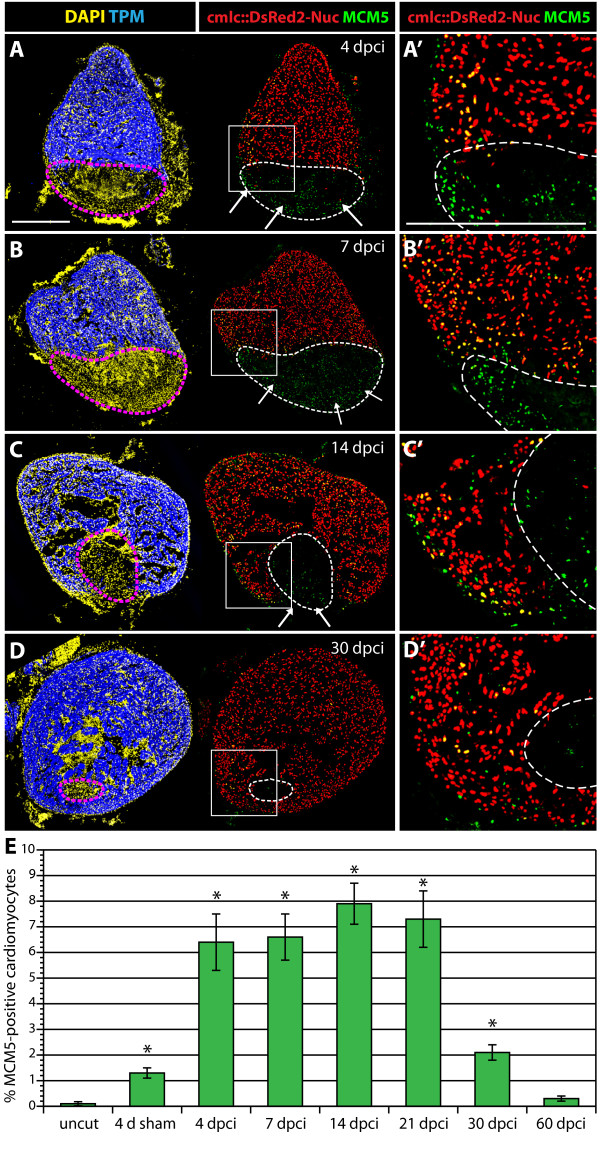
Here, we have established a heart infarct model in zebrafish using cryoinjury. In contrast to the common method of partial resection, cryoinjury results in massive cell death within 20% of the ventricular wall, similar to that observed in mammalian infarcts. As in mammals, the initial stages of the injury response include thrombosis, accumulation of fibroblasts and collagen deposition. However, at later stages, cardiac cells can enter the cell cycle and invade the infarct area in zebrafish. In the subsequent two months, fibrotic scar tissue is progressively eliminated by cell apoptosis and becomes replaced with a new myocardium, resulting in scarless regeneration. We show that tissue remodeling at the myocardial-infarct border zone is associated with accumulation of Vimentin-positive fibroblasts and with expression of an extracellular matrix protein Tenascin-C. Electrocardiogram analysis demonstrated that the reconstitution of the cardiac muscle leads to the restoration of the heart function.
We developed a new cryoinjury model to induce myocardial infarction in zebrafish. Although the initial stages following cryoinjury resemble typical healing in mammals, the zebrafish heart is capable of structural and functional regeneration. Understanding the key healing processes after myocardial infarction in zebrafish may result in identification of the barriers to efficient cardiac regeneration in mammals.
在人类中,心肌梗死的特征是心脏组织发生不可逆的损失,随后被纤维瘢痕组织所取代。相比之下,硬骨鱼和有尾两栖动物在心脏部分切除后能够实现心脏再生。然而,由于缺乏合适的梗死模型,目前尚不清楚这些动物对心肌梗死的反应。
在此,我们利用冷冻损伤在斑马鱼中建立了心脏梗死模型。与常见的部分切除方法不同,冷冻损伤会导致心室壁20%范围内出现大量细胞死亡,这与在哺乳动物梗死中观察到的情况相似。与哺乳动物一样,损伤反应的初始阶段包括血栓形成、成纤维细胞积聚和胶原蛋白沉积。然而,在后期阶段,斑马鱼的心脏细胞能够进入细胞周期并侵入梗死区域。在随后的两个月里,纤维化瘢痕组织通过细胞凋亡逐渐被清除,并被新的心肌组织所取代,从而实现无瘢痕再生。我们发现,心肌梗死边界区的组织重塑与波形蛋白阳性成纤维细胞的积聚以及细胞外基质蛋白肌腱蛋白-C的表达有关。心电图分析表明,心肌的重建导致了心脏功能的恢复。
我们开发了一种新的冷冻损伤模型来诱导斑马鱼发生心肌梗死。尽管冷冻损伤后的初始阶段类似于哺乳动物的典型愈合过程,但斑马鱼的心脏能够实现结构和功能的再生。了解斑马鱼心肌梗死后的关键愈合过程可能有助于识别哺乳动物心脏高效再生的障碍。