Program in Integrated Microbial Biodiversity, Department of Botany, Canadian Institute for Advanced Research, University of British Columbia, Vancouver, British Columbia, Canada.
PLoS One. 2011 Mar 31;6(3):e18163. doi: 10.1371/journal.pone.0018163.
Environmental SSU rDNA surveys have significantly improved our understanding of microeukaryotic diversity. Many of the sequences acquired using this approach are closely related to lineages previously characterized at both morphological and molecular levels, making interpretation of these data relatively straightforward. Some sequences, by contrast, appear to be phylogenetic orphans and are sometimes inferred to represent "novel lineages" of unknown cellular identity. Consequently, interpretation of environmental DNA surveys of cellular diversity rely on an adequately comprehensive database of DNA sequences derived from identified species. Several major taxa of microeukaryotes, however, are still very poorly represented in these databases, and this is especially true for diverse groups of single-celled parasites, such as gregarine apicomplexans.
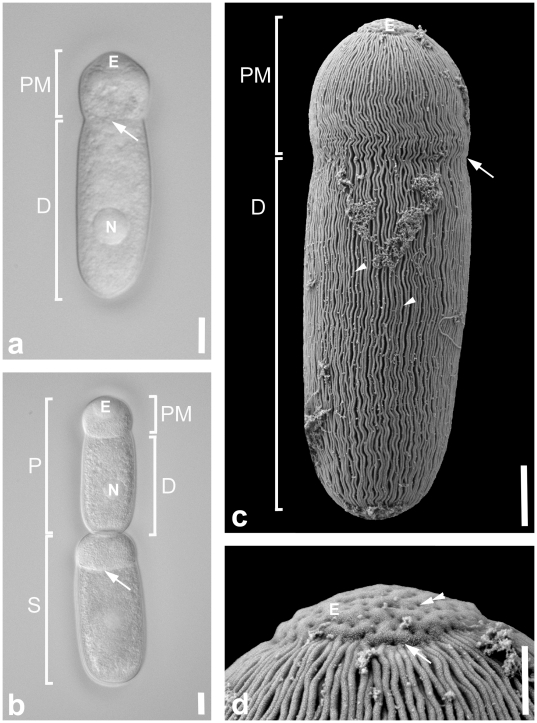
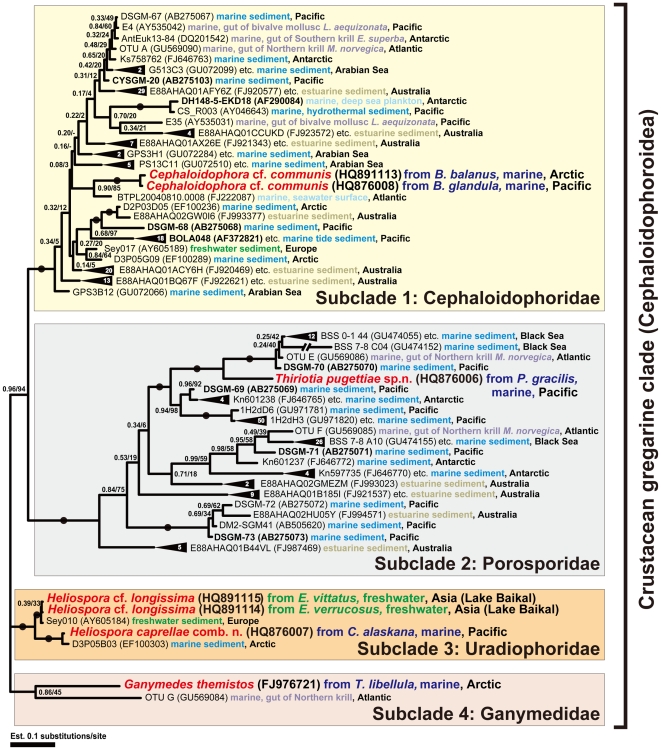
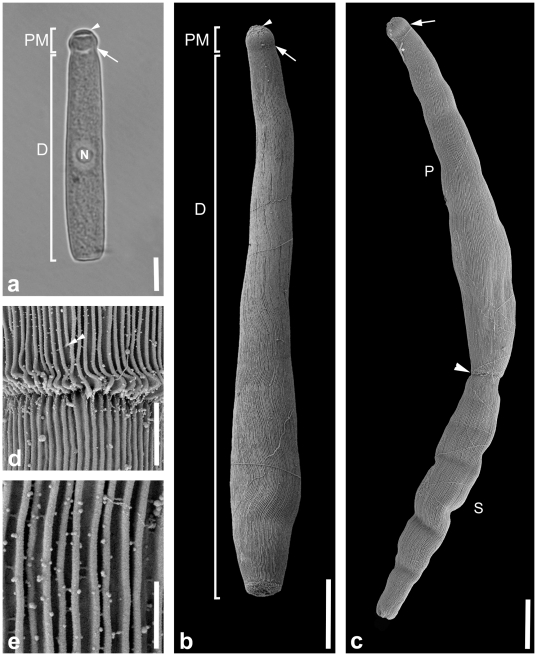
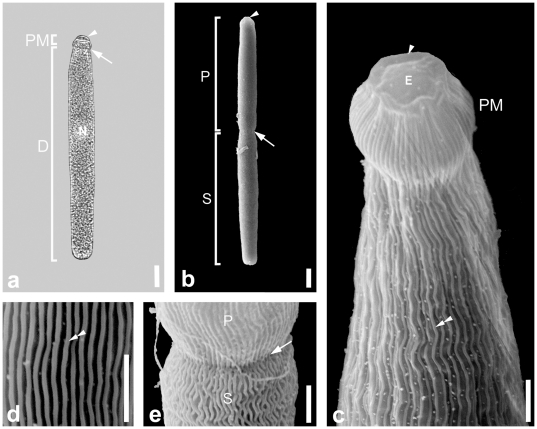
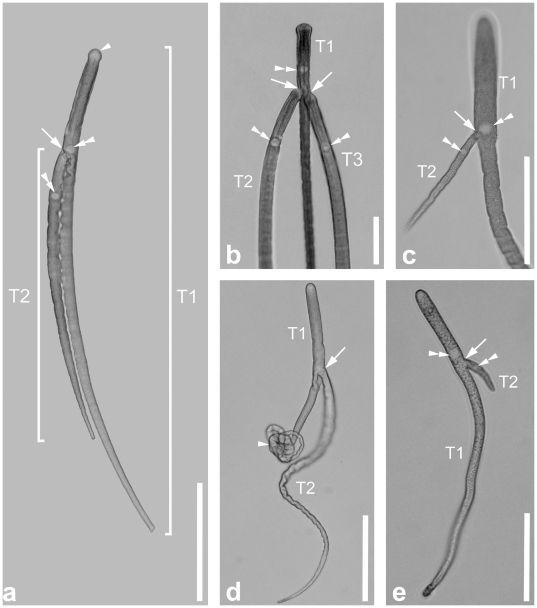
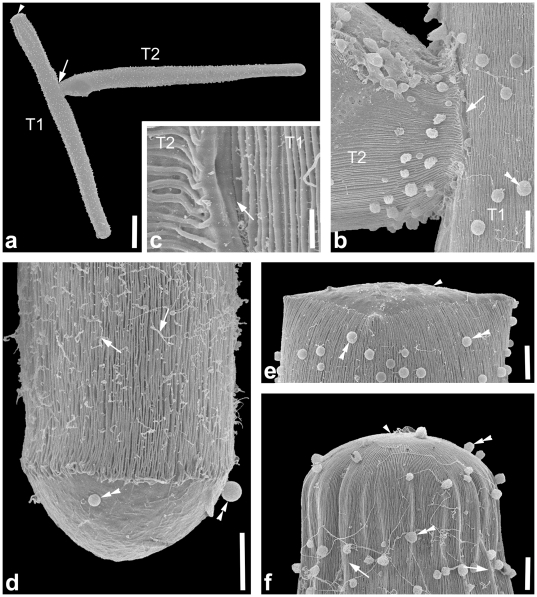
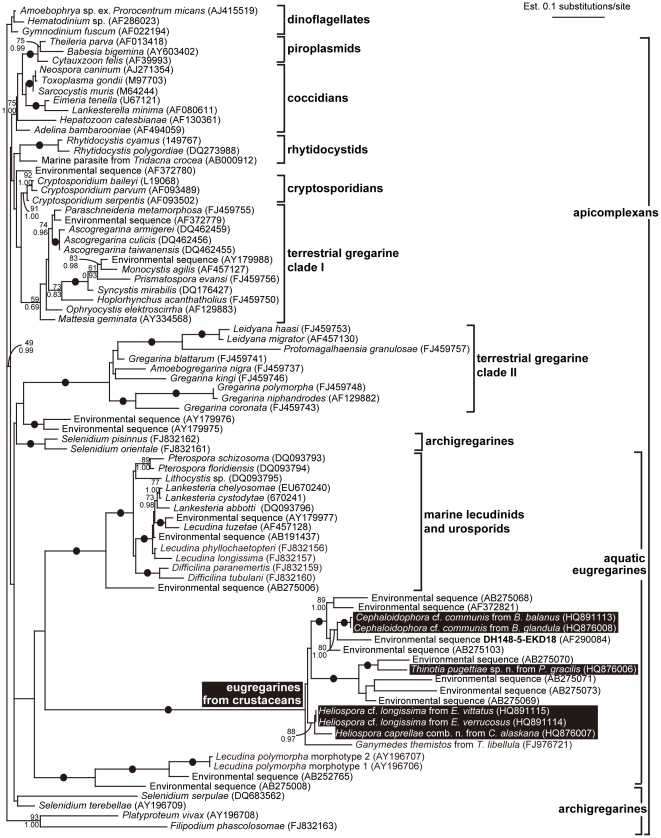
METHODOLOGY/PRINCIPAL FINDINGS: This study attempts to address this paucity of dna sequence data by characterizing four different gregarine species, isolated from the intestines of crustaceans, at both morphological and molecular levels: Thiriotia pugettiae sp. n. from the graceful kelp crab (Pugettia gracilis), Cephaloidophora cf. communis from two different species of barnacles (Balanus glandula and B. balanus), Heliospora cf. longissima from two different species of freshwater amphipods (Eulimnogammarus verrucosus and E. vittatus), and Heliospora caprellae comb. n. from a skeleton shrimp (Caprella alaskana). SSU rDNA sequences were acquired from isolates of these gregarine species and added to a global apicomplexan alignment containing all major groups of gregarines characterized so far. Molecular phylogenetic analyses of these data demonstrated that all of the gregarines collected from crustacean hosts formed a very strongly supported clade with 48 previously unidentified environmental DNA sequences.
CONCLUSIONS/SIGNIFICANCE: This expanded molecular phylogenetic context enabled us to establish a major clade of intestinal gregarine parasites and infer the cellular identities of several previously unidentified environmental SSU rDNA sequences, including several sequences that have formerly been discussed broadly in the literature as a suspected "novel" lineage of eukaryotes.
环境 SSU rDNA 调查极大地提高了我们对微真核生物多样性的理解。使用这种方法获得的许多序列与在形态和分子水平上都有特征的谱系密切相关,这使得对这些数据的解释相对简单。相比之下,有些序列似乎是系统发育上的孤儿,有时被推断为代表未知细胞身份的“新谱系”。因此,对细胞多样性的环境 DNA 调查的解释依赖于从已识别物种中获得的 DNA 序列的足够全面的数据库。然而,几个主要的微真核生物类群在这些数据库中仍然非常缺乏代表性,对于单细胞寄生虫等多样的群体来说尤其如此,例如疟原虫。
方法/主要发现:本研究试图通过在形态学和分子水平上对从甲壳类动物肠道中分离出的四种不同的疟原虫进行特征描述来解决这一 DNA 序列数据不足的问题:来自优雅的海带蟹(Pugettia gracilis)的 Thiriotia pugettiae sp. n.、来自两种不同藤壶(Balanus glandula 和 B. balanus)的 Cephaloidophora cf. communis、来自两种不同的淡水片脚类动物(Eulimnogammarus verrucosus 和 E. vittatus)的 Heliospora cf. longissima 以及来自骨虾(Caprella alaskana)的 Heliospora caprellae comb. n.。从这些疟原虫的分离物中获得了 SSU rDNA 序列,并将其添加到一个包含迄今为止所有已描述的疟原虫主要类群的全球 Apicomplexa 比对中。对这些数据的分子系统发育分析表明,从甲壳类宿主中收集的所有疟原虫都形成了一个非常支持的分支,与 48 个以前未识别的环境 DNA 序列形成分支。
结论/意义:这种扩展的分子系统发育背景使我们能够建立一个主要的肠道疟原虫寄生虫分支,并推断出几个以前未识别的环境 SSU rDNA 序列的细胞身份,包括以前在文献中广泛讨论的作为疑似“新”真核生物谱系的几个序列。