Department of Ecology and Evolutionary Biology, University of Toronto, Toronto, M5S 3B2 Ontario, Canada.
BMC Evol Biol. 2011 Apr 14;11:99. doi: 10.1186/1471-2148-11-99.
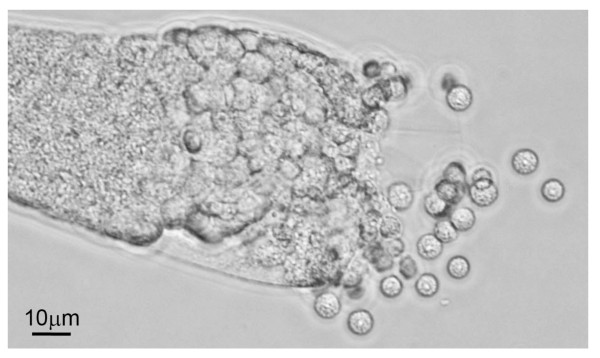
Sperm competition is a driving force in the evolution of male sperm characteristics in many species. In the nematode Caenorhabditis elegans, larger male sperm evolve under experimentally increased sperm competition and larger male sperm outcompete smaller hermaphrodite sperm for fertilization within the hermaphrodite reproductive tract. To further elucidate the relative importance of sperm-related traits that contribute to differential reproductive success among males, we quantified within- and among-strain variation in sperm traits (size, rate of production, number transferred, competitive ability) for seven male genetic backgrounds known previously to differ with respect to some sperm traits. We also quantified male mating ability in assays for rates of courtship and successful copulation, and then assessed the roles of these pre- and post-mating traits in first- and second-male fertilization success.
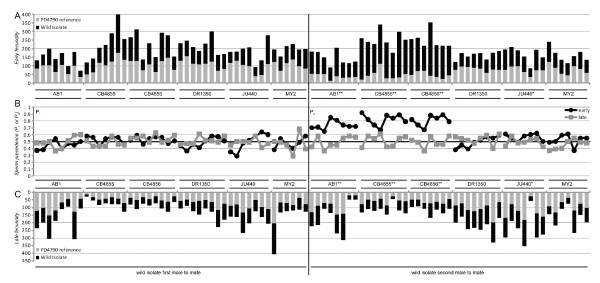
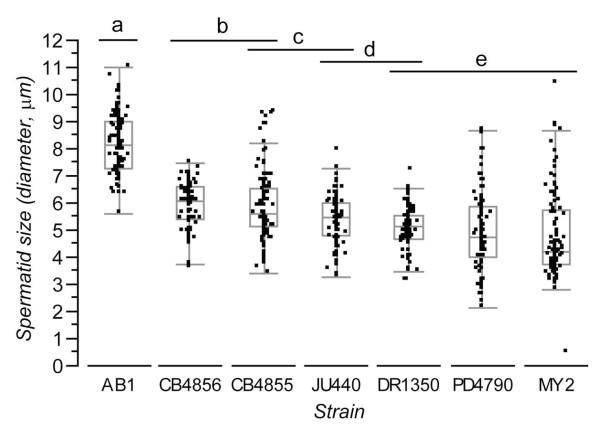
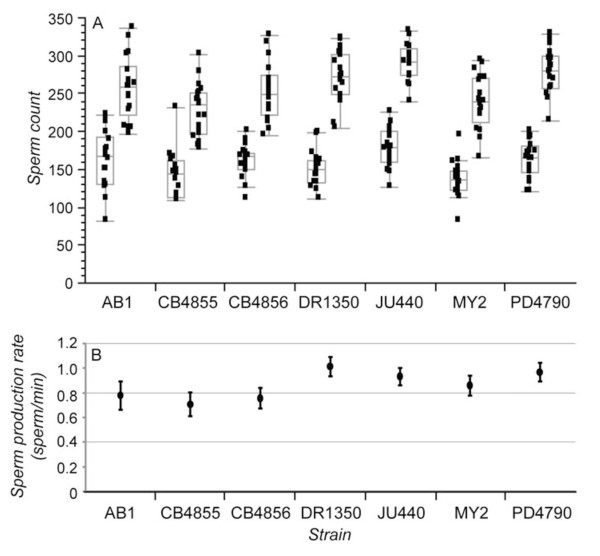
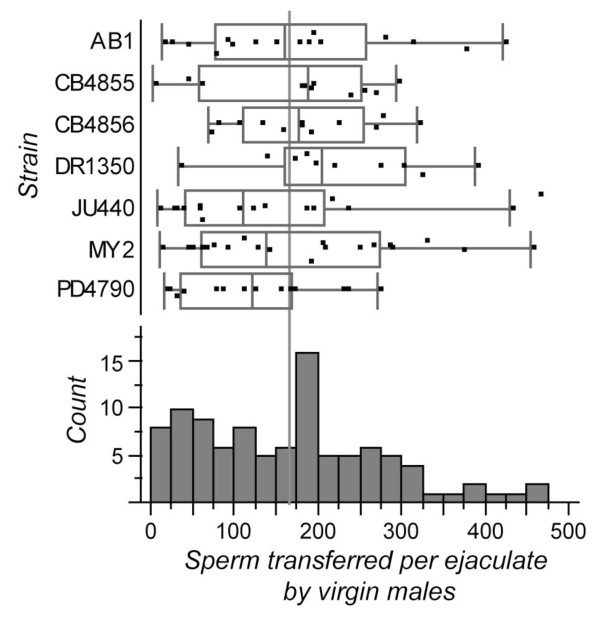
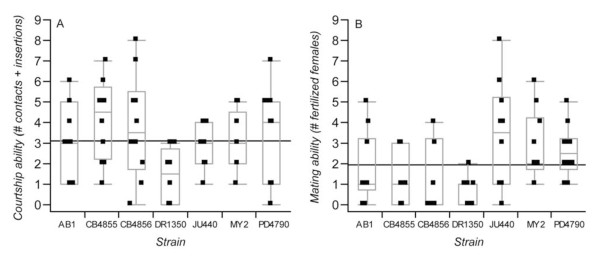
We document significant variation in courtship ability, mating ability, sperm size and sperm production rate. Sperm size and production rate were strong indicators of early fertilization success for males that mated second, but male genetic backgrounds conferring faster sperm production make smaller sperm, despite virgin males of all genetic backgrounds transferring indistinguishable numbers of sperm to mating partners.
We have demonstrated that sperm size and the rate of sperm production represent dominant factors in determining male fertilization success and that C. elegans harbors substantial heritable variation for traits contributing to male reproductive success. C. elegans provides a powerful, tractable system for studying sexual selection and for dissecting the genetic basis and evolution of reproduction-related traits.
在许多物种中,精子竞争是推动雄性精子特征进化的一个驱动力。在秀丽隐杆线虫中,在实验中增加精子竞争的情况下,雄性的精子会进化得更大,并且较大的雄性精子会在雌性生殖道内与较小的雌雄同体精子竞争受精。为了进一步阐明有助于雄性间生殖成功差异的与精子相关的特征的相对重要性,我们量化了七个先前已知在某些精子特征上存在差异的雄性遗传背景的精子特征(大小、产生速度、转移数量、竞争能力)的种内和种间变异。我们还量化了雄性在求爱和成功交配方面的交配能力,然后评估了这些交配前和交配后的特征在第一和第二雄性受精成功中的作用。
我们记录了求爱能力、交配能力、精子大小和精子产生速度的显著变化。精子大小和产生速度是第二交配雄性早期受精成功的有力指标,但具有更快精子产生能力的雄性遗传背景会产生更小的精子,尽管所有遗传背景的 virgin 雄性向交配伙伴转移的精子数量是无法区分的。
我们已经证明,精子大小和精子产生速度是决定雄性受精成功的主导因素,并且秀丽隐杆线虫在影响雄性生殖成功的特征方面具有很大的遗传变异。秀丽隐杆线虫为研究性选择和剖析与生殖相关的特征的遗传基础和进化提供了一个强大、易于处理的系统。