• 文献检索
  • 文档翻译
  • 深度研究
  • 学术资讯
  • Suppr Zotero 插件Zotero 插件
  • 邀请有礼
  • 套餐&价格
  • 历史记录
应用&插件
Suppr Zotero 插件Zotero 插件浏览器插件Mac 客户端Windows 客户端微信小程序
定价
高级版会员购买积分包购买API积分包
服务
文献检索文档翻译深度研究API 文档MCP 服务
关于我们
关于 Suppr公司介绍联系我们用户协议隐私条款
关注我们

Suppr 超能文献

核心技术专利:CN118964589B侵权必究
粤ICP备2023148730 号-1Suppr @ 2026

文献检索

告别复杂PubMed语法,用中文像聊天一样搜索,搜遍4000万医学文献。AI智能推荐,让科研检索更轻松。

立即免费搜索

文件翻译

保留排版,准确专业,支持PDF/Word/PPT等文件格式,支持 12+语言互译。

免费翻译文档

深度研究

AI帮你快速写综述,25分钟生成高质量综述,智能提取关键信息,辅助科研写作。

立即免费体验

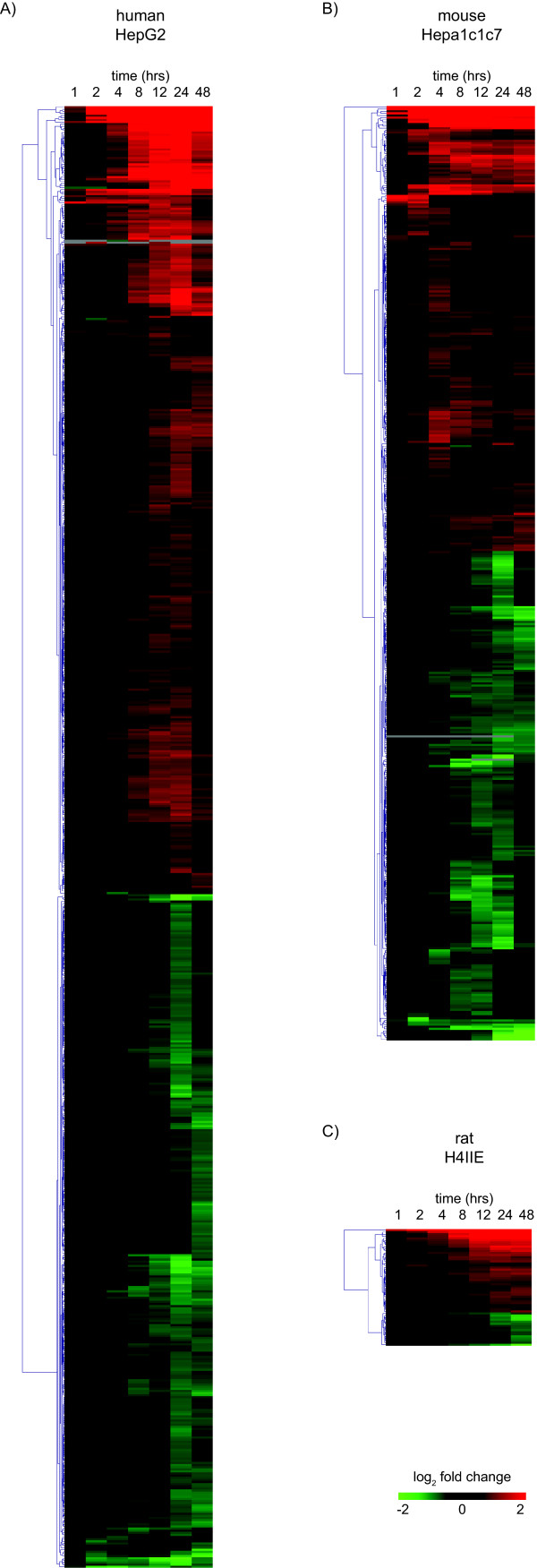
TCDD 诱导的人 HepG2、小鼠 Hepa1c1c7 和大鼠 H4IIE 肝癌细胞基因表达谱的差异。

Differences in TCDD-elicited gene expression profiles in human HepG2, mouse Hepa1c1c7 and rat H4IIE hepatoma cells.

机构信息

Department of Biochemistry & Molecular Biology, Michigan State University, East Lansing, Michigan 48824, USA.

出版信息

BMC Genomics. 2011 Apr 15;12:193. doi: 10.1186/1471-2164-12-193.

DOI:10.1186/1471-2164-12-193
PMID:21496263
原文链接:https://pmc.ncbi.nlm.nih.gov/articles/PMC3089798/
Abstract

BACKGROUND

2,3,7,8-Tetrachlorodibenzo-p-dioxin (TCDD) is an environmental contaminant that elicits a broad spectrum of toxic effects in a species-specific manner. Current risk assessment practices routinely extrapolate results from in vivo and in vitro rodent models to assess human risk. In order to further investigate the species-specific responses elicited by TCDD, temporal gene expression responses in human HepG2, mouse Hepa1c1c7 and rat H4IIE cells were compared.

RESULTS

Microarray analysis identified a core set of conserved gene expression responses across species consistent with the role of AhR in mediating adaptive metabolic responses. However, significant species-specific as well as species-divergent responses were identified. Computational analysis of the regulatory regions of species-specific and -divergent responses suggests that dioxin response elements (DREs) are involved. These results are consistent with in vivo rat vs. mouse species-specific differential gene expression, and more comprehensive comparative DRE searches.

CONCLUSIONS

Comparative analysis of human HepG2, mouse Hepa1c1c7 and rat H4IIE TCDD-elicited gene expression responses is consistent with in vivo rat-mouse comparative gene expression studies, and more comprehensive comparative DRE searches, suggesting that AhR-mediated gene expression is species-specific.

摘要

背景

2,3,7,8-四氯二苯并对二恶英(TCDD)是一种环境污染物,以物种特异性的方式引起广泛的毒性作用。目前的风险评估实践通常从体内和体外啮齿动物模型中推断结果,以评估人类风险。为了进一步研究 TCDD 引起的物种特异性反应,比较了人 HepG2、鼠 Hepa1c1c7 和大鼠 H4IIE 细胞中的时间基因表达反应。

结果

微阵列分析确定了一组跨物种保守的基因表达反应,这与 AhR 在介导适应性代谢反应中的作用一致。然而,也确定了显著的物种特异性和物种分歧反应。对物种特异性和物种分歧反应的调控区的计算分析表明,二恶英反应元件(DRE)参与其中。这些结果与体内大鼠与小鼠的物种特异性差异基因表达以及更全面的比较 DRE 搜索一致。

结论

人 HepG2、鼠 Hepa1c1c7 和大鼠 H4IIE 的 TCDD 诱导的基因表达反应的比较分析与体内大鼠-小鼠比较基因表达研究以及更全面的比较 DRE 搜索一致,表明 AhR 介导的基因表达是物种特异性的。

https://cdn.ncbi.nlm.nih.gov/pmc/blobs/6fca/3089798/29dc59fe89a1/1471-2164-12-193-2.jpg
https://cdn.ncbi.nlm.nih.gov/pmc/blobs/6fca/3089798/0846271a656b/1471-2164-12-193-1.jpg
https://cdn.ncbi.nlm.nih.gov/pmc/blobs/6fca/3089798/29dc59fe89a1/1471-2164-12-193-2.jpg
https://cdn.ncbi.nlm.nih.gov/pmc/blobs/6fca/3089798/0846271a656b/1471-2164-12-193-1.jpg
https://cdn.ncbi.nlm.nih.gov/pmc/blobs/6fca/3089798/29dc59fe89a1/1471-2164-12-193-2.jpg

相似文献

1
Differences in TCDD-elicited gene expression profiles in human HepG2, mouse Hepa1c1c7 and rat H4IIE hepatoma cells.TCDD 诱导的人 HepG2、小鼠 Hepa1c1c7 和大鼠 H4IIE 肝癌细胞基因表达谱的差异。
BMC Genomics. 2011 Apr 15;12:193. doi: 10.1186/1471-2164-12-193.
2
Comparisons of differential gene expression elicited by TCDD, PCB126, βNF, or ICZ in mouse hepatoma Hepa1c1c7 cells and C57BL/6 mouse liver.TCDD、PCB126、βNF 和 Icz 在小鼠肝癌 Hepa1c1c7 细胞和 C57BL/6 小鼠肝脏中诱导的差异基因表达比较。
Toxicol Lett. 2013 Oct 23;223(1):52-9. doi: 10.1016/j.toxlet.2013.08.013. Epub 2013 Aug 29.
3
Comparative analysis of AhR-mediated TCDD-elicited gene expression in human liver adult stem cells.AhR 介导的 TCDD 诱导人肝成体干细胞基因表达的比较分析。
Toxicol Sci. 2009 Nov;112(1):229-44. doi: 10.1093/toxsci/kfp189. Epub 2009 Aug 14.
4
Comparative analysis of temporal and dose-dependent TCDD-elicited gene expression in human, mouse, and rat primary hepatocytes.比较分析人、鼠和大鼠原代肝细胞中 TCDD 诱导的时间和剂量依赖性基因表达。
Toxicol Sci. 2013 May;133(1):54-66. doi: 10.1093/toxsci/kft028. Epub 2013 Feb 15.
5
Comparison of TCDD-elicited genome-wide hepatic gene expression in Sprague-Dawley rats and C57BL/6 mice.TCDD 诱导的 Sprague-Dawley 大鼠和 C57BL/6 小鼠全基因组肝基因表达比较。
Toxicol Appl Pharmacol. 2013 Mar 1;267(2):184-91. doi: 10.1016/j.taap.2012.11.028. Epub 2012 Dec 11.
6
In vivo-in vitro toxicogenomic comparison of TCDD-elicited gene expression in Hepa1c1c7 mouse hepatoma cells and C57BL/6 hepatic tissue.TCDD诱导的Hepa1c1c7小鼠肝癌细胞和C57BL/6肝组织中基因表达的体内-体外毒理基因组学比较
BMC Genomics. 2006 Apr 12;7:80. doi: 10.1186/1471-2164-7-80.
7
Integration of genome-wide computation DRE search, AhR ChIP-chip and gene expression analyses of TCDD-elicited responses in the mouse liver.全基因组计算 DRE 搜索、AhR ChIP-chip 以及 TCDD 诱导的小鼠肝脏应答的基因表达分析的整合。
BMC Genomics. 2011 Jul 15;12:365. doi: 10.1186/1471-2164-12-365.
8
Comparative toxicogenomic analysis of the hepatotoxic effects of TCDD in Sprague Dawley rats and C57BL/6 mice.二噁英对斯普拉格-道利大鼠和C57BL/6小鼠肝毒性作用的比较毒理基因组学分析
Toxicol Sci. 2006 Dec;94(2):398-416. doi: 10.1093/toxsci/kfl100. Epub 2006 Sep 7.
9
Comparative analysis of TCDD-induced AhR-mediated gene expression in human, mouse and rat primary B cells.人、小鼠和大鼠原代B细胞中TCDD诱导的芳烃受体(AhR)介导的基因表达的比较分析。
Toxicol Appl Pharmacol. 2017 Feb 1;316:95-106. doi: 10.1016/j.taap.2016.11.009. Epub 2016 Nov 30.
10
Comparative metabolomic and genomic analyses of TCDD-elicited metabolic disruption in mouse and rat liver.TCDD 诱导的小鼠和大鼠肝脏代谢紊乱的比较代谢组学和基因组学分析。
Toxicol Sci. 2012 Jan;125(1):41-55. doi: 10.1093/toxsci/kfr262. Epub 2011 Sep 29.

引用本文的文献

1
The impact of persistent organic pollutants on fertility: exposure to the environmental toxicant 2,3,7,8-tetrachlorodibenzo-p-dioxin alters reproductive tract immune responses.持久性有机污染物对生育能力的影响:暴露于环境毒物2,3,7,8-四氯二苯并对二恶英会改变生殖道免疫反应。
Front Immunol. 2024 Dec 10;15:1497405. doi: 10.3389/fimmu.2024.1497405. eCollection 2024.
2
Fine particulate matter‑induced cardiac developmental toxicity (Review).细颗粒物诱发的心脏发育毒性(综述)
Exp Ther Med. 2024 Oct 29;29(1):6. doi: 10.3892/etm.2024.12756. eCollection 2025 Jan.
3
P and AHR-CYP1A1 Signaling Crosstalk in an Injury-Induced Zebrafish Inflammation Model.

本文引用的文献

1
Genome-wide computational analysis of dioxin response element location and distribution in the human, mouse, and rat genomes.全基因组计算分析二恶英反应元件在人类、小鼠和大鼠基因组中的位置和分布。
Chem Res Toxicol. 2011 Apr 18;24(4):494-504. doi: 10.1021/tx100328r. Epub 2011 Mar 17.
2
A comparison of whole genome gene expression profiles of HepaRG cells and HepG2 cells to primary human hepatocytes and human liver tissues.将 HepaRG 细胞和 HepG2 细胞与原代人肝细胞和人肝组织的全基因组基因表达谱进行比较。
Drug Metab Dispos. 2010 Jun;38(6):988-94. doi: 10.1124/dmd.109.031831. Epub 2010 Mar 12.
3
Comparison of HepG2 and HepaRG by whole-genome gene expression analysis for the purpose of chemical hazard identification.
损伤诱导的斑马鱼炎症模型中P与芳烃受体-细胞色素P450 1A1信号转导的相互作用
Pharmaceuticals (Basel). 2024 Aug 31;17(9):1155. doi: 10.3390/ph17091155.
4
Kynurenic Acid/AhR Signaling at the Junction of Inflammation and Cardiovascular Diseases.犬尿酸/芳香烃受体信号在炎症与心血管疾病的交汇点。
Int J Mol Sci. 2024 Jun 25;25(13):6933. doi: 10.3390/ijms25136933.
5
Aryl Hydrocarbon Receptor in Oxidative Stress as a Double Agent and Its Biological and Therapeutic Significance.芳香烃受体在氧化应激中的双重作用及其生物学和治疗意义。
Int J Mol Sci. 2022 Jun 16;23(12):6719. doi: 10.3390/ijms23126719.
6
Dioxin Disrupts Thyroid Hormone and Glucocorticoid Induction of klf9, a Master Regulator of Frog Metamorphosis.二恶英干扰甲状腺激素和糖皮质激素诱导 klf9 的表达,klf9 是青蛙变态的主要调节因子。
Toxicol Sci. 2022 Apr 26;187(1):150-161. doi: 10.1093/toxsci/kfac017.
7
Species-Specific Differences in Aryl Hydrocarbon Receptor Responses: How and Why?种属特异性的芳香烃受体反应差异:如何及为何?
Int J Mol Sci. 2021 Dec 10;22(24):13293. doi: 10.3390/ijms222413293.
8
The aryl hydrocarbon receptor as a target of environmental stressors - Implications for pollution mediated stress and inflammatory responses.芳香烃受体作为环境应激源的靶点——对污染介导的应激和炎症反应的影响。
Redox Biol. 2020 Jul;34:101530. doi: 10.1016/j.redox.2020.101530. Epub 2020 Apr 18.
9
Genome-Scale Characterization of Toxicity-Induced Metabolic Alterations in Primary Hepatocytes.原发性肝细胞中毒性诱导代谢改变的全基因组特征分析。
Toxicol Sci. 2019 Dec 1;172(2):279-291. doi: 10.1093/toxsci/kfz197.
10
Mechanisms of circadian clock interactions with aryl hydrocarbon receptor signalling.生物钟与芳烃受体信号传导的相互作用机制。
Eur J Neurosci. 2020 Jan;51(1):379-395. doi: 10.1111/ejn.14361. Epub 2019 Feb 25.
通过全基因组基因表达分析比较 HepG2 和 HepaRG 细胞,以识别化学危害。
Toxicol Sci. 2010 May;115(1):66-79. doi: 10.1093/toxsci/kfq026. Epub 2010 Jan 27.
4
Comparative analysis of AhR-mediated TCDD-elicited gene expression in human liver adult stem cells.AhR 介导的 TCDD 诱导人肝成体干细胞基因表达的比较分析。
Toxicol Sci. 2009 Nov;112(1):229-44. doi: 10.1093/toxsci/kfp189. Epub 2009 Aug 14.
5
Tamoxifen-elicited uterotrophy: cross-species and cross-ligand analysis of the gene expression program.他莫昔芬诱发的子宫肥大:基因表达程序的跨物种和跨配体分析
BMC Med Genomics. 2009 Apr 28;2:19. doi: 10.1186/1755-8794-2-19.
6
Transcriptomic responses to 2,3,7,8-tetrachlorodibenzo-p-dioxin (TCDD) in liver: comparison of rat and mouse.肝脏对2,3,7,8-四氯二苯并对二恶英(TCDD)的转录组反应:大鼠与小鼠的比较
BMC Genomics. 2008 Sep 16;9:419. doi: 10.1186/1471-2164-9-419.
7
Aryl hydrocarbon receptor-mediated down-regulation of sox9b causes jaw malformation in zebrafish embryos.芳基烃受体介导的sox9b下调导致斑马鱼胚胎颌骨畸形。
Mol Pharmacol. 2008 Dec;74(6):1544-53. doi: 10.1124/mol.108.050435. Epub 2008 Sep 10.
8
Toxicogenomic analysis of gender, chemical, and dose effects in livers of TCDD- or aroclor 1254-exposed rats using a multifactor linear model.使用多因素线性模型对暴露于2,3,7,8-四氯二苯并-对-二恶英(TCDD)或多氯联苯混合物(商品名:氯丹1254)的大鼠肝脏中的性别、化学物质和剂量效应进行毒理基因组学分析。
Toxicol Sci. 2008 Apr;102(2):291-309. doi: 10.1093/toxsci/kfm313. Epub 2008 Jan 3.
9
Microarray analysis of gene expression in peripheral blood mononuclear cells from dioxin-exposed human subjects.对二噁英暴露人类受试者外周血单个核细胞中基因表达的微阵列分析。
Toxicology. 2007 Jan 5;229(1-2):101-13. doi: 10.1016/j.tox.2006.10.004. Epub 2006 Oct 17.
10
Comparative toxicogenomic analysis of the hepatotoxic effects of TCDD in Sprague Dawley rats and C57BL/6 mice.二噁英对斯普拉格-道利大鼠和C57BL/6小鼠肝毒性作用的比较毒理基因组学分析
Toxicol Sci. 2006 Dec;94(2):398-416. doi: 10.1093/toxsci/kfl100. Epub 2006 Sep 7.