Department of Biochemistry and Molecular Biology, Michigan State University, East Lansing, MI 48824, USA; Center for Integrative Toxicology, Michigan State University, East Lansing, MI 48824, USA.
Toxicol Lett. 2013 Oct 23;223(1):52-9. doi: 10.1016/j.toxlet.2013.08.013. Epub 2013 Aug 29.
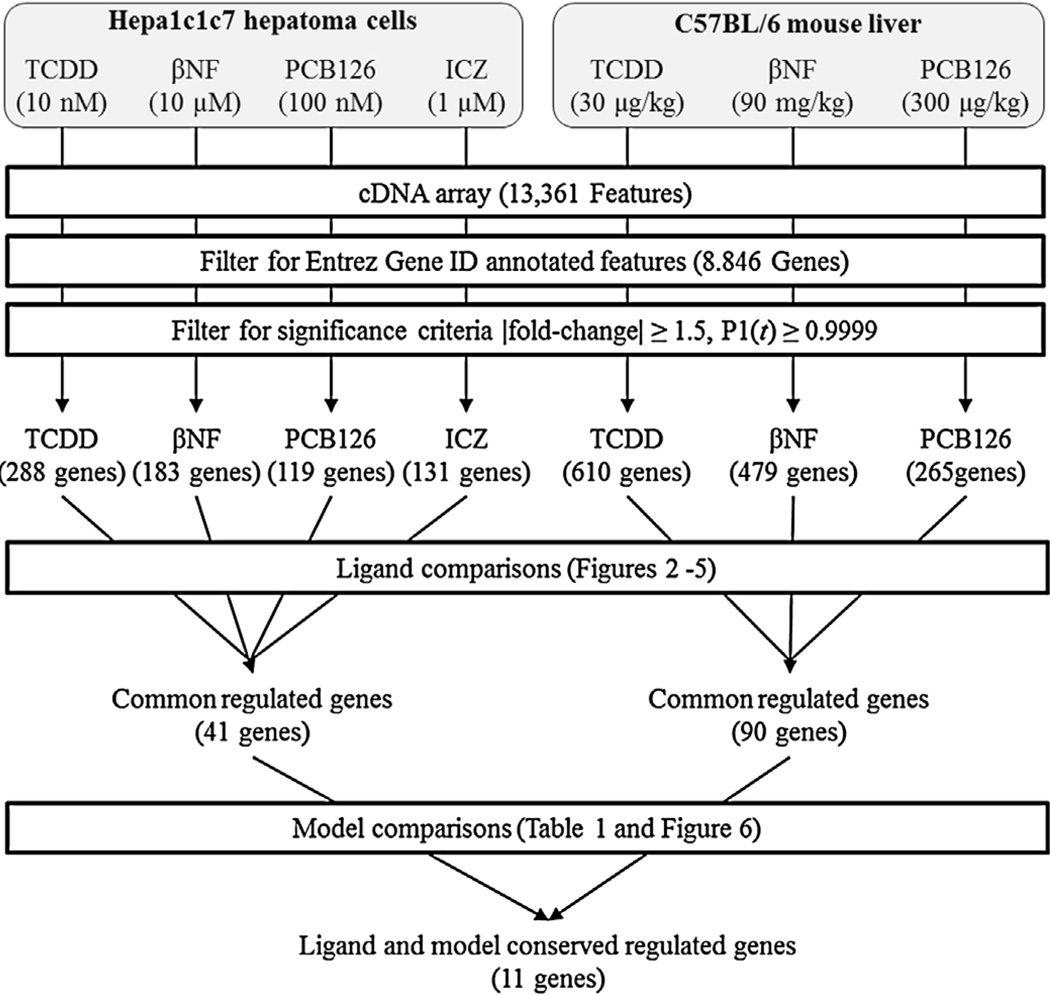
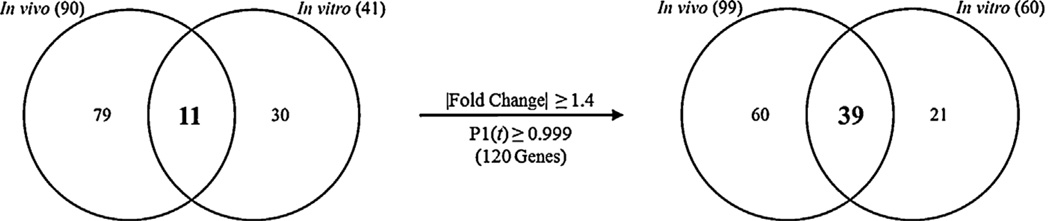
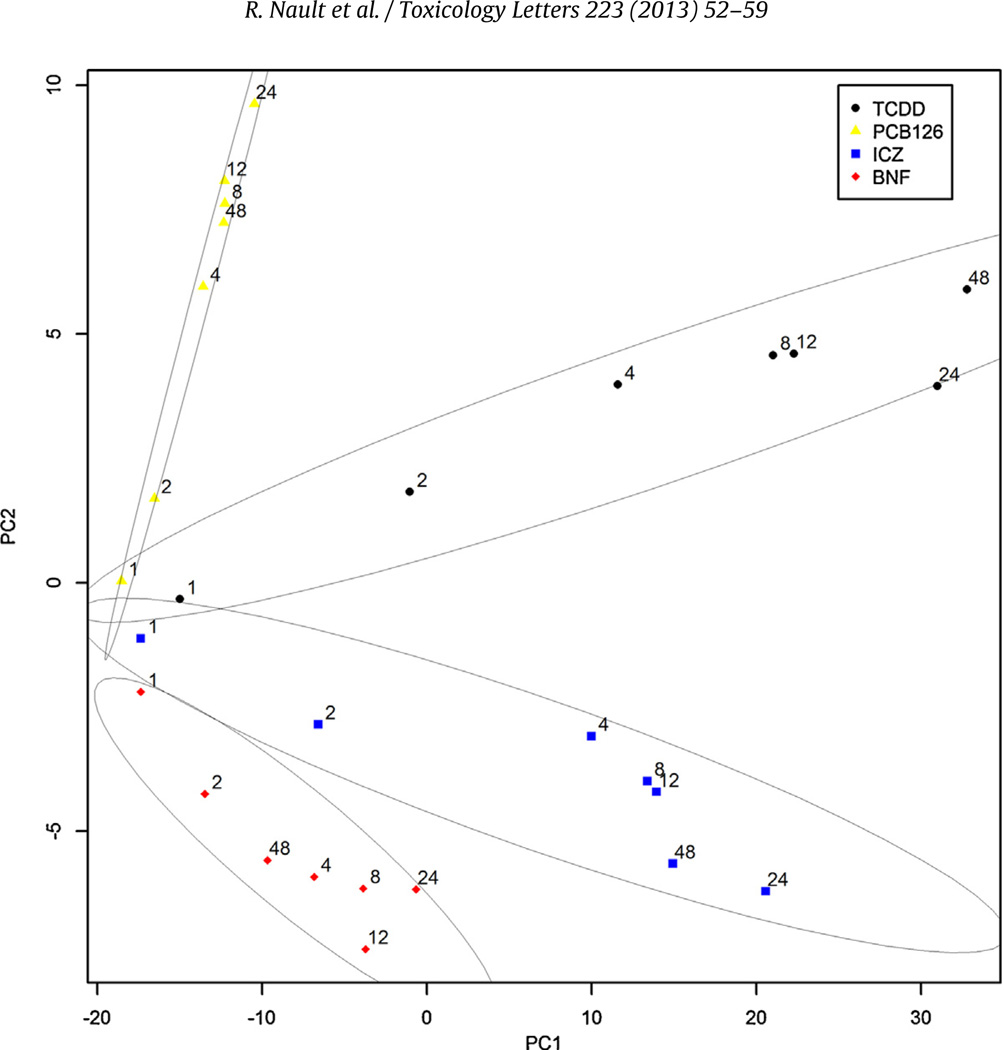
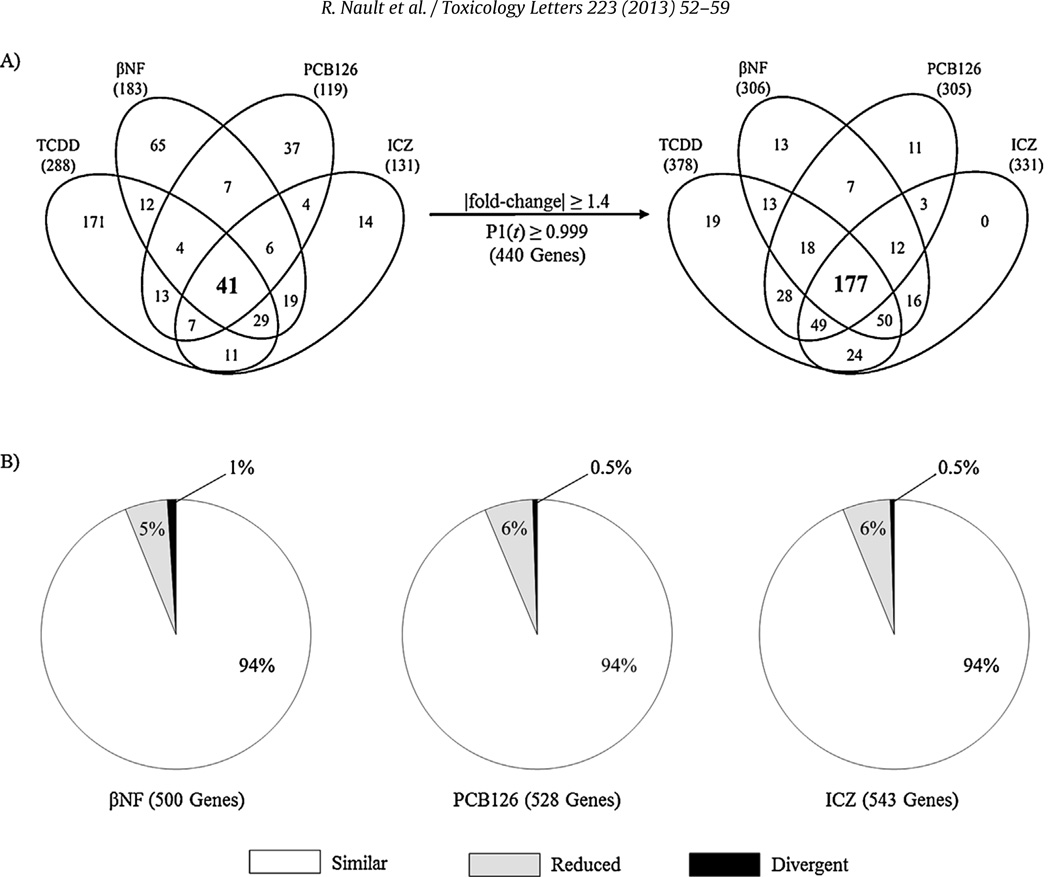
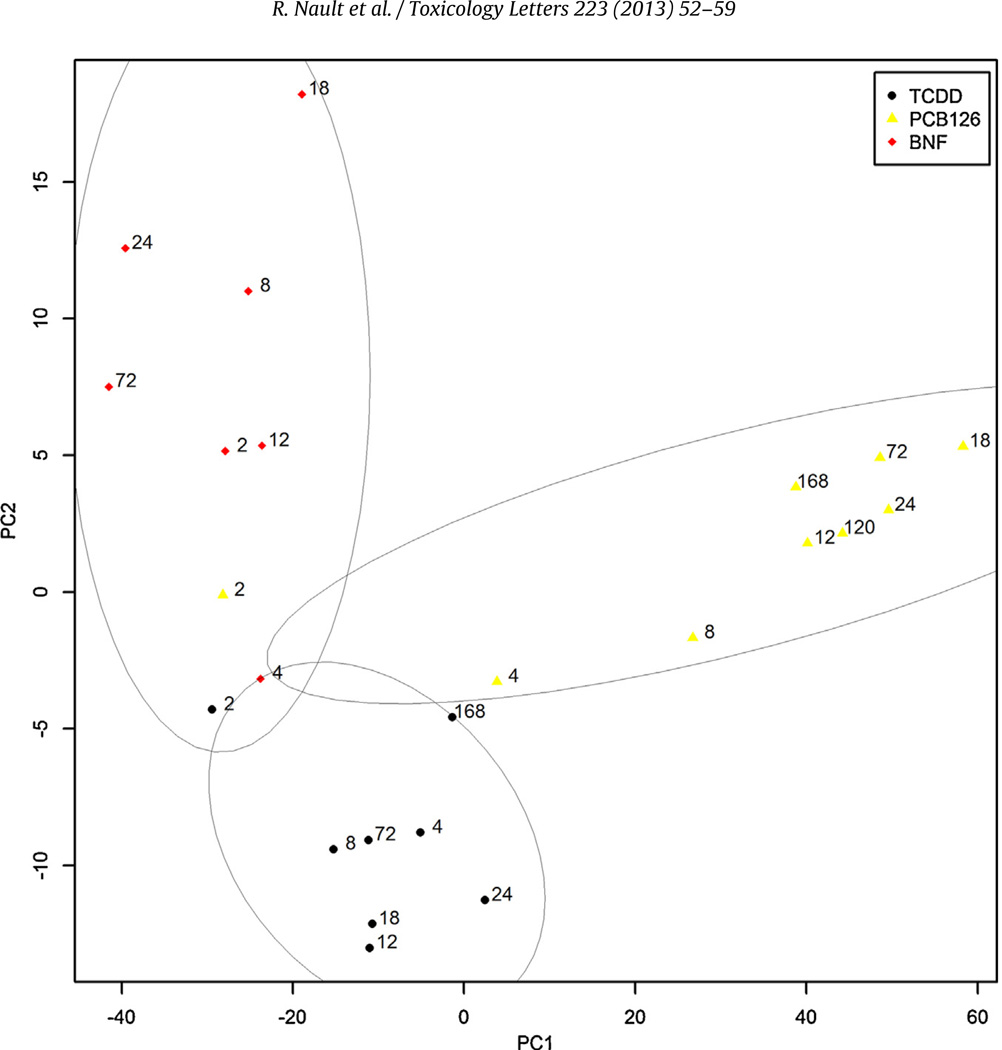
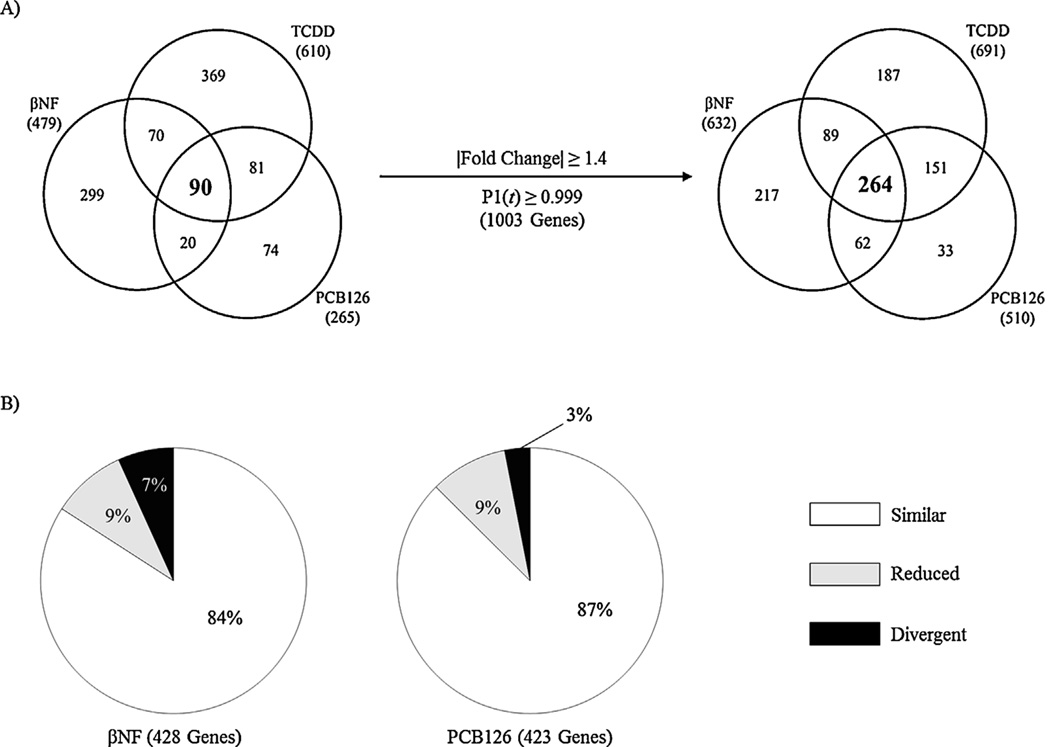
The aryl hydrocarbon receptor (AhR) is a promiscuous receptor activated by structurally diverse synthetic and natural compounds. AhR activation may lead to ligand-specific changes in gene expression despite similarities in mode of action. Therefore, differential gene expression elicited by four structurally diverse, high affinity AhR ligands (2,3,7,8-tetrachlorodibenzo-p-dioxin (TCDD; 10nM, 30 μg/kg), 3,3',4,4',5-pentachlorobiphenyl (PCB126; 100nM, 300μg/kg), β-naphthoflavone (βNF; 10 μM, 90 mg/kg), and indolo[3,2-b]carbazole (ICZ; 1μM)) in mouse Hepa1c1c7 hepatoma cells and C57BL/6 mouse liver samples were compared. A total of 288, 183, 119, and 131 Hepa1c1c7 genes were differentially expressed (|fold-change|≥ 1.5, P1(t)≥ 0.9999) by TCDD, βNF, PCB126, and ICZ, respectively. Only ∼35% were differentially expressed by all 4 ligands in Hepa1c1c7 cells. In vivo, 661, 479, and 265 hepatic genes were differentially expressed following treatment with TCDD, βNF, and PCB126, respectively. Similar to Hepa1c1c7 cells, ≤ 34% of gene expression changes were common across all ligands. Principal components analysis identified time-dependent gene expression divergence. Comparisons of ligand-elicited expression between Hepa1c1c7 cells and mouse liver identified only 11 common gene expression changes across all ligands. Although metabolism may explain some ligand-specific gene expression changes, PCB126, βNF, and ICZ also elicited divergent expression compared to TCDD, suggestive of selective AhR modulation.
芳香烃受体 (AhR) 是一种多通道受体,可被结构多样的合成和天然化合物激活。尽管作用模式相似,但 AhR 的激活可能导致配体特异性的基因表达变化。因此,用四种结构不同、高亲和力的 AhR 配体(2,3,7,8-四氯二苯并-p-二恶英 (TCDD;10nM,30μg/kg)、3,3',4,4',5-五氯联苯 (PCB126;100nM,300μg/kg)、β-萘黄酮 (βNF;10μM,90mg/kg)和吲哚并[3,2-b]咔唑 (ICZ;1μM))处理 Hepa1c1c7 肝癌细胞和 C57BL/6 小鼠肝组织样本,比较它们诱导的基因表达变化。TCDD、βNF、PCB126 和 ICZ 分别使 Hepa1c1c7 细胞中 288、183、119 和 131 个基因差异表达(|fold-change|≥1.5,P1(t)≥0.9999)。只有约 35%的基因在 Hepa1c1c7 细胞中被这四种配体共同差异表达。在体内,TCDD、βNF 和 PCB126 处理分别使 661、479 和 265 个肝基因差异表达。与 Hepa1c1c7 细胞相似,≤34%的基因表达变化在所有配体中都是共同的。主成分分析确定了时间依赖性基因表达的差异。将 Hepa1c1c7 细胞和小鼠肝组织中配体诱导的表达进行比较,仅在所有配体中发现了 11 个共同的基因表达变化。虽然代谢可能解释了一些配体特异性的基因表达变化,但与 TCDD 相比,PCB126、βNF 和 ICZ 也诱导了不同的表达,提示 AhR 选择性调节。