Department of Immunobiology, Yale University School of Medicine, New Haven, Connecticut 06520, USA.
Nature. 2011 Apr 28;472(7344):476-80. doi: 10.1038/nature09973.
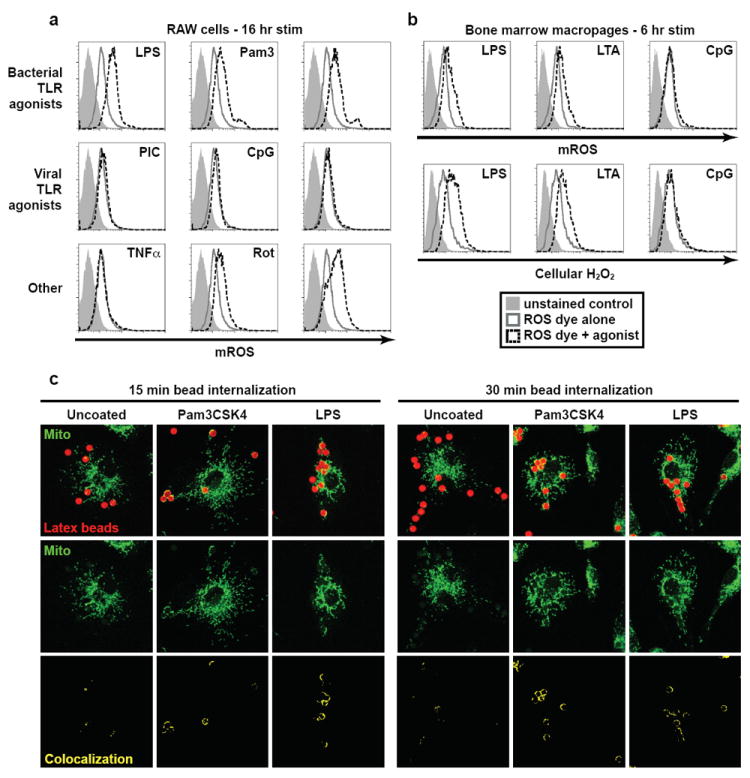
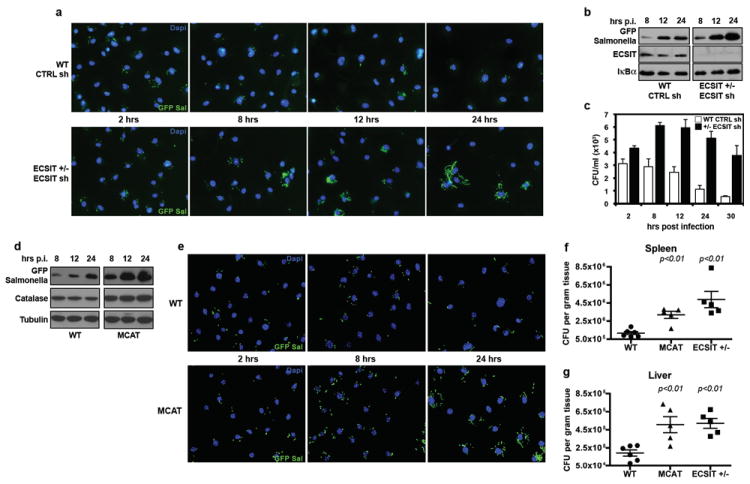
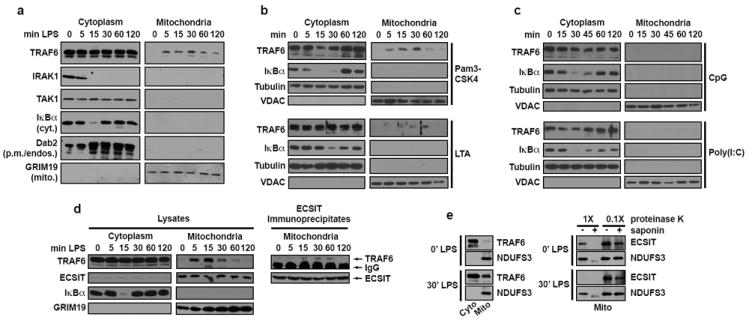
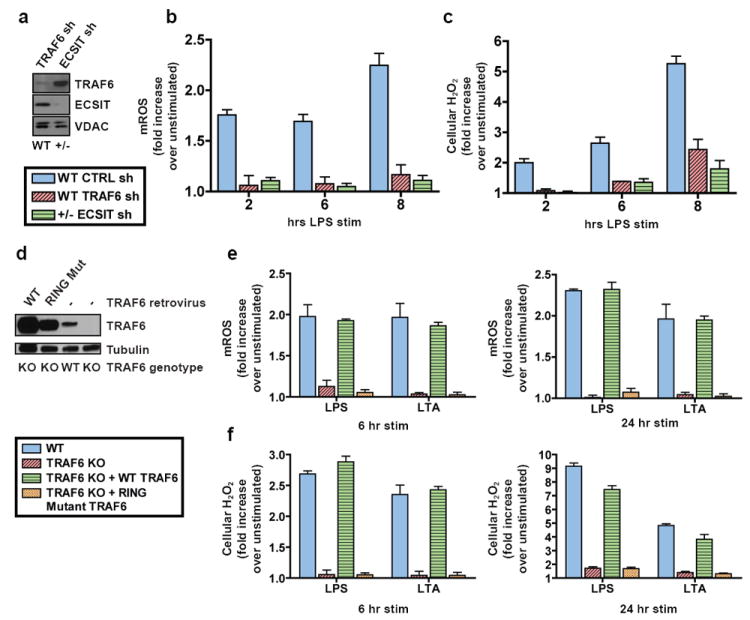
Reactive oxygen species (ROS) are essential components of the innate immune response against intracellular bacteria and it is thought that professional phagocytes generate ROS primarily via the phagosomal NADPH oxidase machinery. However, recent studies have suggested that mitochondrial ROS (mROS) also contribute to mouse macrophage bactericidal activity, although the mechanisms linking innate immune signalling to mitochondria for mROS generation remain unclear. Here we demonstrate that engagement of a subset of Toll-like receptors (TLR1, TLR2 and TLR4) results in the recruitment of mitochondria to macrophage phagosomes and augments mROS production. This response involves translocation of a TLR signalling adaptor, tumour necrosis factor receptor-associated factor 6 (TRAF6), to mitochondria, where it engages the protein ECSIT (evolutionarily conserved signalling intermediate in Toll pathways), which is implicated in mitochondrial respiratory chain assembly. Interaction with TRAF6 leads to ECSIT ubiquitination and enrichment at the mitochondrial periphery, resulting in increased mitochondrial and cellular ROS generation. ECSIT- and TRAF6-depleted macrophages have decreased levels of TLR-induced ROS and are significantly impaired in their ability to kill intracellular bacteria. Additionally, reducing macrophage mROS levels by expressing catalase in mitochondria results in defective bacterial killing, confirming the role of mROS in bactericidal activity. These results reveal a novel pathway linking innate immune signalling to mitochondria, implicate mROS as an important component of antibacterial responses and further establish mitochondria as hubs for innate immune signalling.
活性氧 (ROS) 是固有免疫反应对抗细胞内细菌的重要组成部分,人们认为专业吞噬细胞主要通过吞噬体 NADPH 氧化酶机制产生 ROS。然而,最近的研究表明,线粒体 ROS (mROS) 也有助于小鼠巨噬细胞的杀菌活性,尽管将固有免疫信号传递到线粒体以产生 mROS 的机制尚不清楚。在这里,我们证明了一组 Toll 样受体 (TLR1、TLR2 和 TLR4) 的结合导致线粒体向巨噬细胞吞噬体的募集,并增强 mROS 的产生。这种反应涉及 TLR 信号转导衔接蛋白肿瘤坏死因子受体相关因子 6 (TRAF6) 的易位到线粒体,其中它与蛋白 ECSIT( Toll 途径中进化保守的信号中间物)结合,这与线粒体呼吸链组装有关。与 TRAF6 的相互作用导致 ECSIT 的泛素化和富集在线粒体周围,导致线粒体和细胞 ROS 的生成增加。ECSIT 和 TRAF6 耗尽的巨噬细胞中 TLR 诱导的 ROS 水平降低,其杀死细胞内细菌的能力显著受损。此外,通过在线粒体中表达过氧化氢酶来降低巨噬细胞的 mROS 水平会导致细菌杀伤功能缺陷,这证实了 mROS 在杀菌活性中的作用。这些结果揭示了一条将固有免疫信号传递到线粒体的新途径,表明 mROS 是抗菌反应的重要组成部分,并进一步确立了线粒体作为固有免疫信号的枢纽。