Ann Arbor, Mich.; and Philadelphia, Pa. From the Section of Plastic Surgery, Department of Surgery, University of Michigan Health System, and the American Board of Plastic Surgery.
Plast Reconstr Surg. 2011 May;127(5):2101-2107. doi: 10.1097/PRS.0b013e31820e91ca.
The American Board of Plastic Surgery Maintenance of Certification program includes the submission of 10 consecutive cases in one of 20 tracer modules for Performance in Practice evaluation. This has resulted in a wealth of data on the practice patterns of Board diplomates. The specific aim of this project was to examine these data to determine whether diplomates are adhering to evidence-based practice guidelines.
The authors searched the Agency for Healthcare Research and Quality National Guideline Clearinghouse for guidelines. Once the guidelines were identified, the authors compared the recommendations with data entered by Board diplomates for the tracer modules in question. It is important to note that guidelines are recommendations based on the best available evidence and that all guidelines are subject to change, pending periodic reexamination of the evidence.
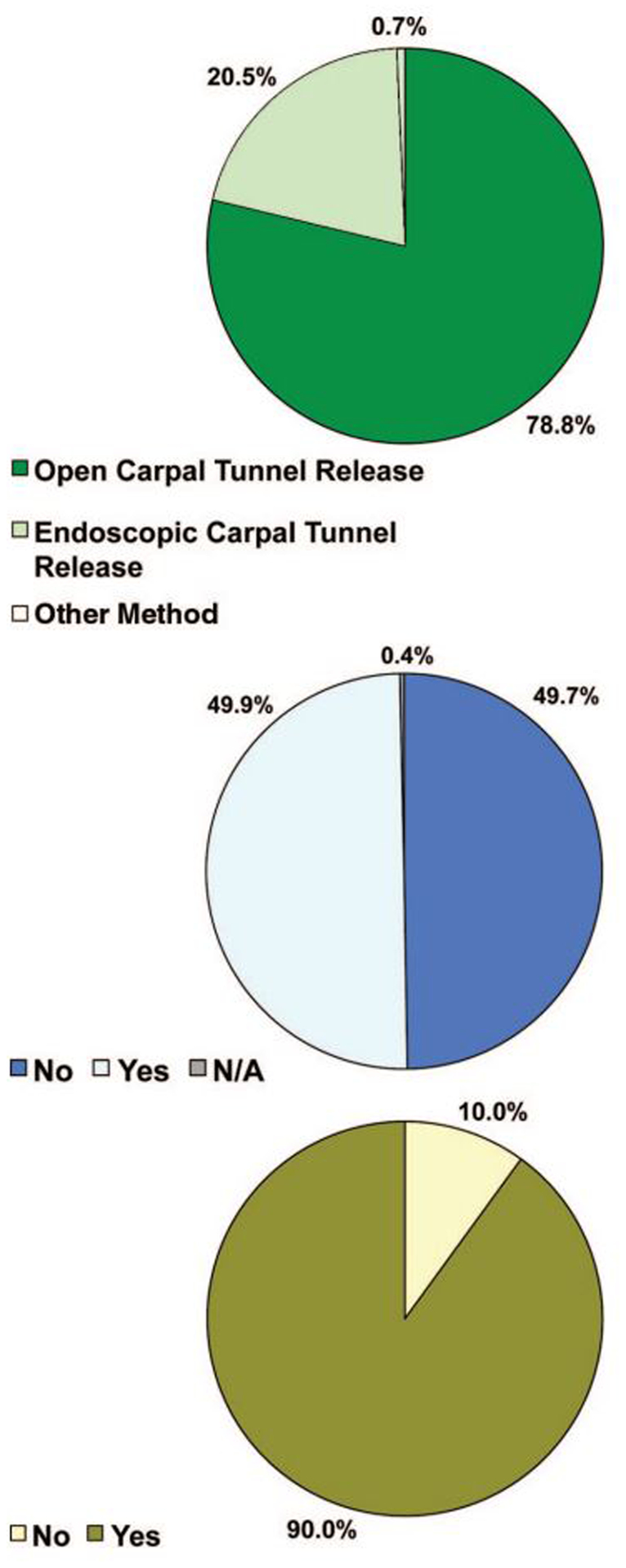
Diplomates are adhering to guidelines regarding age of cosmetic breast augmentation patients, use of prophylactic antibiotics and deep venous thrombosis prophylaxis in abdominoplasty patients, and use of carpal tunnel release in the treatment of carpal tunnel syndrome. Half the diplomates, however, are using splints following carpal tunnel release, despite recommendations to the contrary. In addition, only half the diplomates are following guidelines recommending mammography before breast augmentation. Furthermore, 90 percent of diplomates are not following recommendations against the use of deep venous thrombosis prophylaxis for patients with acute lower limb trauma.
This study revealed that there were few guidelines with which to compare diplomate performance. Steps should be taken to increase the number of evidence-based practice guidelines for plastic surgery procedures.
美国整形外科学会维持认证计划包括在 20 个追踪器模块中的一个模块中连续提交 10 例病例,以进行实践表现评估。这产生了大量关于委员会认证医生实践模式的数据。该项目的具体目的是检查这些数据,以确定认证医生是否遵守基于证据的实践指南。
作者在医疗保健研究和质量机构的国家指南清理中心搜索指南。一旦确定了指南,作者就将这些建议与委员会认证医生在相关追踪器模块中输入的数据进行了比较。需要注意的是,指南是基于最佳现有证据的建议,并且所有指南都可能会根据证据的定期重新审查而发生变化。
认证医生在美容乳房增大患者的年龄、预防性抗生素的使用和腹部整形术患者的深静脉血栓预防、腕管综合征治疗中的腕管松解术方面都遵守了指南。然而,有一半的认证医生在腕管松解术后使用夹板,尽管有相反的建议。此外,只有一半的认证医生遵循建议在乳房增大术前进行乳房 X 光检查。此外,90%的认证医生不遵循不建议对急性下肢创伤患者使用深静脉血栓预防的建议。
本研究表明,可供比较认证医生表现的指南很少。应采取措施增加整形外科手术程序的基于证据的实践指南数量。