Department of Cellular and Molecular Medicine, Howard Hughes Medical Institute, University of California at San Diego, La Jolla, California 92093-0668, USA.
Nature. 2011 May 12;473(7346):181-6. doi: 10.1038/nature09969. Epub 2011 May 1.
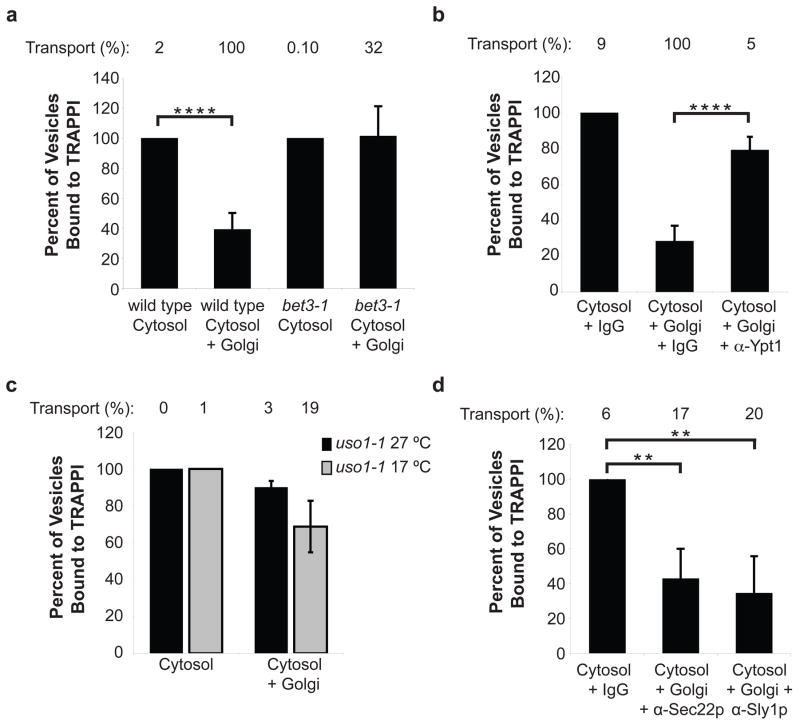
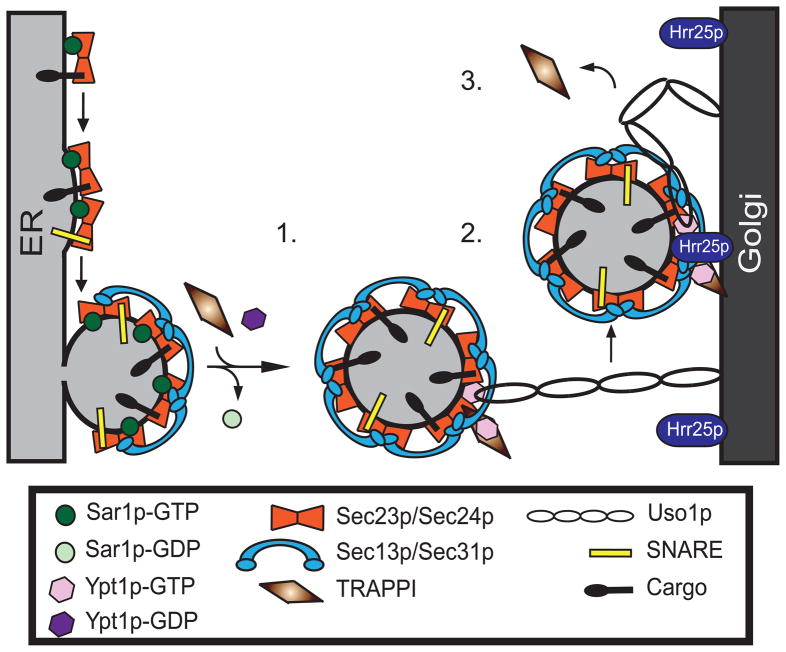
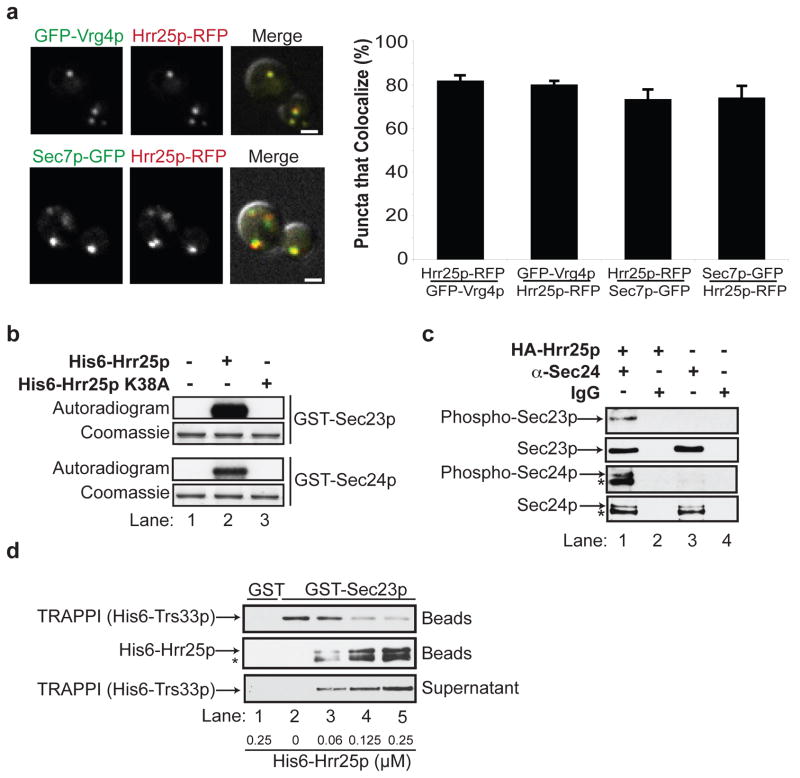
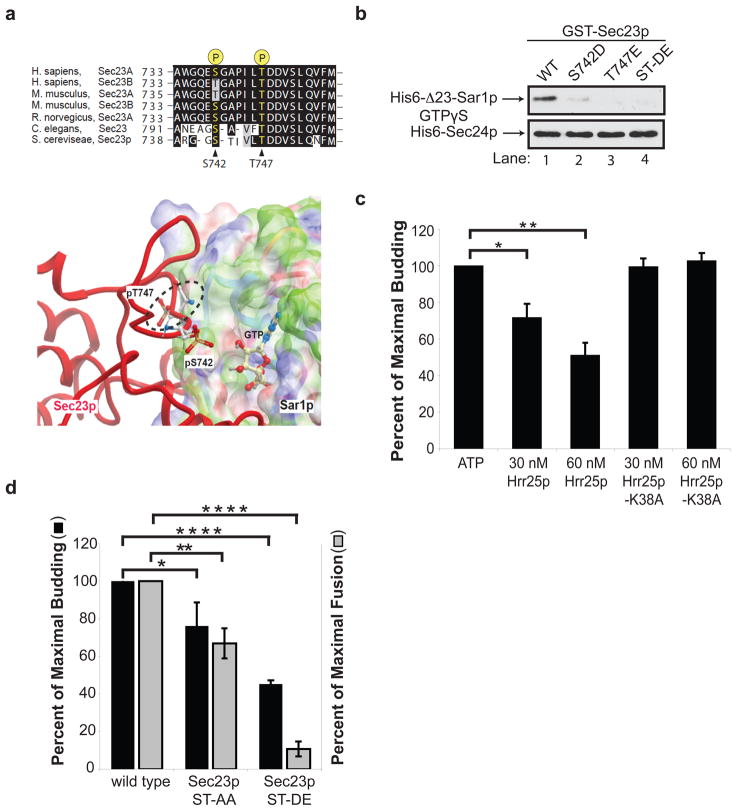
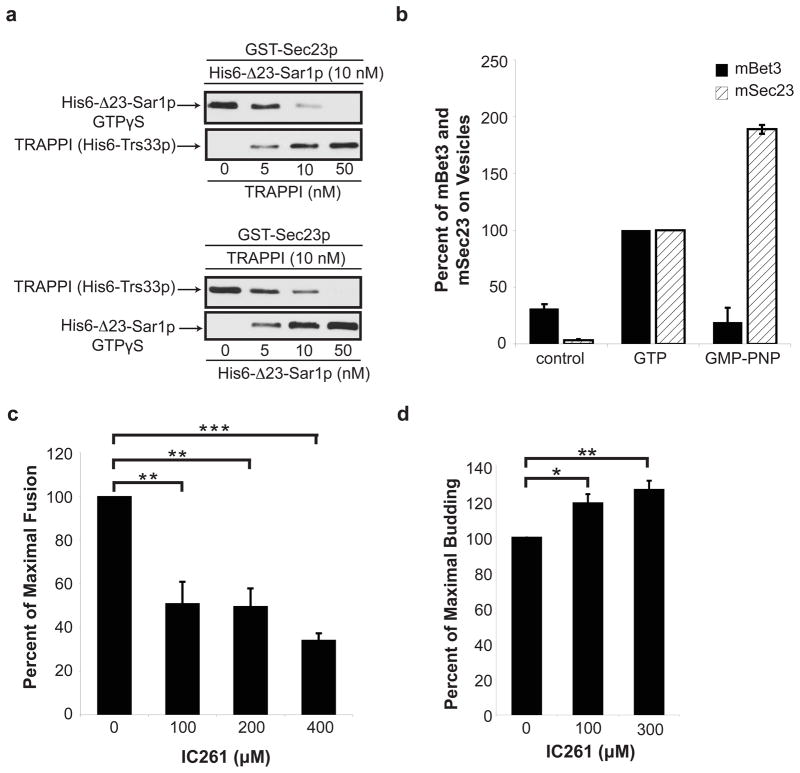
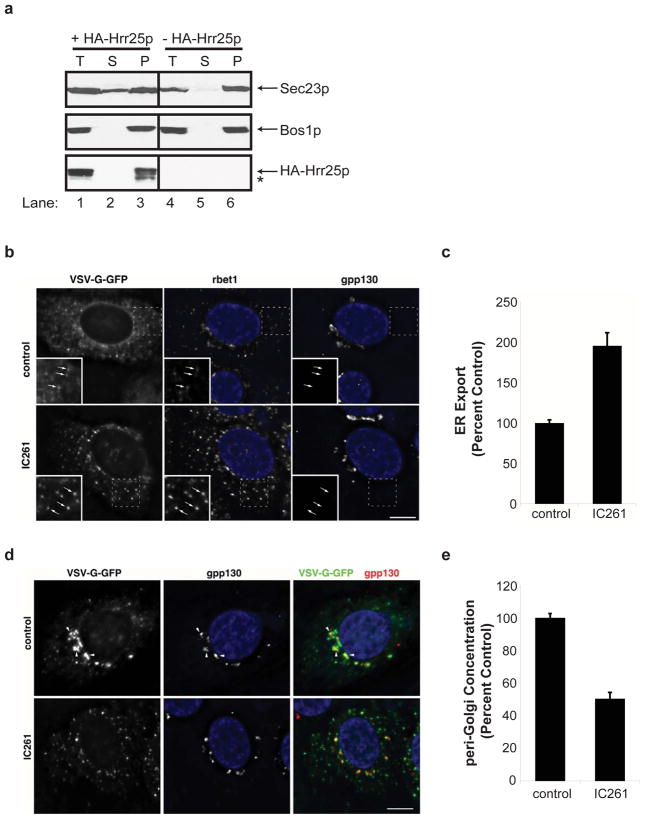
How the directionality of vesicle traffic is achieved remains an important unanswered question in cell biology. The Sec23p/Sec24p coat complex sorts the fusion machinery (SNAREs) into vesicles as they bud from the endoplasmic reticulum (ER). Vesicle tethering to the Golgi begins when the tethering factor TRAPPI binds to Sec23p. Where the coat is released and how this event relates to membrane fusion is unknown. Here we use a yeast transport assay to demonstrate that an ER-derived vesicle retains its coat until it reaches the Golgi. A Golgi-associated kinase, Hrr25p (CK1δ orthologue), then phosphorylates the Sec23p/Sec24p complex. Coat phosphorylation and dephosphorylation are needed for vesicle fusion and budding, respectively. Additionally, we show that Sec23p interacts in a sequential manner with different binding partners, including TRAPPI and Hrr25p, to ensure the directionality of ER-Golgi traffic and prevent the back-fusion of a COPII vesicle with the ER. These events are conserved in mammalian cells.
囊泡运输的方向性是如何实现的,这仍然是细胞生物学中一个重要的未解决的问题。Sec23p/Sec24p 衣被复合物在融合机制(SNAREs)从内质网(ER)出芽时将其分拣到囊泡中。当 tethering 因子 TRAPPI 与 Sec23p 结合时,囊泡开始与高尔基体 tethering。衣被复合物释放的位置以及该事件与膜融合的关系尚不清楚。在这里,我们使用酵母运输测定来证明源自 ER 的囊泡在到达高尔基体之前保留其衣被。然后,高尔基体相关激酶 Hrr25p(CK1δ 同源物)磷酸化 Sec23p/Sec24p 复合物。衣被的磷酸化和去磷酸化分别是囊泡融合和出芽所必需的。此外,我们还表明 Sec23p 以顺序方式与不同的结合伙伴相互作用,包括 TRAPPI 和 Hrr25p,以确保 ER-Golgi 运输的方向性,并防止 COPII 囊泡与 ER 的反向融合。这些事件在哺乳动物细胞中是保守的。