Georgoulias Panagiotis, Valotassiou Varvara, Tsougos Ioannis, Demakopoulos Nikolaos
Department of Nuclear Medicine, University Hospital of Larissa, Larissa, Greece.
Curr Cardiol Rev. 2010 May;6(2):98-103. doi: 10.2174/157340310791162677.
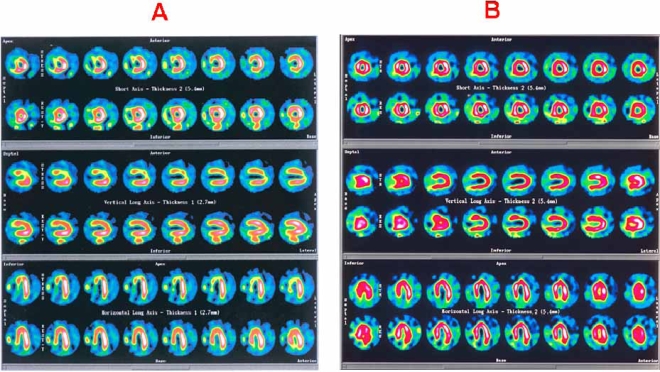
Coronary artery disease (CAD) is the most prevalent form of cardiovascular disease affecting about 13 million Americans, while more than one million percutaneous transluminal intervention (PCI) procedures are performed annually in the USA. The relative high occurrence of restenosis, despite stent implementation, seems to be the primary limitation of PCI. Over the last decades, single photon emission computed tomography (SPECT) myocardial perfusion imaging (MPI), has proven an invaluable tool for the diagnosis of CAD and patients' risk stratification, providing useful information regarding the decision about revascularization and is well suited to assess patients after intervention. Information gained from post-intervention MPI is crucial to differentiate patients with angina from those with exo-cardiac chest pain syndromes, to assess peri-intervention myocardial damage, to predict-detect restenosis after PCI, to detect CAD progression in non-revascularized vessels, to evaluate the effects of intervention if required for occupational reasons and to evaluate patients' long-term prognosis. On the other hand, chest pain and exercise electrocardiography are largely unhelpful in identifying patients at risk after PCI.Although there are enough published data demonstrating the value of myocardial perfusion SPECT imaging in patients after PCI, there is still debate on whether or not these tests should be performed routinely.
冠状动脉疾病(CAD)是最常见的心血管疾病形式,影响着约1300万美国人,而美国每年进行超过100万例经皮腔内介入治疗(PCI)手术。尽管实施了支架置入术,但再狭窄的相对高发生率似乎是PCI的主要局限性。在过去几十年中,单光子发射计算机断层扫描(SPECT)心肌灌注成像(MPI)已被证明是诊断CAD和对患者进行风险分层的宝贵工具,可为血管重建决策提供有用信息,并且非常适合评估介入治疗后的患者。从介入治疗后的MPI获得的信息对于区分心绞痛患者与心外胸痛综合征患者、评估围介入期心肌损伤、预测-检测PCI术后再狭窄、检测未进行血管重建的血管中的CAD进展、评估因职业原因需要时的介入治疗效果以及评估患者的长期预后至关重要。另一方面,胸痛和运动心电图在识别PCI术后的高危患者方面作用不大。尽管有足够多已发表的数据证明心肌灌注SPECT成像在PCI术后患者中的价值,但对于这些检查是否应常规进行仍存在争议。