Department of Medical Biochemistry and Biophysics, Umeå University, Umeå, Sweden.
PLoS One. 2011 Apr 25;6(4):e18513. doi: 10.1371/journal.pone.0018513.
Auto-antibodies with specificity to self-antigens have been implicated in a wide variety of neurological diseases, including Parkinson's (PD) and Alzheimer's diseases, being sensitive indicators of neurodegeneration and focus for disease prevention. Of particular interest are the studies focused on the auto-immune responses to amyloidogenic proteins associated with diseases and their applications in therapeutic treatments such as vaccination with amyloid antigens and antibodies in PD, Alzheimer's disease and potentially other neurodegeneration ailments.
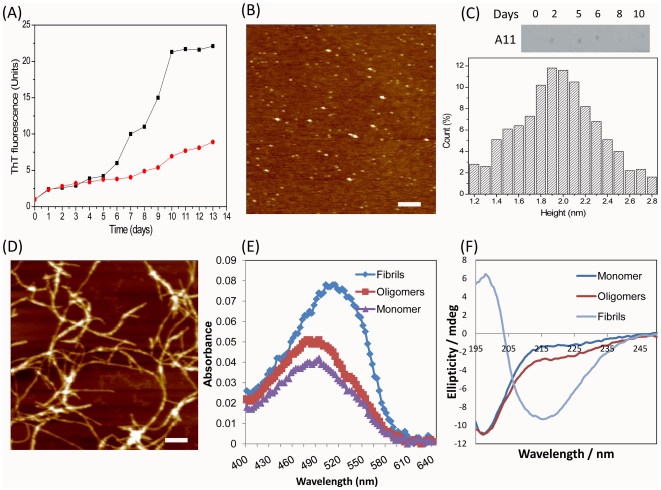
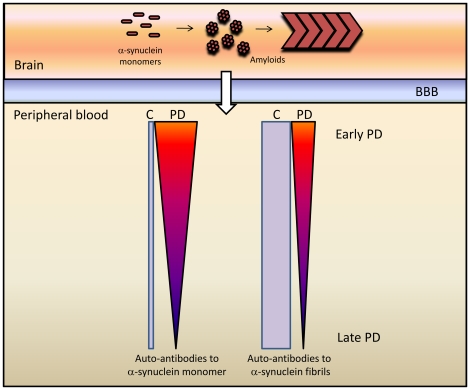
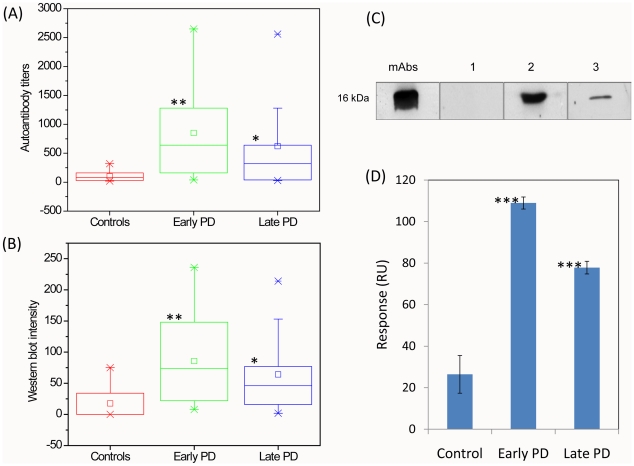
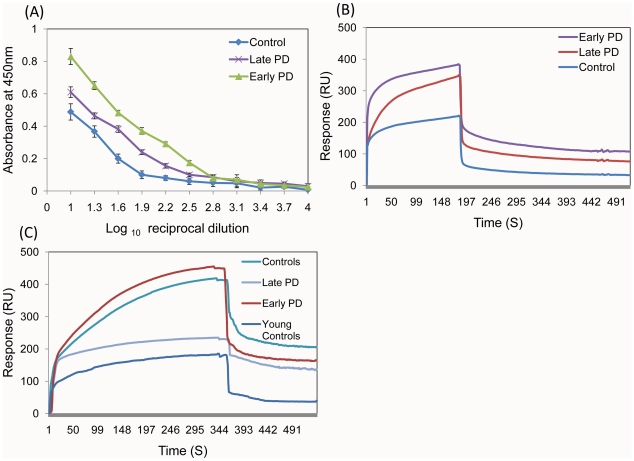
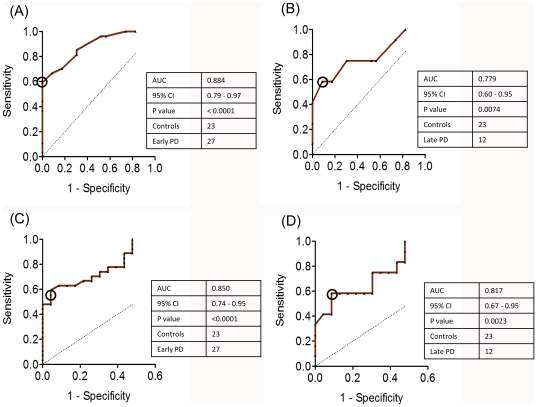
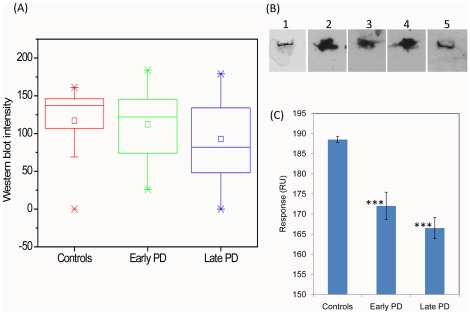
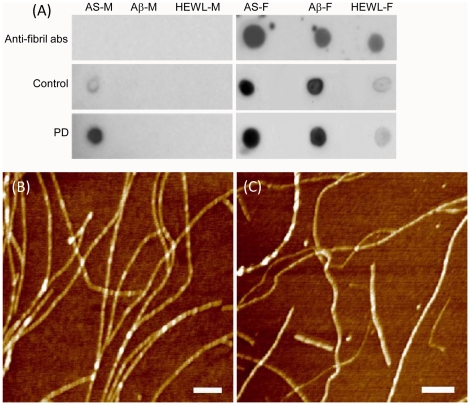
METHODOLOGY/PRINCIPAL FINDINGS: Generated auto-antibodies towards the major amyloidogenic protein involved in PD Lewy bodies--α-synuclein and its amyloid oligomers and fibrils were measured in the blood sera of early and late PD patients and controls by using ELISA, Western blot and Biacore surface plasmon resonance. We found significantly higher antibody levels towards monomeric α-synuclein in the blood sera of PD patients compared to controls, though the responses decreased with PD progression (P<0.0001). This indicates potential protective role of autoimmunity in maintaining the body homeostasis and clearing protein species whose disbalance may lead to amyloid assembly. There were no noticeable immune responses towards amyloid oligomers, but substantially increased levels of IgGs towards α-synuclein amyloid fibrils both in PD patients and controls, which subsided with the disease progression (P<0.0001). Pooled IgGs from PD patients and controls interacted also with the amyloid fibrils of Aβ (1-40) and hen lysozyme, however the latter were recognized with lower affinity. This suggests that IgGs bind to the generic amyloid conformational epitope, displaying higher specificity towards human amyloid species associated with neurodegeneration.
CONCLUSIONS/SIGNIFICANCE: Our findings may suggest the protective role of autoimmunity in PD and therefore immune reactions towards PD major amyloid protein--α-synuclein can be of value in the development of treatment and diagnostic strategies, especially during the early disease stages.
针对自身抗原的自身抗体与多种神经退行性疾病有关,包括帕金森病(PD)和阿尔茨海默病,它们是神经退行性变的敏感指标,也是疾病预防的重点。特别值得关注的是那些针对与疾病相关的淀粉样蛋白的自身免疫反应及其在治疗中的应用的研究,如在 PD、阿尔茨海默病中用淀粉样蛋白抗原和抗体进行疫苗接种,以及在其他潜在神经退行性疾病中。
方法/主要发现:使用 ELISA、Western blot 和 Biacore 表面等离子体共振技术,在早期和晚期 PD 患者和对照组的血清中测量了针对与 PD 路易体相关的主要淀粉样蛋白-α-突触核蛋白及其淀粉样寡聚体和纤维的自身抗体。我们发现,与对照组相比,PD 患者血清中针对单体α-突触核蛋白的抗体水平显著升高,尽管随着 PD 进展,反应降低(P<0.0001)。这表明自身免疫在维持体内平衡和清除可能导致淀粉样组装的蛋白质失衡方面可能发挥保护作用。针对淀粉样寡聚体没有明显的免疫反应,但在 PD 患者和对照组中,针对α-突触核蛋白淀粉样纤维的 IgG 水平显著升高,随着疾病进展而降低(P<0.0001)。PD 患者和对照组的混合 IgG 也与 Aβ(1-40)和鸡卵清溶菌酶的淀粉样纤维相互作用,但后者的亲和力较低。这表明 IgG 结合到通用淀粉样构象表位,对与神经退行性变相关的人类淀粉样物质显示出更高的特异性。
结论/意义:我们的发现可能表明自身免疫在 PD 中的保护作用,因此针对 PD 主要淀粉样蛋白-α-突触核蛋白的免疫反应可能对治疗和诊断策略的发展具有价值,特别是在疾病早期阶段。