Luo Kui, Yang Jiyuan, Kopečková Pavla, Kopeček Jindřich
Department of Pharmaceutics and Pharmaceutical Chemistry/CCCD, University of Utah, Salt Lake City, Utah 84112-9452, USA.
Macromolecules. 2011 Apr 26;44(8):2481-2488. doi: 10.1021/ma102574e.
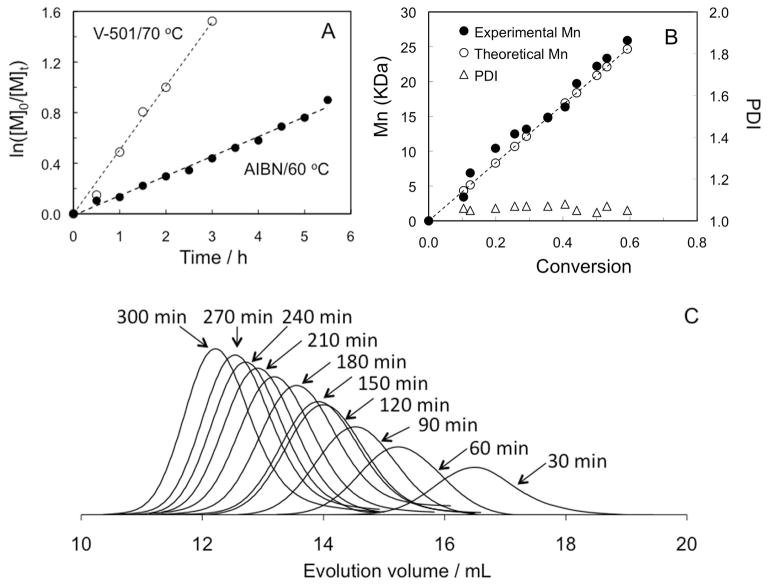
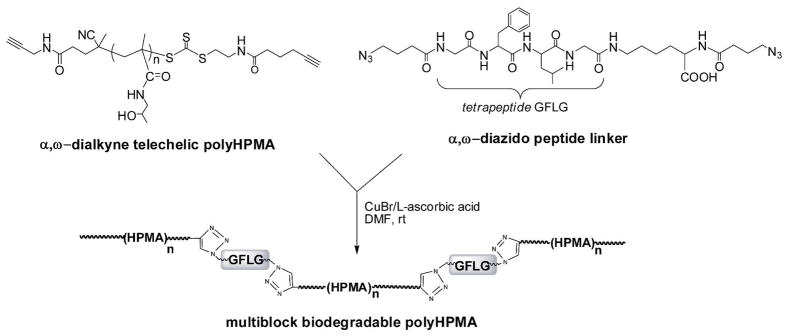
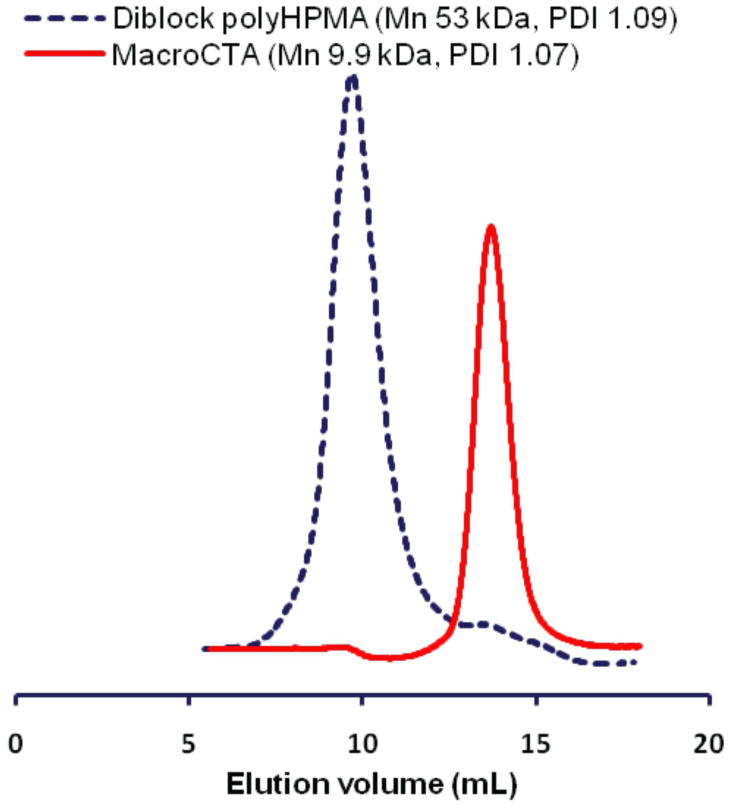
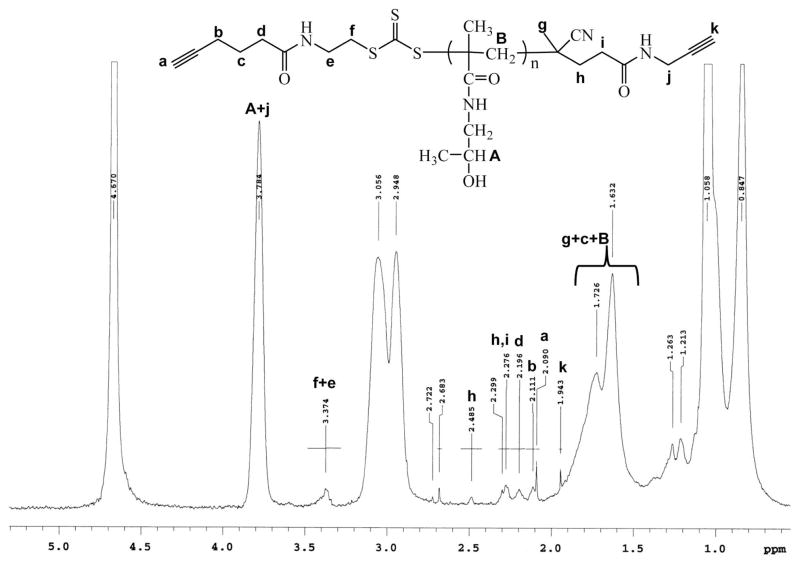
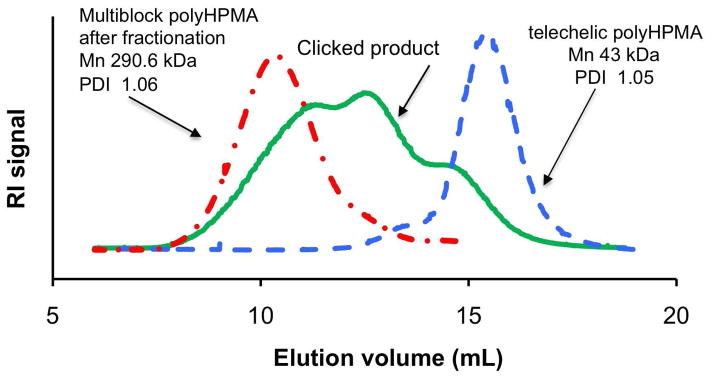
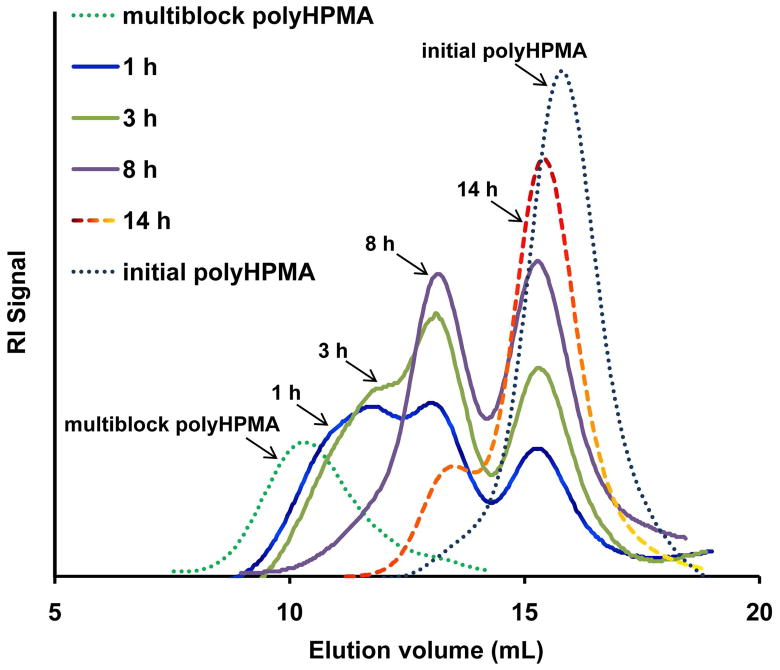
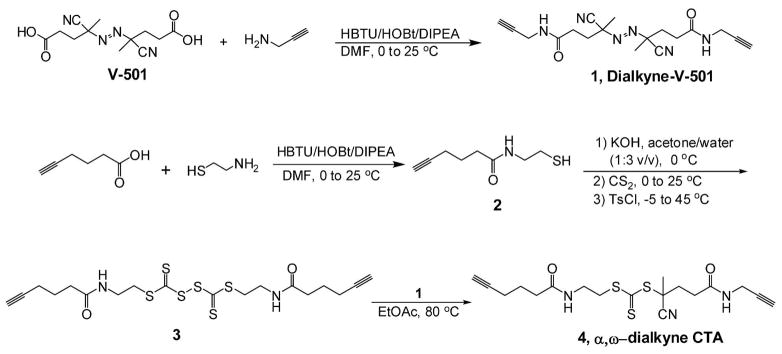
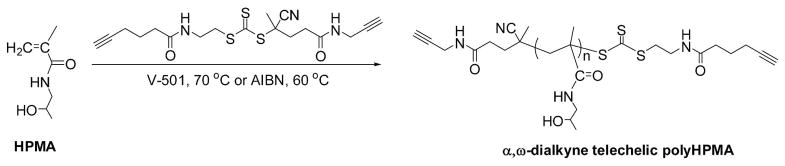
A new bifunctional chain transfer agent (CTA) containing alkyne end groups was designed, synthesized and used for direct synthesis of clickable telechelic polymers. Good control of reversible addition-fragmentation chain transfer (RAFT) polymerization of N-(2-hydroxypropyl)methacrylamide (HPMA) was achieved by using the new CTA, as indicated by a linear increase of number average molecular weight (Mn) with conversion and low polydispersity (PDI) (<1.1). In particular, enzymatically degradable multiblock HPMA polymers were readily prepared by subsequent reaction with αω, -diazido oligopeptide (GFLG) sequence via Cu(I) catalyzed alkyne-azide cycloaddition. Upon exposure of high molecular weight fractions of multiblock polyHPMA to papain or cathepsin B, the polymer was degraded into segments of molecular weight and narrow polydispersity similar to those of the initial telechelic polyHPMA.
设计、合成了一种含炔端基的新型双功能链转移剂(CTA),并将其用于可点击遥爪聚合物的直接合成。使用这种新型CTA实现了对N-(2-羟丙基)甲基丙烯酰胺(HPMA)的可逆加成-断裂链转移(RAFT)聚合的良好控制,数均分子量(Mn)随转化率呈线性增加以及低多分散性(PDI)(<1.1)表明了这一点。特别地,通过随后与αω-二叠氮基寡肽(GFLG)序列经Cu(I)催化的炔-叠氮环加成反应,易于制备可酶解的多嵌段HPMA聚合物。将多嵌段聚HPMA的高分子量级分暴露于木瓜蛋白酶或组织蛋白酶B后,该聚合物被降解为分子量和多分散性与初始遥爪聚HPMA相似的片段。