Institute of Molecular Biology and 2 Molecular and Cell Biology Program, Taiwan International Graduate Program, Graduate Institute of Life Sciences, National Defense Medical Center and Institute of Molecular Biology, Academia Sinica, Taipei 115, Taiwan.
J Cell Biol. 2011 May 16;193(4):769-84. doi: 10.1083/jcb.201008050. Epub 2011 May 9.
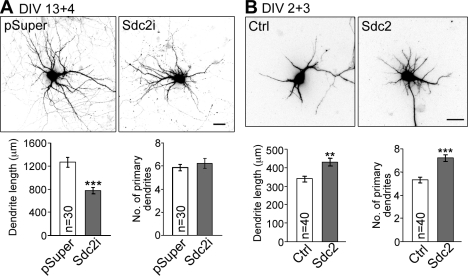
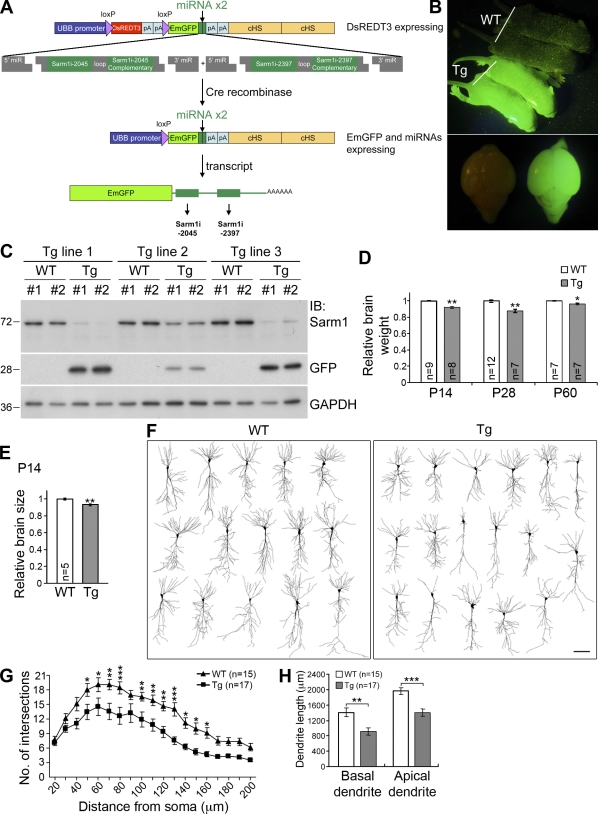
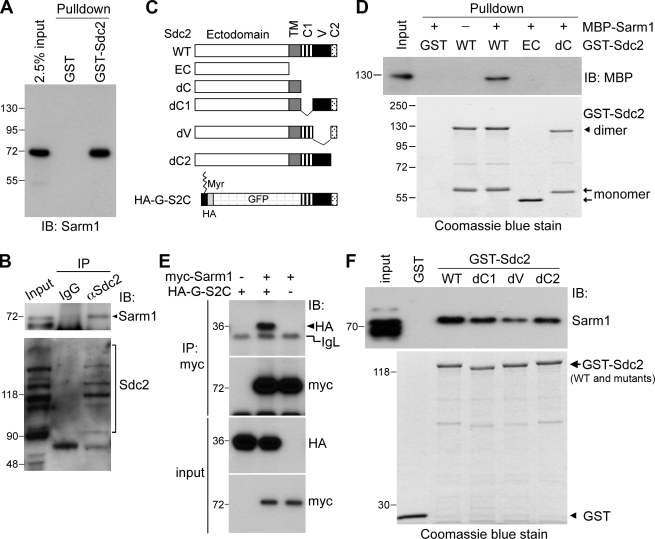
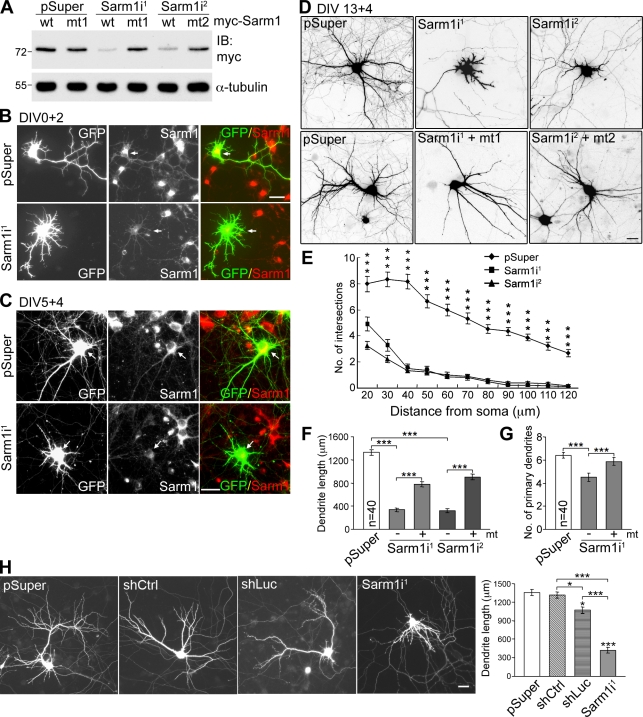
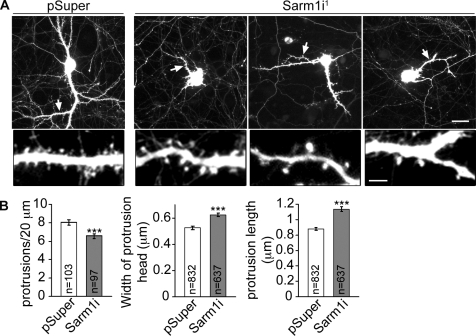
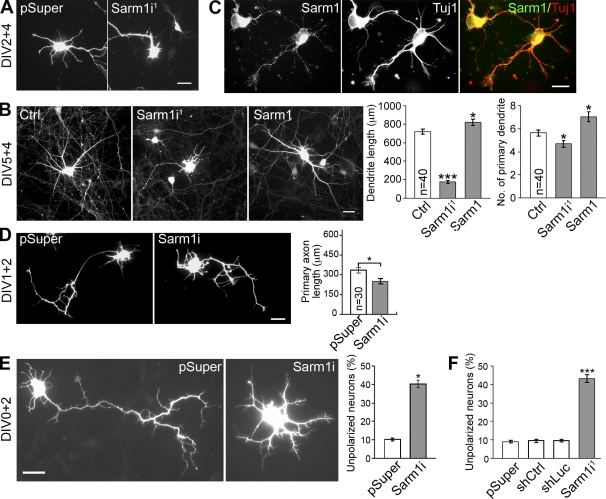
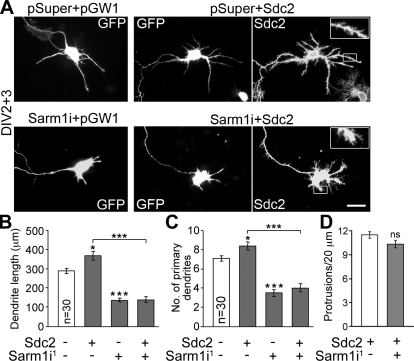
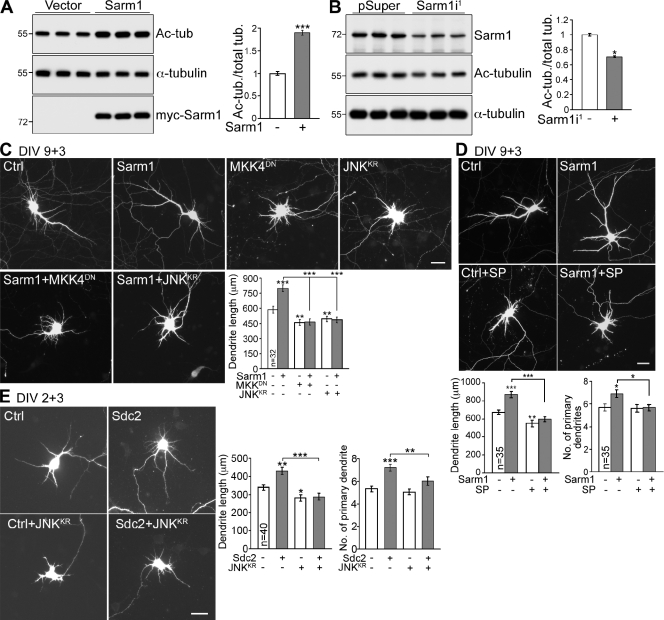
Dendritic arborization is a critical neuronal differentiation process. Here, we demonstrate that syndecan-2 (Sdc2), a synaptic heparan sulfate proteoglycan that triggers dendritic filopodia and spine formation, regulates dendritic arborization in cultured hippocampal neurons. This process is controlled by sterile α and TIR motif-containing 1 protein (Sarm1), a negative regulator of Toll-like receptor 3 (TLR3) in innate immunity signaling. We show that Sarm1 interacts with and receives signal from Sdc2 and controls dendritic arborization through the MKK4-JNK pathway. In Sarm1 knockdown mice, dendritic arbors of neurons were less complex than those of wild-type littermates. In addition to acting downstream of Sdc2, Sarm1 is expressed earlier than Sdc2, which suggests that it has multiple roles in neuronal morphogenesis. Specifically, it is required for proper initiation and elongation of dendrites, axonal outgrowth, and neuronal polarization. These functions likely involve Sarm1-mediated regulation of microtubule stability, as Sarm1 influenced tubulin acetylation. This study thus reveals the molecular mechanism underlying the action of Sarm1 in neuronal morphogenesis.
树突分支是神经元分化的关键过程。在这里,我们证明了突触硫酸乙酰肝素蛋白聚糖 syndecan-2(Sdc2)可以触发树突丝状伪足和棘突的形成,从而调节培养的海马神经元中的树突分支。这个过程受到无菌α和 TIR 结构域蛋白 1(Sarm1)的控制,Sarm1 是先天免疫信号中 Toll 样受体 3(TLR3)的负调节剂。我们发现 Sarm1 与 Sdc2 相互作用并接收其信号,并通过 MKK4-JNK 通路控制树突分支。在 Sarm1 敲低的小鼠中,神经元的树突分支比野生型同窝仔鼠的树突分支更简单。除了作为 Sdc2 的下游分子之外,Sarm1 的表达时间早于 Sdc2,这表明它在神经元形态发生中具有多种作用。具体而言,它需要适当的启动和延长树突、轴突生长和神经元极化。这些功能可能涉及 Sarm1 介导的微管稳定性的调节,因为 Sarm1 影响微管蛋白乙酰化。因此,本研究揭示了 Sarm1 在神经元形态发生中的作用的分子机制。