Department of Psychology, Arizona State University, P.O. Box 871104, Tempe, AZ 85287, USA.
Psychopharmacology (Berl). 2011 Nov;218(2):405-18. doi: 10.1007/s00213-011-2322-4. Epub 2011 May 12.
The synthetic progestin medroxyprogesterone acetate (MPA), widely used in hormone therapy (HT) and as the contraceptive Depo Provera, is implicated in detrimental cognitive effects in women. Recent evidence in aged ovariectomized (Ovx) rodents shows that short-term MPA treatment impairs cognition and alters the GABAergic system.
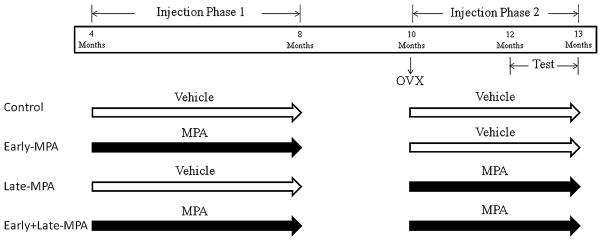
Using rats, we evaluated the long-lasting cognitive and GABAergic effects of MPA administered in young adulthood (Early-MPA), modeling contraception, and how this early exposure interacts with later MPA treatment (Late-MPA), modeling HT.
Early-MPA treatment involved weekly anti-ovulatory MPA injections (3.5 mg) from 4 to 8 months of age in ovary-intact rats. At 10 months old, rats were Ovx and weekly MPA injections were re-initiated and continued throughout testing for Late-MPA treatment.
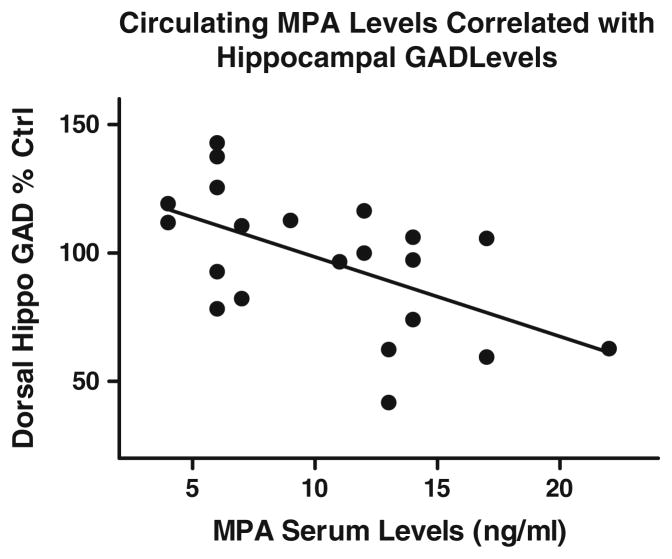
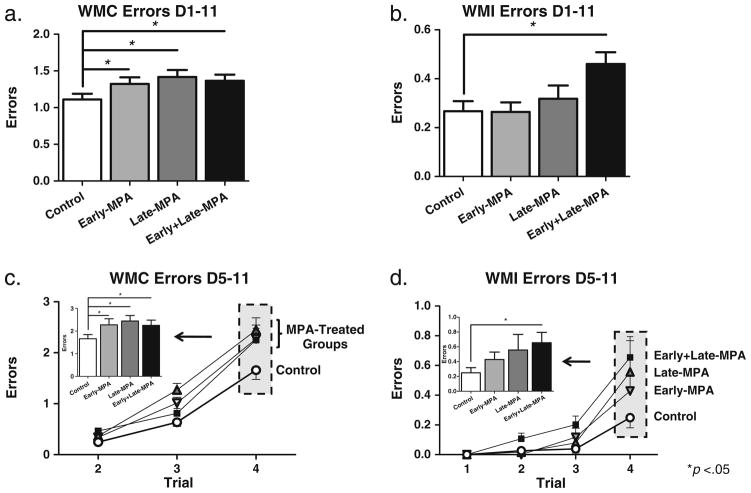
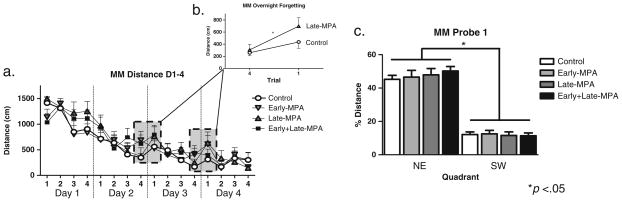
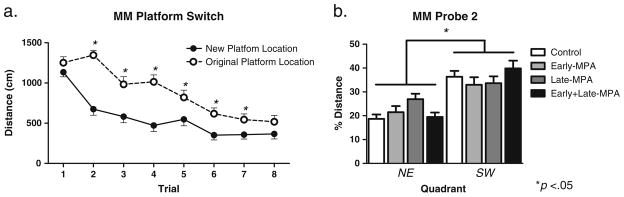
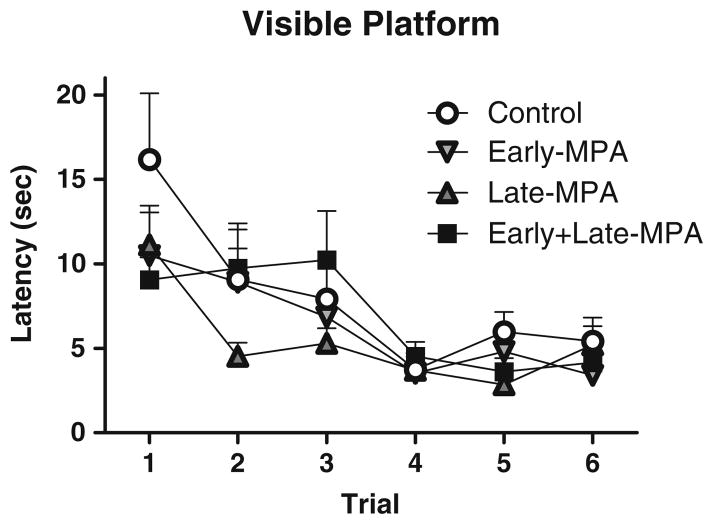
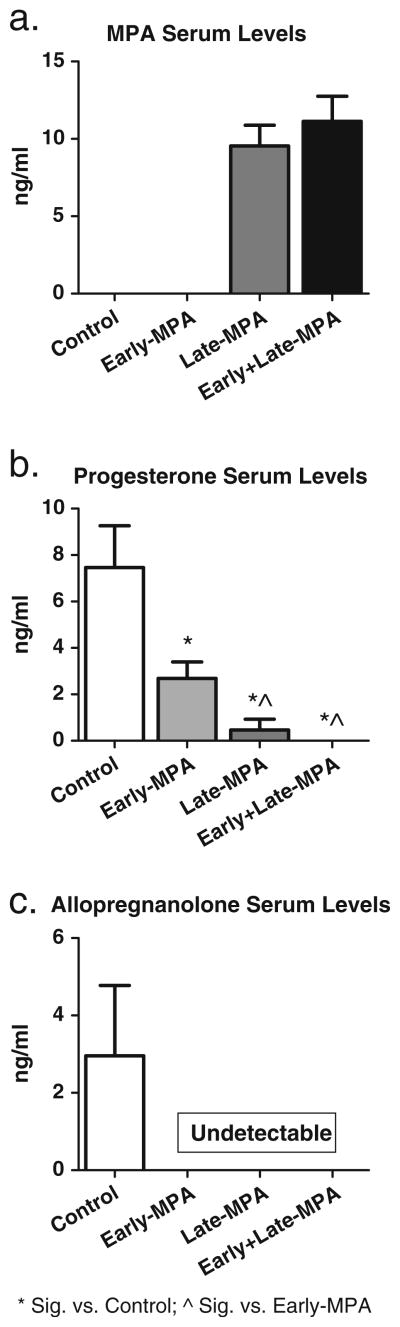
On the water radial-arm maze, all MPA-treated groups showed working memory impairment compared to Controls (p < 0.05); Early + Late-MPA rats were impaired on multiple dimensions of working memory (p < 0.05). On the Morris maze, Late-MPA rats showed greater overnight forgetting compared to Controls (p < 0.05). At study conclusion, MPA was detected in serum in all MPA-treated groups except Early-MPA, confirming treatment and clearance from serum in Early-MPA rats. In animals with detectable serum MPA, higher MPA levels were associated with less dorsal-hippocampal glutamic acid decarboxylase, the synthesizing enzyme for GABA (p = 0.0059).
Findings suggest that MPA treatment leads to long-lasting cognitive impairments in the rodent, even in the absence of circulating MPA in animals given prior MPA treatment, which may relate to the GABAergic system. Further research defining the parameters of the negative impact of this widely used progestin on brain and cognition is warranted.
合成孕激素醋酸甲羟孕酮(MPA)广泛用于激素治疗(HT)和避孕药 DepoProvera,与女性的认知损害有关。最近在老年去卵巢(Ovx)啮齿动物中的证据表明,短期 MPA 治疗会损害认知并改变 GABA 能系统。
我们使用大鼠评估了在成年早期(早期 MPA)给予 MPA 的长期认知和 GABA 能作用,模拟避孕,以及这种早期暴露如何与后来的 MPA 治疗(晚期 MPA)相互作用,模拟 HT。
早期 MPA 治疗涉及从 4 到 8 个月龄时每周给予抗排卵 MPA 注射(3.5mg),以维持卵巢完整的大鼠。在 10 个月大时,大鼠进行 Ovx,并重新开始每周给予 MPA 注射,并在整个晚期 MPA 治疗期间继续进行测试。
在水放射臂迷宫中,与对照组相比,所有 MPA 治疗组均显示出工作记忆受损(p<0.05);早期+晚期 MPA 大鼠在工作记忆的多个维度上受损(p<0.05)。在 Morris 水迷宫中,晚期 MPA 大鼠与对照组相比,夜间遗忘更多(p<0.05)。在研究结束时,除早期 MPA 组外,所有 MPA 治疗组的血清中均检测到 MPA,证实了早期 MPA 大鼠的血清清除。在有可检测到血清 MPA 的动物中,较高的 MPA 水平与背侧海马谷氨酸脱羧酶(GABA 的合成酶)减少有关(p=0.0059)。
研究结果表明,即使在给予早期 MPA 治疗的动物中没有循环 MPA,MPA 治疗也会导致啮齿动物的认知障碍持续存在,这可能与 GABA 能系统有关。进一步研究定义这种广泛使用的孕激素对大脑和认知的负面影响的参数是必要的。