Department of Public Health Sciences, University of Hawai'i, Honolulu, Hawai'i 96822, USA.
J Neuroinflammation. 2011 May 14;8:48. doi: 10.1186/1742-2094-8-48.
Human immunodeficiency virus type 1 (HIV-1) infection frequently causes neurologic disease, which is the result of viral replication and activation of macrophages and microglia in the CNS, and subsequent secretion of high levels of neurotoxic products, including tumor necrosis factor-α (TNF-α). We therefore hypothesized that a soluble TNF-α antagonist might have potential utility as a neuroprotective effecter molecule, and conducted proof-of-concept studies to test this hypothesis.
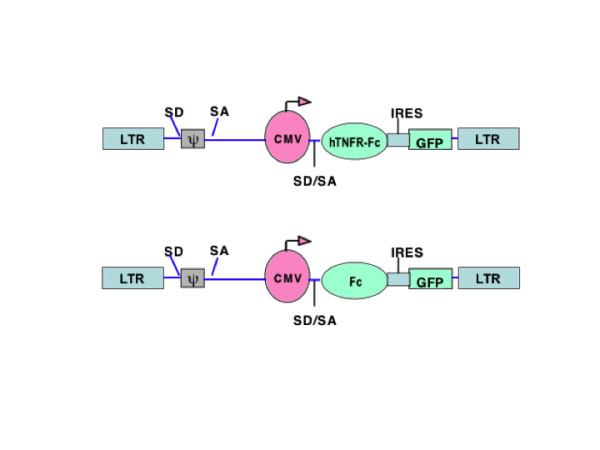
To develop novel therapeutics for the treatment of neuroAIDS, we constructed and characterized a soluble TNF receptor (sTNFR)-Fc fusion protein with the goal of neutralizing TNF-α, and tested the stability of expression of this gene following delivery by a lentiviral vector.
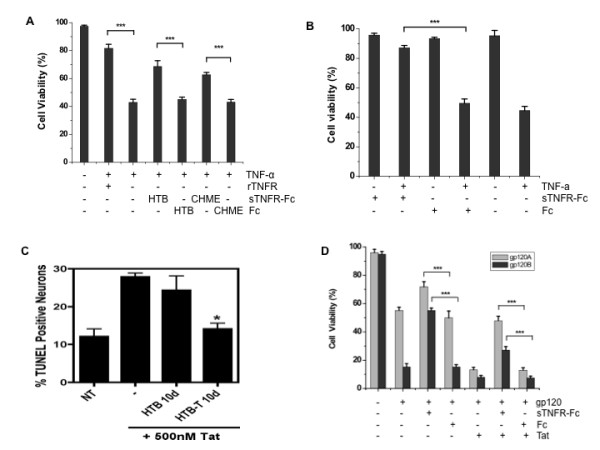
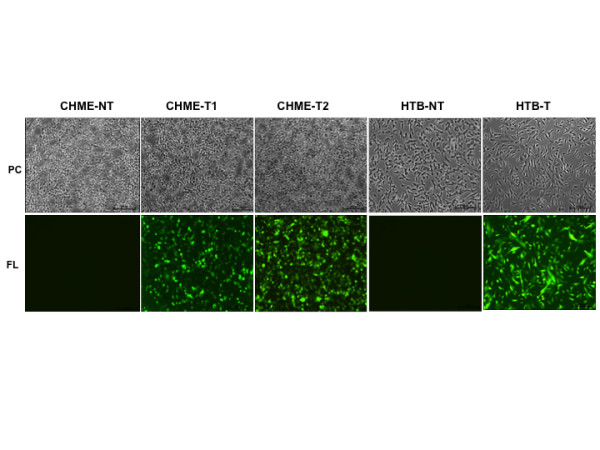
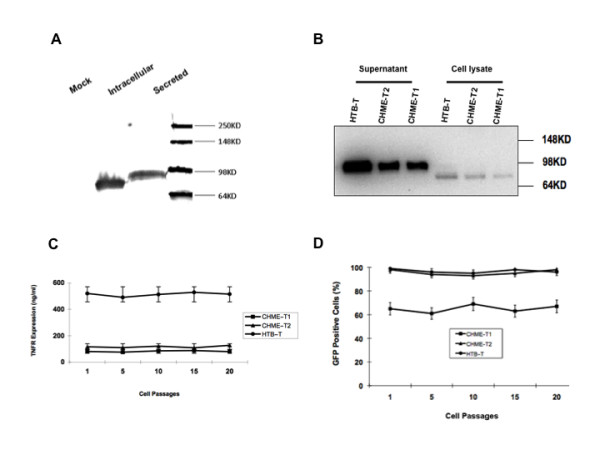
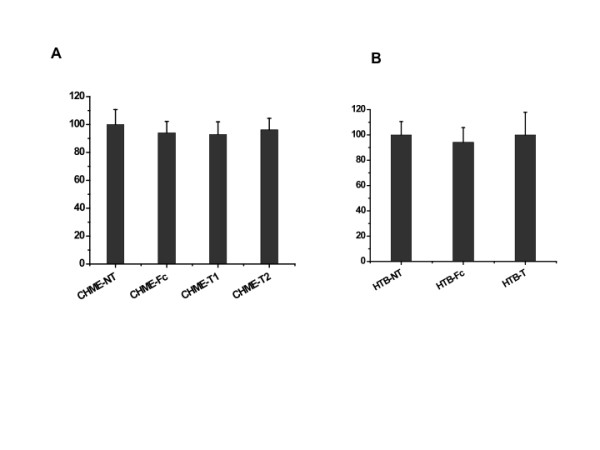
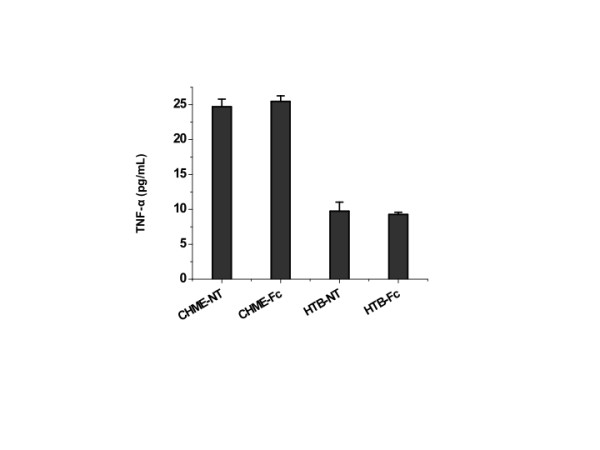
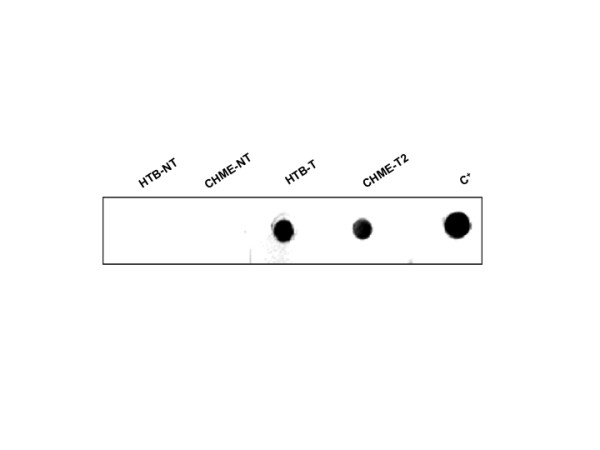
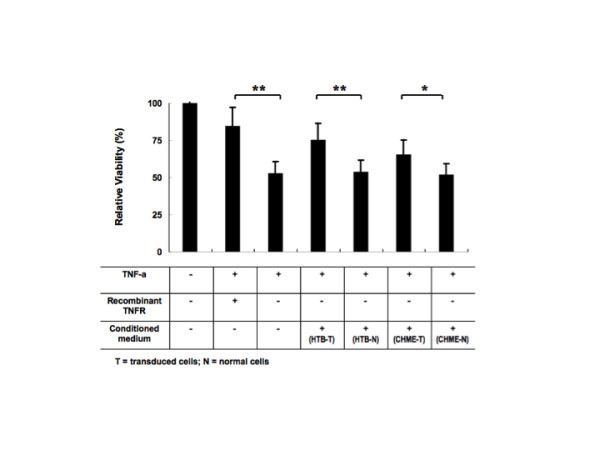
High-titer lentiviral vectors were prepared, allowing efficient transduction of macrophage/glial and neuronal cell lines, as well as primary rat cerebellar neurons. Efficient, stable secretion of sTNFR-Fc was demonstrated in supernatants from transduced cell lines over 20 passages, using both western blot and ELISA. Biological activity of the secreted sTNFR-Fc was confirmed by TNF-specific in vitro protein binding and functional blocking assays. Finally, the secreted protein was shown to protect neuronal cells from TNF-α, HIV-1 Tat-, and gp120-mediated neurotoxicity.
These results demonstrate that lentiviral vector mediated expression of sTNFR-Fc may have potential as a novel therapy for neuroAIDS.
人类免疫缺陷病毒 1 型(HIV-1)感染常导致神经疾病,这是病毒复制和中枢神经系统中巨噬细胞和小胶质细胞激活的结果,随后会分泌高水平的神经毒性产物,包括肿瘤坏死因子-α(TNF-α)。因此,我们假设可溶性 TNF-α拮抗剂可能具有作为神经保护效应分子的潜在用途,并进行了概念验证研究来检验这一假设。
为了开发用于治疗神经艾滋病的新型疗法,我们构建并表征了一种可溶性 TNF 受体(sTNFR)-Fc 融合蛋白,旨在中和 TNF-α,并测试了该基因通过慢病毒载体传递后的表达稳定性。
制备了高滴度的慢病毒载体,允许巨噬细胞/小胶质细胞和神经元细胞系以及原代大鼠小脑神经元高效转导。通过 Western blot 和 ELISA 证实,在转导的细胞系中,超过 20 个传代后,sTNFR-Fc 可有效且稳定地分泌到上清液中。分泌的 sTNFR-Fc 的生物学活性通过 TNF 特异性体外蛋白结合和功能阻断测定得到证实。最后,证明分泌的蛋白可保护神经元细胞免受 TNF-α、HIV-1 Tat 和 gp120 介导的神经毒性。
这些结果表明,慢病毒载体介导的 sTNFR-Fc 表达可能是神经艾滋病的一种新型治疗方法。