Program in Molecular Pathogenesis and Department of Pathology, Skirball Institute of Biomolecular Medicine, New York University School of Medicine, New York, NY 10016, USA.
J Exp Med. 2011 Jun 6;208(6):1267-78. doi: 10.1084/jem.20102551. Epub 2011 May 16.
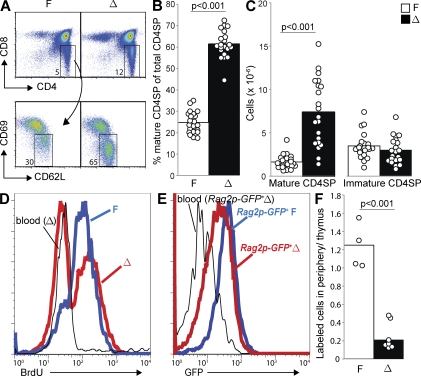
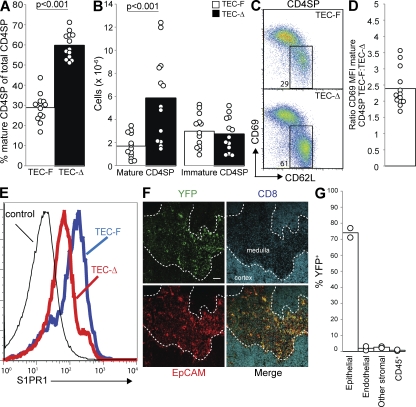
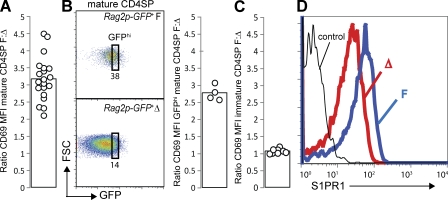
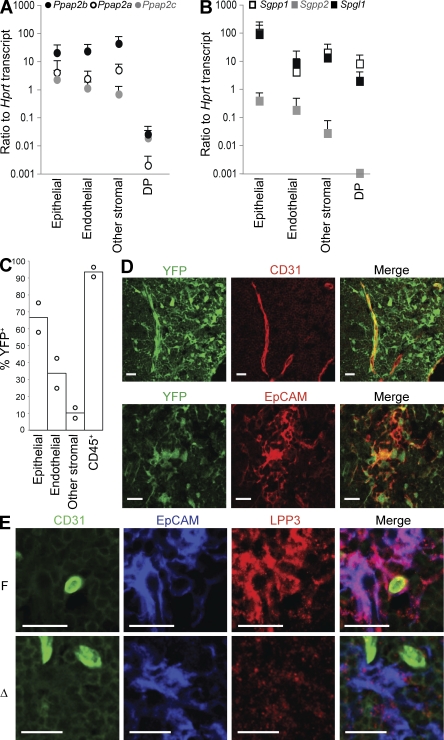
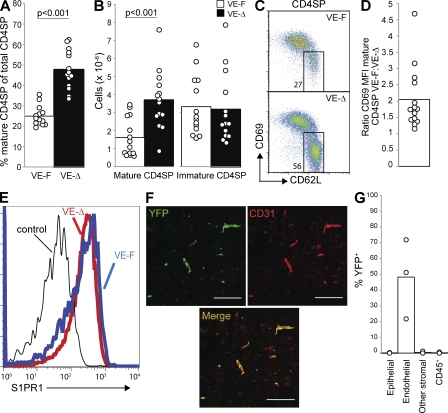
The signaling lipid sphingosine-1-phosphate (S1P) stabilizes the vasculature, directs lymphocyte egress from lymphoid organs, and shapes inflammatory responses. However, little is known about how S1P distribution is controlled in vivo, and it is not clear how a ubiquitously made lipid functions as a signal that requires precise spatial and temporal control. We have found that lipid phosphate phosphatase 3 (LPP3) enables efficient export of mature T cells from the thymus into circulation, and several lines of evidence suggest that LPP3 promotes exit by destroying thymic S1P. Although five additional S1P-degrading enzymes are expressed in the thymus, they cannot compensate for the loss of LPP3. Moreover, conditional deletion of LPP3 in either epithelial cells or endothelial cells is sufficient to inhibit egress. These results suggest that S1P generation and destruction are tightly regulated and that LPP3 is essential to establish the balance.
信号脂质鞘氨醇-1-磷酸(S1P)稳定血管,指导淋巴细胞从淋巴器官中迁出,并调节炎症反应。然而,人们对 S1P 在体内的分布如何受到控制知之甚少,也不清楚一种普遍存在的脂质如何作为一种需要精确时空控制的信号发挥作用。我们发现,磷酸脂磷酸酶 3(LPP3)能够有效地将成熟的 T 细胞从胸腺中输出到循环中,有几条证据表明 LPP3 通过破坏胸腺 S1P 来促进细胞的迁出。尽管在胸腺中表达了另外五种 S1P 降解酶,但它们不能弥补 LPP3 的缺失。此外,条件性地在胸腺上皮细胞或内皮细胞中缺失 LPP3 足以抑制细胞的迁出。这些结果表明 S1P 的产生和降解受到严格的调控,LPP3 对于建立平衡至关重要。