Membrane Research Center, Chemical Engineering Department, Razi University, Kermanshah, Iran.
Int J Nanomedicine. 2011;6:825-33. doi: 10.2147/IJN.S18045. Epub 2011 Apr 19.
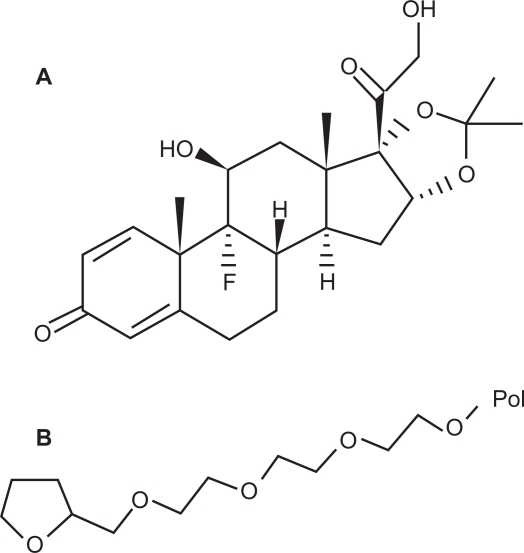
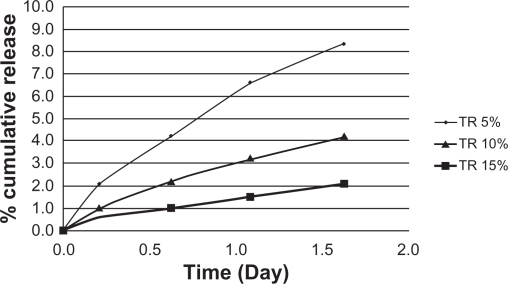
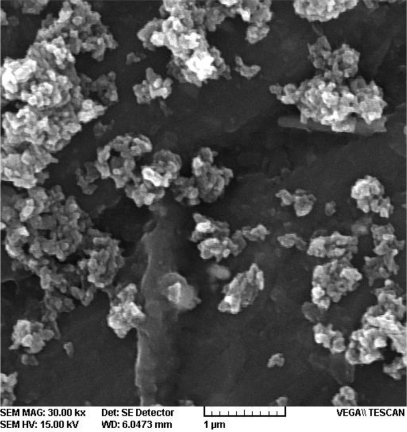
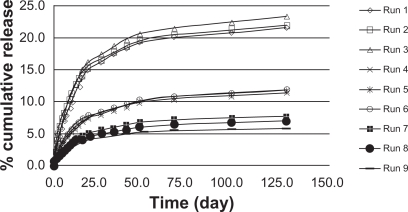
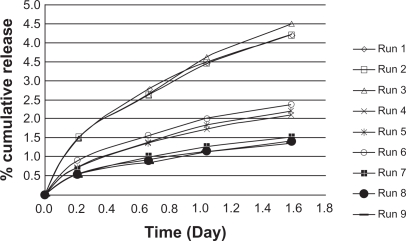
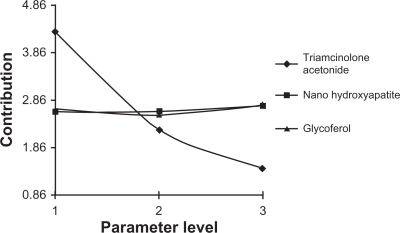
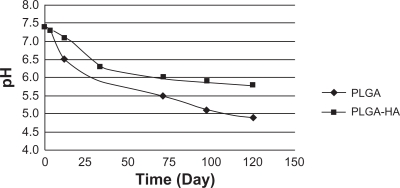
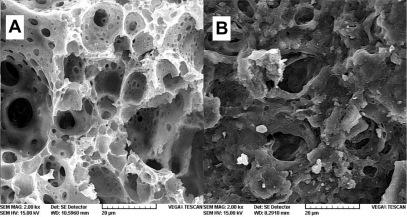
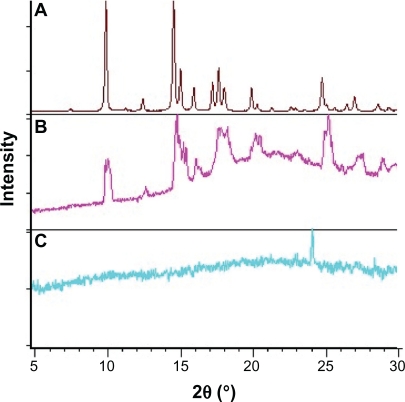
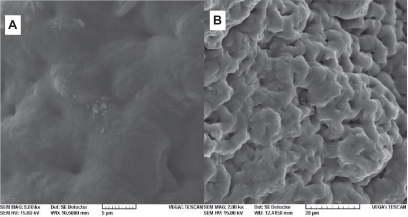
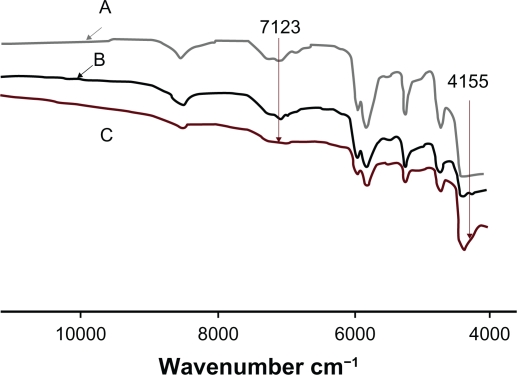
We report an analysis of in vitro and in vivo drug release from an in situ formulation consisting of triamcinolone acetonide (TR) and poly(D,L-lactide-co-glycolide) (PLGA) and the additives glycofurol (GL) and hydroxyapatite nanoparticles (HA). We found that these additives enhanced drug release rate. We used the Taguchi method to predict optimum formulation variables to minimize the initial burst. This method decreased the burst rate from 8% to 1.3%. PLGA-HA acted as a strong buffer, thereby preventing tissue inflammation at the injection site caused by the acidic degradation products of PLGA. Characterization of the optimized formulation by a variety of techniques, including scanning electron microscopy, X-ray diffraction, differential scanning calorimetry, and Fourier transform near infrared spectroscopy, revealed that the crystalline structure of TR was converted to an amorphous form. Therefore, this hydrophobic agent can serve as an additive to modify drug release rates. Data generated by in vitro and in vivo experiments were in good agreement.
我们报告了一种原位制剂中曲安奈德(TR)和聚(D,L-丙交酯-共-乙交酯)(PLGA)与添加剂甘油醛(GL)和纳米羟基磷灰石(HA)的体外和体内药物释放分析。我们发现这些添加剂可以提高药物释放速率。我们使用田口方法来预测最佳配方变量,以最小化初始突释。这种方法将突释率从 8%降低到 1.3%。PLGA-HA 充当了强大的缓冲剂,从而防止了由于 PLGA 酸性降解产物引起的注射部位的组织炎症。通过多种技术对优化配方进行了表征,包括扫描电子显微镜、X 射线衍射、差示扫描量热法和傅里叶变换近红外光谱,揭示了 TR 的结晶结构转化为无定形形式。因此,这种疏水性物质可用作添加剂来调节药物释放速率。体外和体内实验产生的数据非常吻合。