de Graaff F, Verra W, Pruijs J E H, Sakkers R J B
Department of Orthopaedic Surgery, Wilhelmina Children's Hospital (University Medical Center Utrecht), P.O. Box 85090, 3508 AB Utrecht, The Netherlands.
J Child Orthop. 2011 Apr;5(2):121-5. doi: 10.1007/s11832-010-0305-3. Epub 2011 Jan 25.
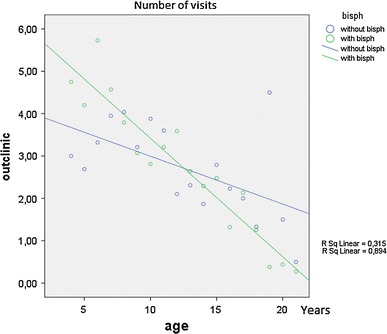
Bisphosphonates are currently the medical treatment most often used in children with osteogenesis imperfecta (OI). The purpose of this retrospective pre-post study was to evaluate the efficacy of treatment with bisphosphonates. We measured the effect by evaluating the number of outpatient department consultations and operative interventions before and after treatment with bisphosphonates in children with OI.
Outpatient department consultation and operative intervention frequencies before and after treatment with bisphosphonates were registered. Children who had at least 2 years of medical records before treatment and at least 2 years after treatment were used in this study.
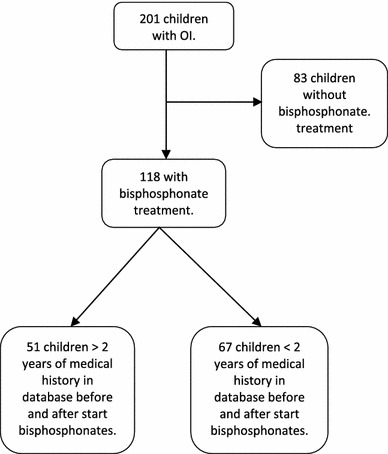
Of 118 children who were treated with bisphosphonates, 51 (23 boys and 28 girls) fulfilled the inclusion criteria. Statistical analysis revealed a significant decrease in outpatient department consultations (P < 0.000) and operative intervention (P < 0.003) before and after bisphosphonate treatment.
The pre-post design of our study shows a significant reduction of the number of outpatient department consultations and operative interventions in patients with OI after treatment with bisphosphonates.
双膦酸盐类药物是目前治疗成骨不全症(OI)患儿最常用的药物。这项回顾性前后对照研究的目的是评估双膦酸盐类药物治疗的疗效。我们通过评估OI患儿在接受双膦酸盐类药物治疗前后的门诊咨询次数和手术干预次数来衡量其效果。
记录双膦酸盐类药物治疗前后的门诊咨询和手术干预频率。本研究纳入了治疗前至少有2年病历且治疗后至少有2年病历的患儿。
在118例接受双膦酸盐类药物治疗的患儿中,51例(23例男孩和28例女孩)符合纳入标准。统计分析显示,双膦酸盐类药物治疗前后门诊咨询次数(P < 0.000)和手术干预次数(P < 0.003)均显著减少。
我们研究的前后对照设计表明,OI患者在接受双膦酸盐类药物治疗后,门诊咨询次数和手术干预次数显著减少。