Mellen Center for Multiple Sclerosis, Neurological Institute, Cleveland Clinic, Cleveland, Ohio, United States of America.
PLoS One. 2011;6(5):e19262. doi: 10.1371/journal.pone.0019262. Epub 2011 May 13.
Interferon-beta (IFNβ) is used to inhibit disease activity in multiple sclerosis (MS), but its mechanisms of action are incompletely understood, individual treatment response varies, and biological markers predicting response to treatment have yet to be identified.
The relationship between the molecular response to IFNβ and treatment response was determined in 85 patients using a longitudinal design in which treatment effect was categorized by brain magnetic resonance imaging as good (n = 70) or poor response (n = 15). Molecular response was quantified using a customized cDNA macroarray assay for 166 IFN-regulated genes (IRGs).
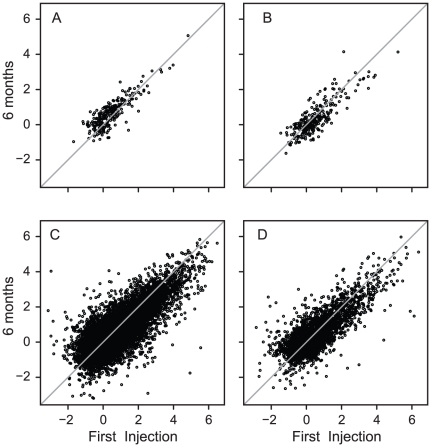
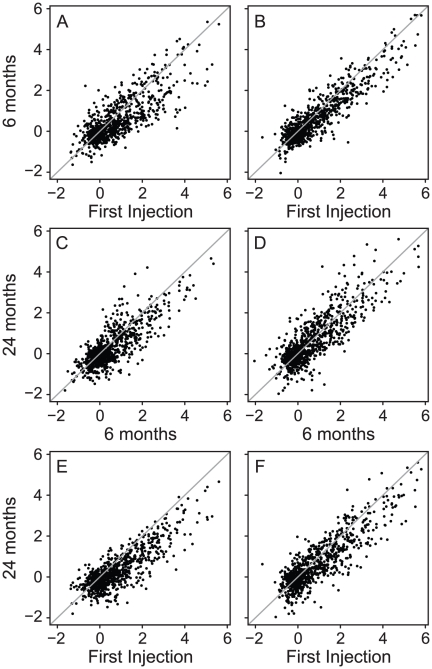
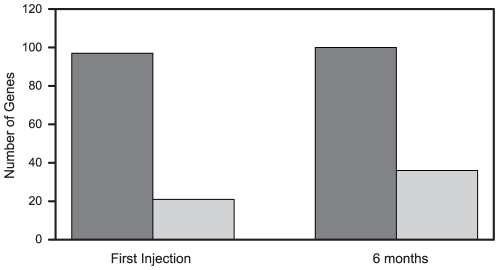
The molecular response to IFNβ differed significantly between patients in the pattern and number of regulated genes. The molecular response was strikingly stable for individuals for as long as 24 months, however, suggesting an individual 'IFN response fingerprint'. Unexpectedly, patients with poor response showed an exaggerated molecular response. IRG induction ratios demonstrated an exaggerated molecular response at both the first and 6-month IFNβ injections.
MS patients exhibit individually unique but temporally stable biological responses to IFNβ. Poor treatment response is not explained by the duration of biological effects or the specific genes induced. Rather, individuals with poor treatment response have a generally exaggerated biological response to type 1 IFN injections. We hypothesize that the molecular response to type I IFN identifies a pathogenetically distinct subset of MS patients whose disease is driven in part by innate immunity. The findings suggest a strategy for biologically based, rational use of IFNβ for individual MS patients.
干扰素-β(IFNβ)用于抑制多发性硬化症(MS)的疾病活动,但作用机制尚不完全清楚,个体治疗反应存在差异,且尚未确定预测治疗反应的生物标志物。
采用纵向设计,对 85 例患者进行了 IFNβ治疗反应与分子反应之间的关系研究,根据脑磁共振成像将治疗效果分为反应良好(n = 70)和反应不良(n = 15)。使用定制的 cDNA 微阵列测定 166 个干扰素调节基因(IRG)来量化分子反应。
IFNβ治疗反应的分子反应在患者之间的模式和调节基因数量上存在显著差异。然而,个体的分子反应在长达 24 个月的时间内非常稳定,这表明存在个体的“IFN 反应指纹”。出乎意料的是,反应不良的患者表现出明显的过度分子反应。IRG 诱导比率在 IFNβ首次和 6 个月注射时均显示出过度的分子反应。
MS 患者对 IFNβ表现出个体独特但具有时间稳定性的生物学反应。治疗反应不佳不能用生物学效应的持续时间或诱导的特定基因来解释。相反,治疗反应不佳的个体对 I 型 IFN 注射通常具有过度的生物学反应。我们假设对 I 型 IFN 的分子反应鉴定了 MS 患者的一个具有不同病理特征的亚群,其疾病部分由固有免疫驱动。这些发现为基于生物学的 IFNβ个体化治疗提供了策略。