Department of Oncology and Children's Research Center, University Children's Hospital, Zurich, Switzerland.
PLoS One. 2011;6(5):e19506. doi: 10.1371/journal.pone.0019506. Epub 2011 May 13.
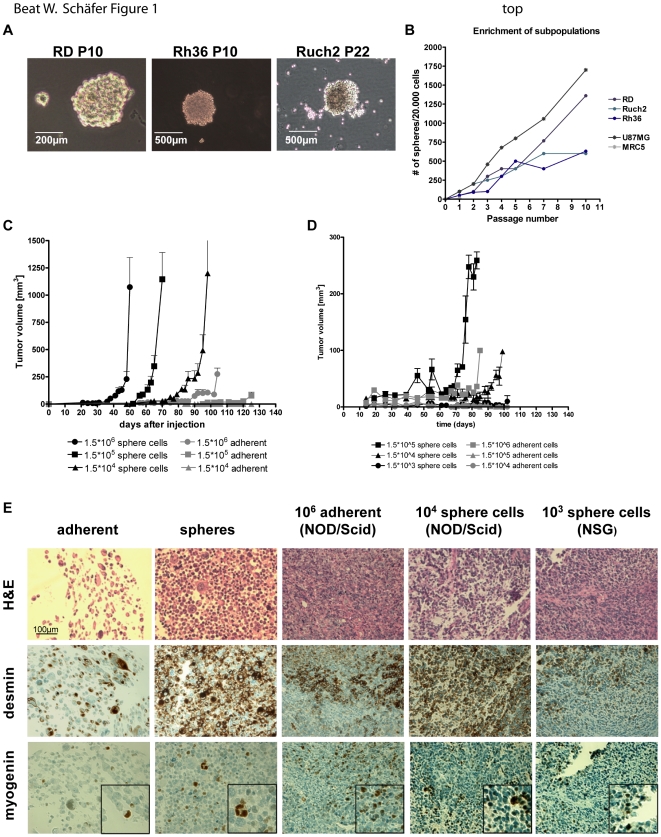
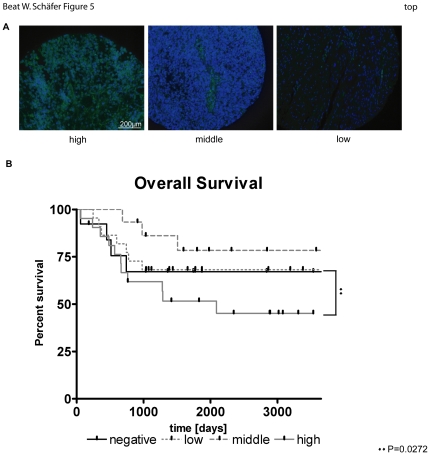
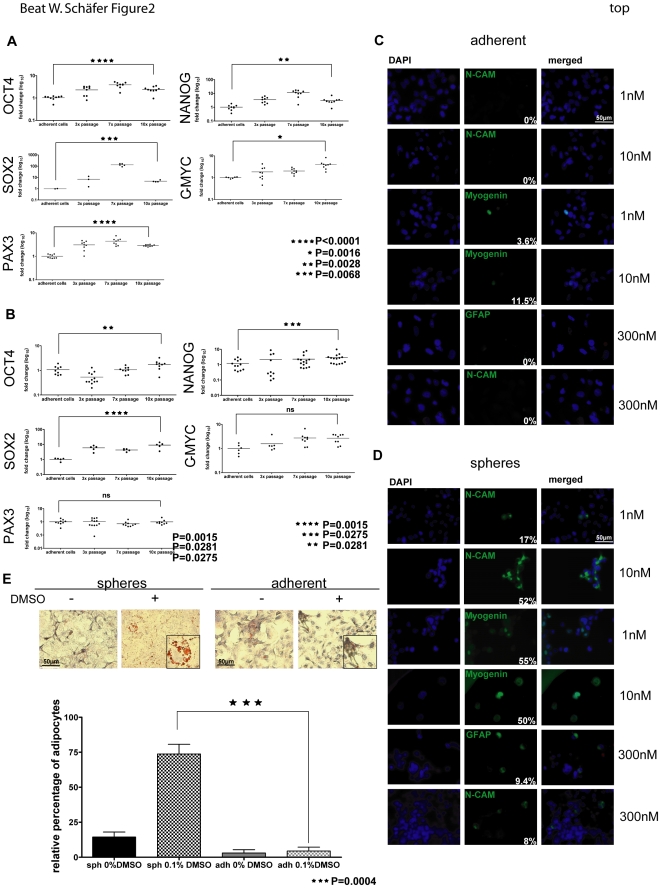
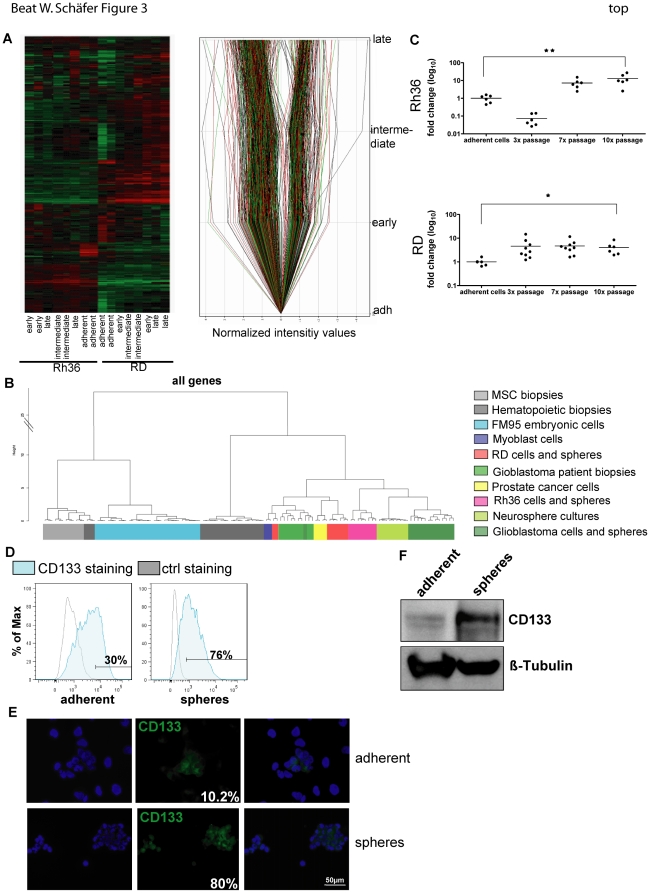
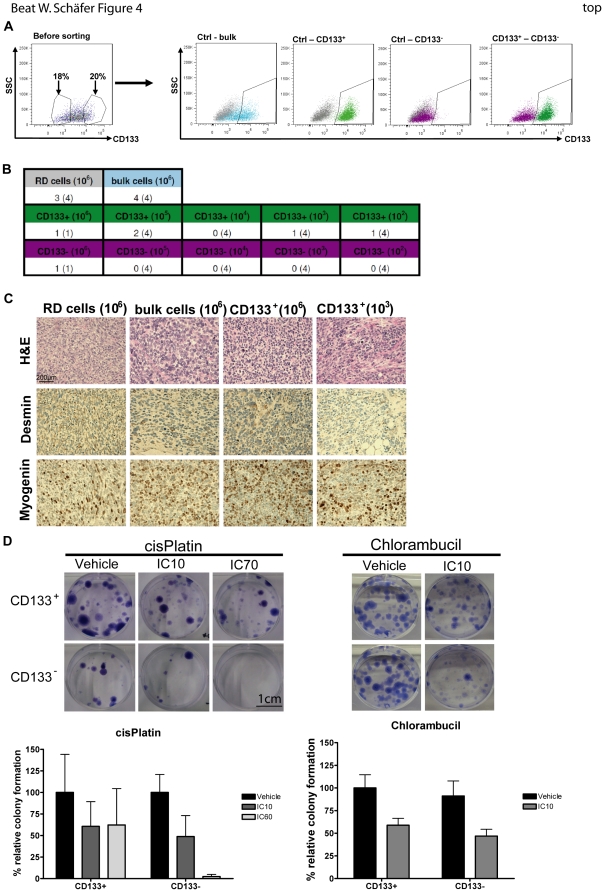
Cancer stem cells (CSCs) have been identified in a number of solid tumors, but not yet in rhabdomyosarcoma (RMS), the most frequently occurring soft tissue tumor in childhood. Hence, the aim of this study was to identify and characterize a CSC population in RMS using a functional approach. We found that embryonal rhabdomyosarcoma (eRMS) cell lines can form rhabdomyosarcoma spheres (short rhabdospheres) in stem cell medium containing defined growth factors over several passages. Using an orthotopic xenograft model, we demonstrate that a 100 fold less sphere cells result in faster tumor growth compared to the adherent population suggesting that CSCs were enriched in the sphere population. Furthermore, stem cell genes such as oct4, nanog, c-myc, pax3 and sox2 are significantly upregulated in rhabdospheres which can be differentiated into multiple lineages such as adipocytes, myocytes and neuronal cells. Surprisingly, gene expression profiles indicate that rhabdospheres show more similarities with neuronal than with hematopoietic or mesenchymal stem cells. Analysis of these profiles identified the known CSC marker CD133 as one of the genes upregulated in rhabdospheres, both on RNA and protein levels. CD133(+) sorted cells were subsequently shown to be more tumorigenic and more resistant to commonly used chemotherapeutics. Using a tissue microarray (TMA) of eRMS patients, we found that high expression of CD133 correlates with poor overall survival. Hence, CD133 could be a prognostic marker for eRMS. These experiments indicate that a CD133(+) CSC population can be enriched from eRMS which might help to develop novel targeted therapies against this pediatric tumor.
癌症干细胞(CSCs)已在许多实体瘤中被鉴定出来,但尚未在横纹肌肉瘤(RMS)中被鉴定出来,RMS 是儿童中最常见的软组织肿瘤。因此,本研究的目的是使用功能方法鉴定和表征 RMS 中的 CSC 群体。我们发现胚胎性横纹肌肉瘤(eRMS)细胞系可以在含有定义生长因子的干细胞培养基中形成横纹肌肉瘤球体(短横纹球体),经过几个传代。通过原位异种移植模型,我们证明与贴壁细胞群体相比,100 倍少的球体细胞导致更快的肿瘤生长,这表明 CSCs 在球体群体中得到了富集。此外,干细胞基因,如 oct4、nanog、c-myc、pax3 和 sox2,在横纹球体中显著上调,横纹球体可以分化为多种谱系,如脂肪细胞、肌细胞和神经元细胞。令人惊讶的是,基因表达谱表明横纹球体与神经元的相似性大于与造血或间充质干细胞的相似性。对这些谱的分析表明,已知的 CSC 标记物 CD133 是横纹球体中上调的基因之一,无论是在 RNA 还是蛋白质水平上。随后表明 CD133(+)分选细胞具有更强的致瘤性和对常用化疗药物的更强抗性。使用 eRMS 患者的组织微阵列(TMA),我们发现 CD133 的高表达与总生存率差相关。因此,CD133 可能是 eRMS 的预后标志物。这些实验表明,CD133(+) CSC 群体可以从 eRMS 中富集出来,这可能有助于针对这种儿科肿瘤开发新的靶向治疗方法。