Chase J Geoffrey, Starfinger Christina, Hann Christopher E, Revie James A, Stevenson Dave, Shaw Geoffrey M, Desaive Thomas
Centre for Bioengineering, University of Canterbury, Christchurch, New Zealand.
Open Med Inform J. 2010;4:149-63. doi: 10.2174/1874431101004010149. Epub 2010 Jul 29.
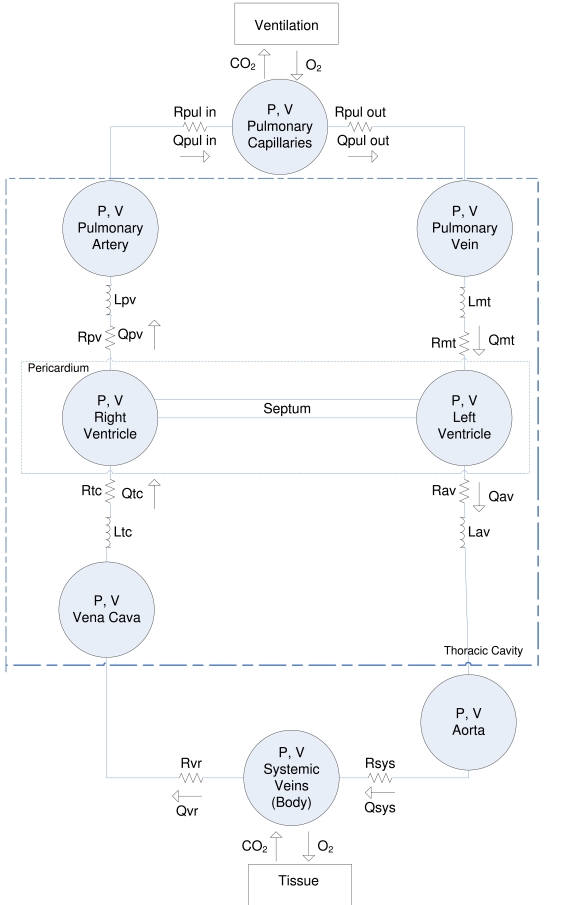
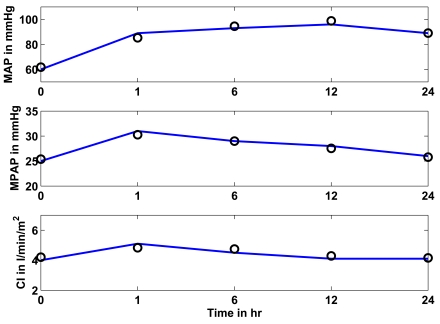
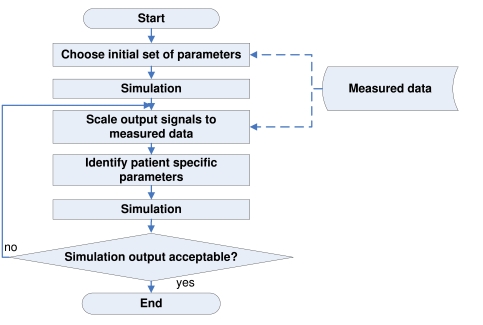
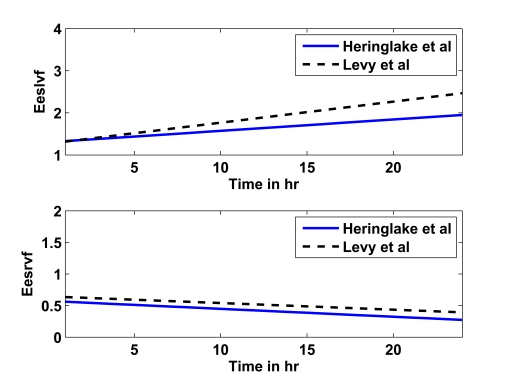
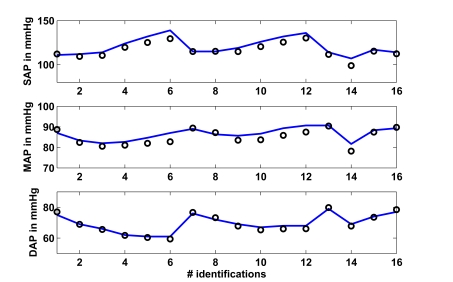
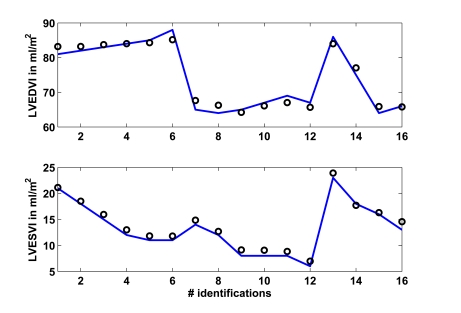
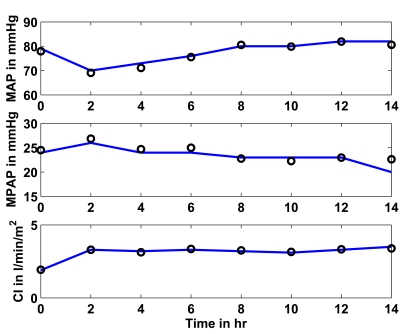
A model for the cardiovascular and circulatory systems has previously been validated in simulated cardiac and circulatory disease states. It has also been shown to accurately capture the main hemodynamic trends in porcine models of pulmonary embolism and PEEP (positive end-expiratory pressure) titrations at different volemic levels. In this research, the existing model and parameter identification process are used to study the effect of different adrenaline doses in healthy and critically ill patient populations, and to develop a means of predicting the hemodynamic response to adrenaline. The hemodynamic effects on arterial blood pressures and stroke volume (cardiac index) are simulated in the model and adrenaline-specific parameters are identified. The dose dependent changes in these parameters are then related to adrenaline dose using data from studies published in the literature. These relationships are then used to predict the future, patient-specific response to a change in dose or over time periods from 1-12 hours. The results are compared to data from 3 published adrenaline dosing studies comprising a total of 37 data sets. Absolute percentage errors for the identified model are within 10% when re-simulated and compared to clinical data for all cases. All identified parameter trends match clinically expected changes. Absolute percentage errors for the predicted hemodynamic responses (N=15) are also within 10% when re-simulated and compared to clinical data. Clinically accurate prediction of the effect of inotropic circulatory support drugs, such as adrenaline, offers significant potential for this type of model-based application. Overall, this work represents a further clinical, proof of concept, of the underlying fundamental mathematical model, methods and approach, as well as providing a template for using the model in clinical titration of adrenaline in a decision support role in critical care. They are thus a further justification in support of upcoming human clinical trials to validate this model.
心血管和循环系统模型先前已在模拟的心脏和循环疾病状态下得到验证。研究还表明,该模型能够准确捕捉不同血容量水平下猪肺栓塞模型和呼气末正压(PEEP)滴定中的主要血流动力学趋势。在本研究中,现有的模型和参数识别过程被用于研究不同剂量肾上腺素对健康和危重症患者群体的影响,并开发一种预测对肾上腺素血流动力学反应的方法。在模型中模拟肾上腺素对动脉血压和每搏输出量(心脏指数)的血流动力学影响,并识别特定于肾上腺素的参数。然后,利用文献发表研究中的数据,将这些参数的剂量依赖性变化与肾上腺素剂量相关联。这些关系随后被用于预测未来患者对剂量变化或1至12小时时间段内的特定反应。将结果与3项已发表肾上腺素给药研究的数据进行比较,这些研究总共包含37个数据集。重新模拟并与所有病例的临床数据比较时,所识别模型的绝对百分比误差在10%以内。所有识别出的参数趋势均符合临床预期变化。重新模拟并与临床数据比较时,预测血流动力学反应(N = 15)的绝对百分比误差也在10%以内。对肾上腺素等强心循环支持药物效果进行临床准确预测,为这类基于模型的应用提供了巨大潜力。总体而言,这项工作进一步证明了基础数学模型、方法和途径的临床概念,同时为在重症监护决策支持中使用该模型进行肾上腺素临床滴定提供了模板。因此,它们进一步证明了支持即将开展的人体临床试验以验证该模型的合理性。