St. George University Teaching Hospital, Physiotherapy, Székesfehérvár, Hungary.
BMC Musculoskelet Disord. 2011 May 27;12:118. doi: 10.1186/1471-2474-12-118.
Amputation impairs the ability to balance. We examined adaptation strategies in balance following dysvascularity-induced unilateral tibial amputation in skilled prosthetic users (SPU) and first fitted amputees (FFA) (N = 28).
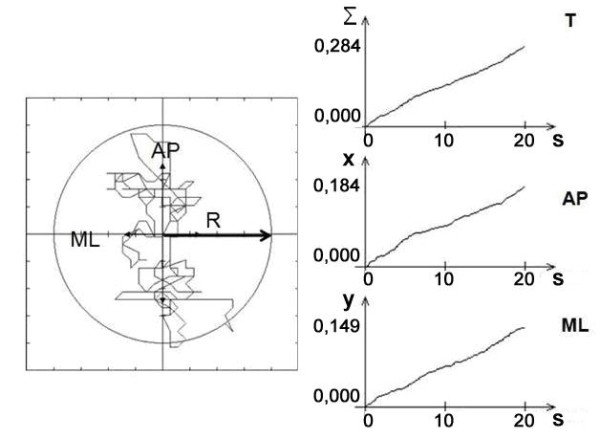
Excursions of center of pressure (COP) were determined during 20 s quiet standing using a stabilometry system with eyes-open on both legs or on the non-affected leg(s).
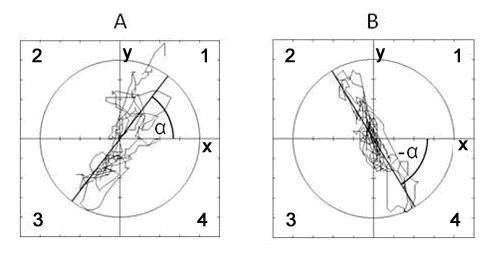
COP trajectories and time functions; distribution of reaction forces between the two legs; inclination angles obtained through second order regression analysis using stabilogram data.
FFA vs SPU demonstrated 27.8% greater postural sway in bilateral stance (p = 0.0004). Postural sway area was smaller in FFA standing on the non-affected leg compared with SPU (p = 0.028). The slope of the regression line indicating postural stability was nearly identical in FFA and SPU and the direction of regression line was opposite for the left and right leg amputees.
Of the two adaptation strategies in balance, the first appears before amputation due to pain and fatigue in the affected leg. This strategy appears in the form of reduced postural sway while standing on the non-affected leg. The second adaptation occurs during rehabilitation and regular use of the prosthesis resulting in normal weightbearing associated with reduced postural sway on two legs and return to the normal postural stability on one leg.
截肢会影响平衡能力。我们研究了熟练假肢使用者(SPU)和初次安装假肢者(FFA)在因血管疾病导致单侧胫骨截肢后平衡适应策略(N=28)。
使用带有睁眼的稳定仪系统,在双腿或非受影响的腿上进行 20 秒的安静站立,以确定中心压力(COP)的偏移量。
COP 轨迹和时间函数;双腿之间的反作用力分布;使用稳定图数据进行二阶回归分析获得的倾斜角度。
FFA 与 SPU 相比,双侧站立时姿势摆动增加了 27.8%(p=0.0004)。FFA 站立在非受影响的腿上时,姿势摆动面积比 SPU 小(p=0.028)。表示姿势稳定性的回归线斜率在 FFA 和 SPU 中几乎相同,并且左右腿截肢者的回归线方向相反。
在平衡的两种适应策略中,第一种策略是由于受影响的腿疼痛和疲劳而在截肢前出现的。这种策略表现为在非受影响的腿站立时减少姿势摆动。第二种适应策略发生在康复和经常使用假肢期间,导致双腿正常负重,同时减少了姿势摆动,并恢复了单腿的正常姿势稳定性。