Criswell H E, Mueller R A, Breese G R
Biological Sciences Research Center, University of North Carolina School of Medicine, Chapel Hill 27599.
Brain Res. 1990 Apr 2;512(2):284-90. doi: 10.1016/0006-8993(90)90638-R.
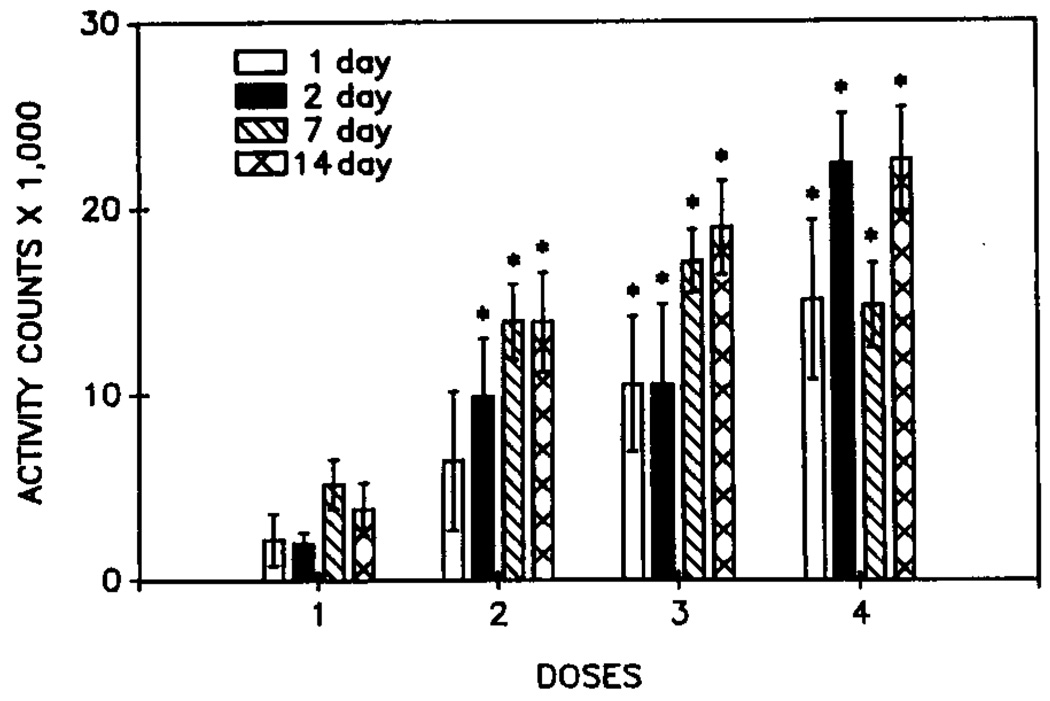
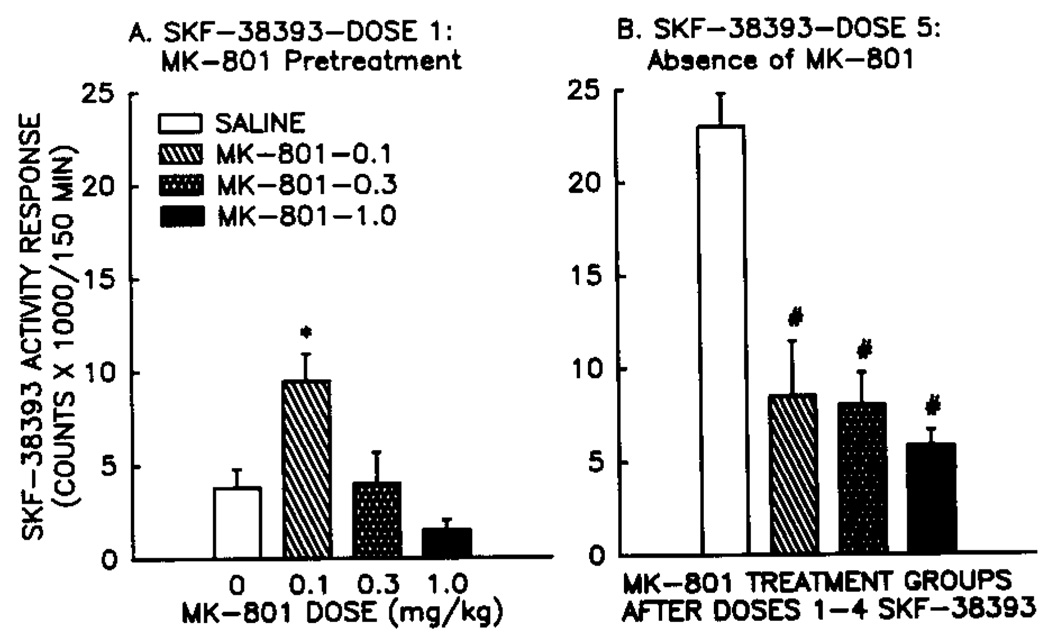
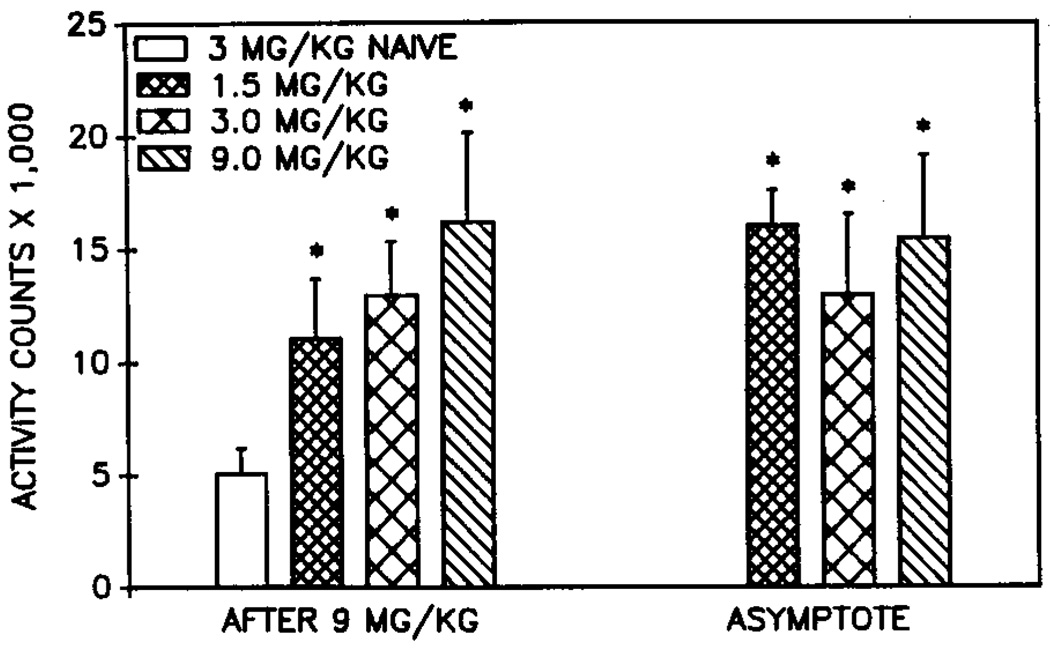
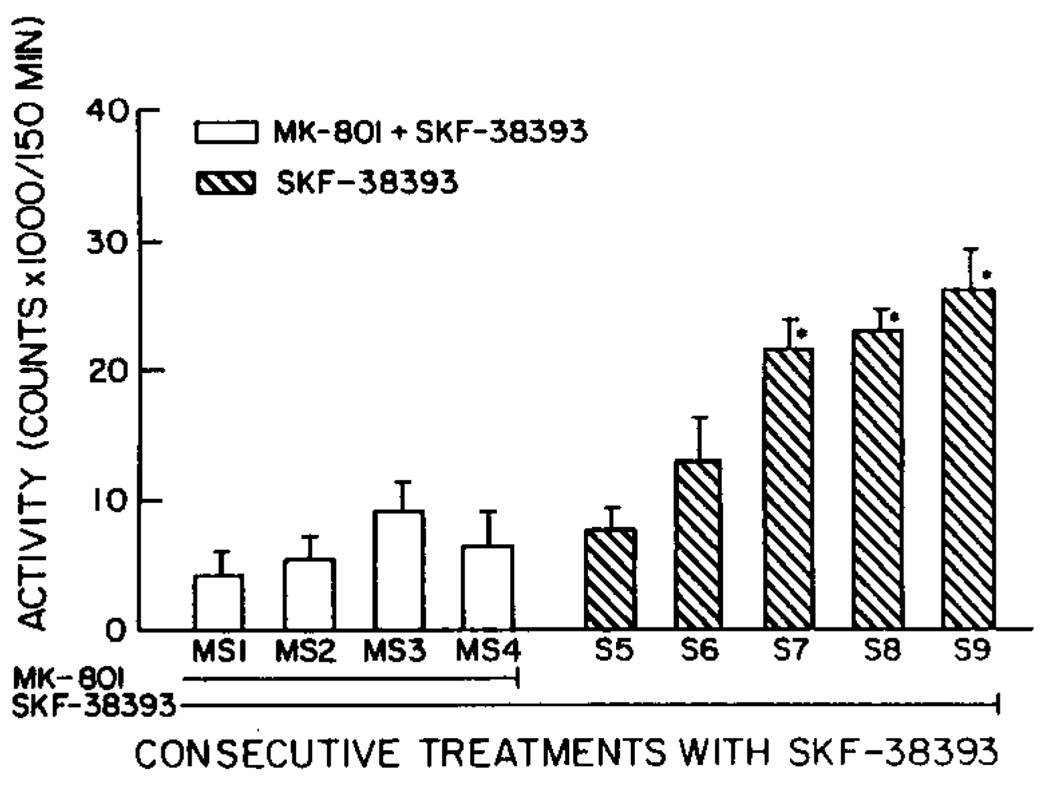
Repeated administration of the D1-dopamine agonist SKF-38393 to adult rats having had dopaminergic neurons destroyed early in development results in an increasing enhancement of the behavioral response to SKF-38393 with each dose until a maximum is reached. This increased sensitivity lasts for at least 6 months. In the present study, this long-lasting change in behavioral responsiveness to repeated treatment with SKF-38393, referred to as D1-dopamine receptor priming, was shown to be dose dependent with smaller doses requiring an increased number of administrations to produce a maximal response when compared to higher doses. In addition, priming occurred equally well when treatment intervals ranged from 1 day to 14 days. These latter data reinforced the view that activation of D1-dopamine receptors results in a prolonged change in neural function. In subsequent experiments, D1-dopamine receptor priming was blocked by pretreatment with the NMDA-receptor antagonist MK-801. This antagonism of priming could not be attributed to a blockade of D1-dopamine receptors by MK-801 or to the induction of interfering behaviors. Because an NMDA antagonist interfered with D1-receptor priming as it does with other long-term neural messages, a common requirement for these diverse forms of neuronal plasticity appears to involve activation of the NMDA receptor. This functional link between NMDA receptors and dopaminergic function and its relationship to neuronal plasticity could have relevance to the biochemical mechanisms involved in learning and to symptoms in central disorders during development that worsen over time, particularly those proposed to involve malfunctioning dopaminergic mechanisms.
对发育早期多巴胺能神经元已被破坏的成年大鼠重复给予 D1 - 多巴胺激动剂 SKF - 38393,会使每次给药后对 SKF - 38393 的行为反应增强,直至达到最大值。这种增强的敏感性至少持续 6 个月。在本研究中,这种对重复给予 SKF - 38393 的行为反应性的持久变化,即所谓的 D1 - 多巴胺受体启动,被证明是剂量依赖性的,与高剂量相比,低剂量需要增加给药次数才能产生最大反应。此外,当治疗间隔从 1 天到 14 天不等时,启动效果同样良好。这些数据进一步支持了这样一种观点,即 D1 - 多巴胺受体的激活会导致神经功能的长期变化。在随后的实验中,D1 - 多巴胺受体启动被 NMDA 受体拮抗剂 MK - 801 预处理所阻断。这种对启动的拮抗作用不能归因于 MK - 801 对 D1 - 多巴胺受体的阻断或干扰行为的诱导。由于 NMDA 拮抗剂干扰 D1 - 受体启动的方式与它干扰其他长期神经信号的方式相同,这些不同形式的神经元可塑性似乎有一个共同的要求,即涉及 NMDA 受体的激活。NMDA 受体与多巴胺能功能之间的这种功能联系及其与神经元可塑性的关系,可能与学习所涉及的生化机制以及发育过程中随着时间推移而恶化的中枢疾病症状有关,特别是那些被认为涉及多巴胺能机制功能失调的症状。