Institute of Chemical Industry of Forest Products, CAF, Jiangsu Province, Nanjing 210042, China.
Molecules. 2011 May 27;16(6):4428-37. doi: 10.3390/molecules16064428.
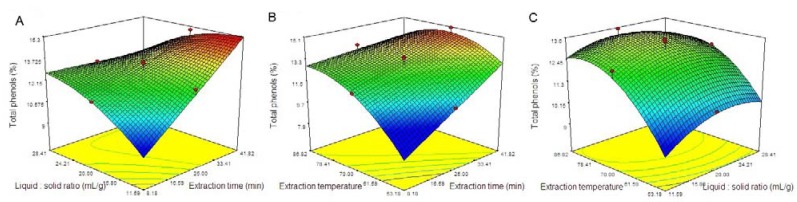
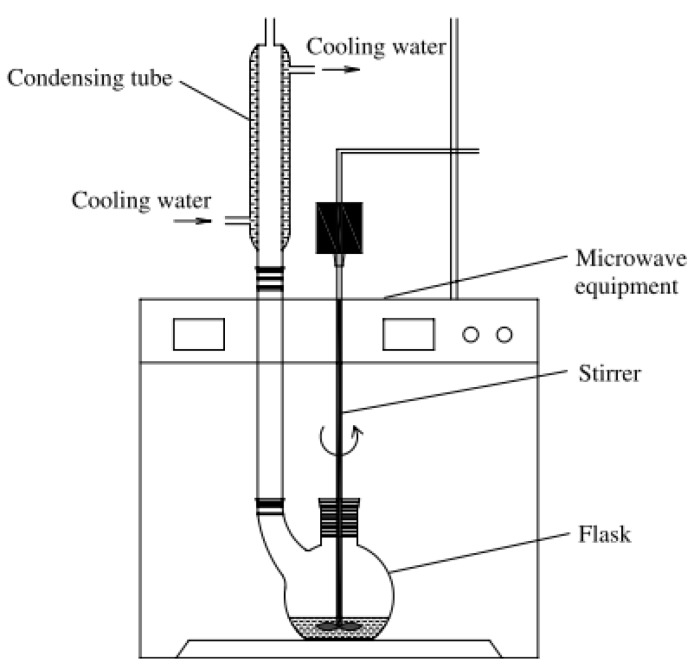
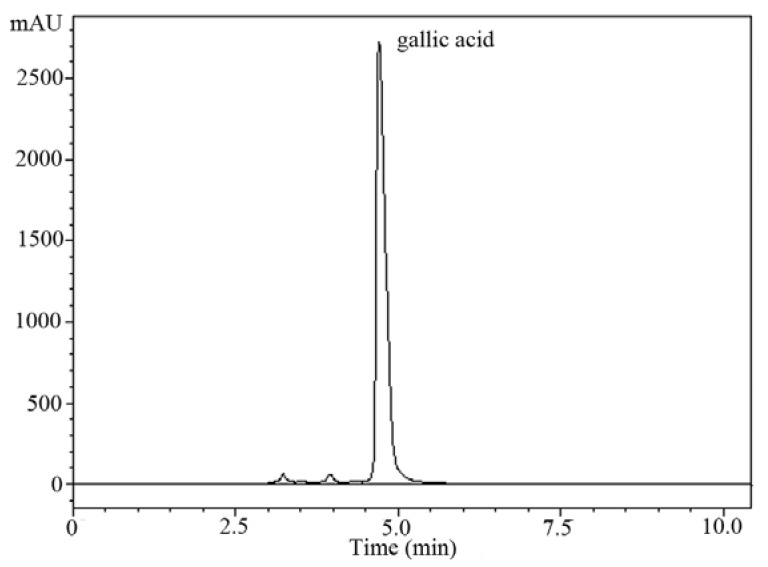
The abundant fruit hulls of tea-oil tree (Camellia oleifera) are still underutilized and wastefully discaded to pollute the environment. In order to solve this problem and better utilize the fruit hulls of C. oleifera, a microwave-assisted extraction system was used to extract their polyphenols using water as the extraction solvent. A central composite design (CCD) was used to monitor the effects of three extraction processing parameters--liquid:solid ratio (mL/g), extraction time (min) and extraction temperature (°C)--on the polyphenol yield (%). The results showed that the optimal conditions were liquid:solid ratio of 15.33:1 (mL/g), extraction time of 35 min and extraction temperature of 76 °C. Validation tests indicated that under the optimized conditions the actual yield of polyphenols was 15.05 ± 0.04% with RSD = 0.21% (n = 5), which was in good agreement with the predicted yield. Phenolic compounds in the extracts were analysed by HPLC, and gallic acid was found to be the predominant constituent. The total flavonoid content in the extracts was determined and high total flavonoid content was revealed (140.06 mg/g dry material).
茶果壳(油茶)资源丰富,但利用率低,浪费严重,污染环境。为解决这一问题,充分利用油茶果壳,采用微波辅助提取系统,以水为提取溶剂,提取其中的多酚类物质。利用中心复合设计(CCD)考察了液料比(mL/g)、提取时间(min)和提取温度(℃)3 个提取工艺参数对多酚得率(%)的影响。结果表明,最佳提取条件为:液料比 15.33:1(mL/g)、提取时间 35 min、提取温度 76℃。验证试验表明,在优化条件下,多酚的实际得率为 15.05±0.04%,RSD=0.21%(n=5),与预测值吻合较好。采用高效液相色谱法对提取物中的酚类化合物进行分析,发现其中以没食子酸为主要成分。同时还测定了提取物中总黄酮的含量,结果表明其含量较高(140.06 mg/g 干物质)。