Tumor Virology Program, Greehey Children's Cancer Research Institute, The University of Texas Health Science Center at San Antonio, San Antonio, Texas, United States of America.
PLoS Pathog. 2011 May;7(5):e1002054. doi: 10.1371/journal.ppat.1002054. Epub 2011 May 19.
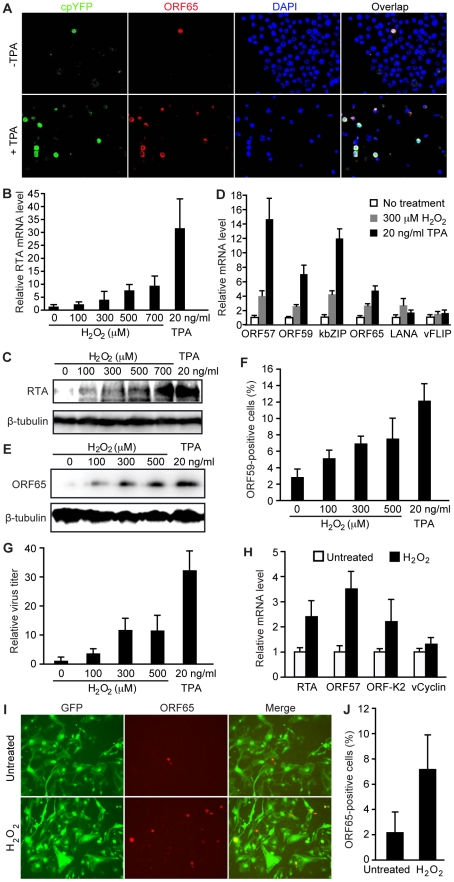
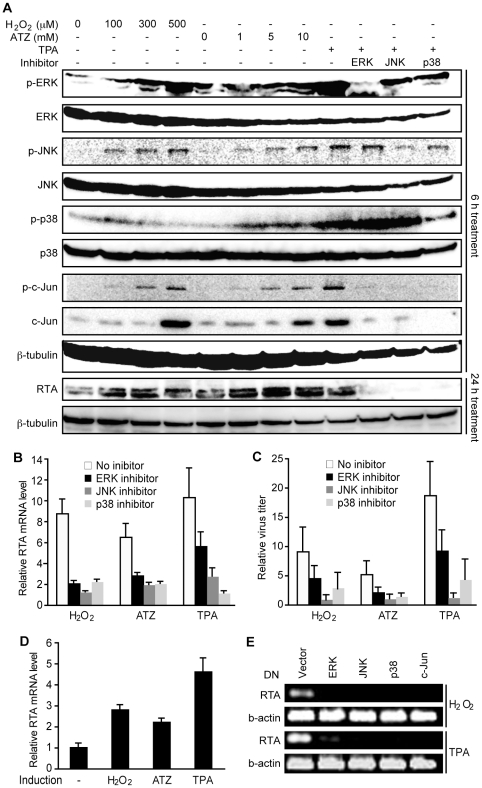
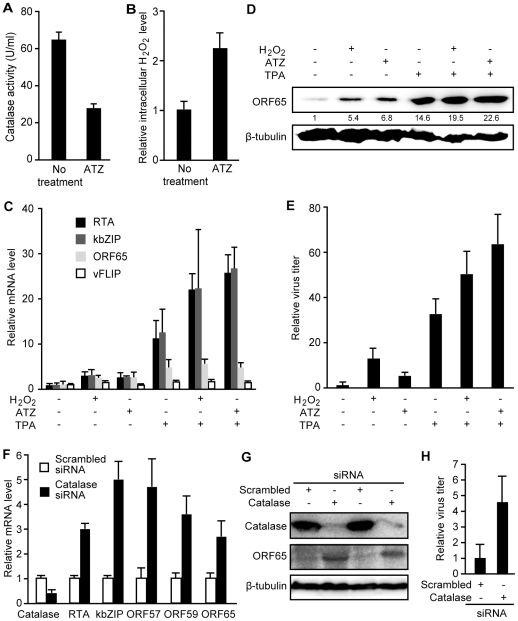
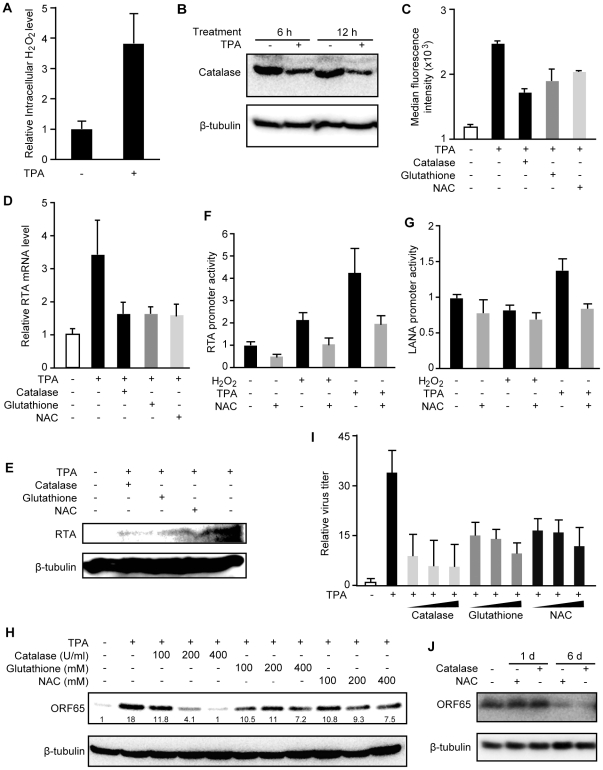
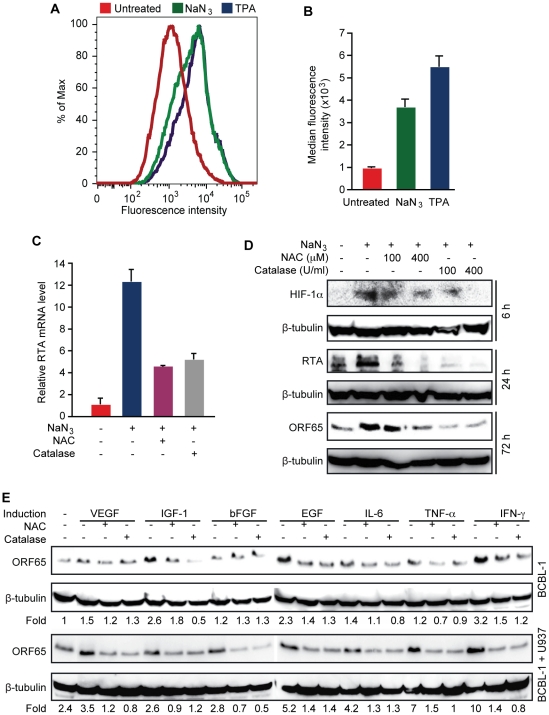
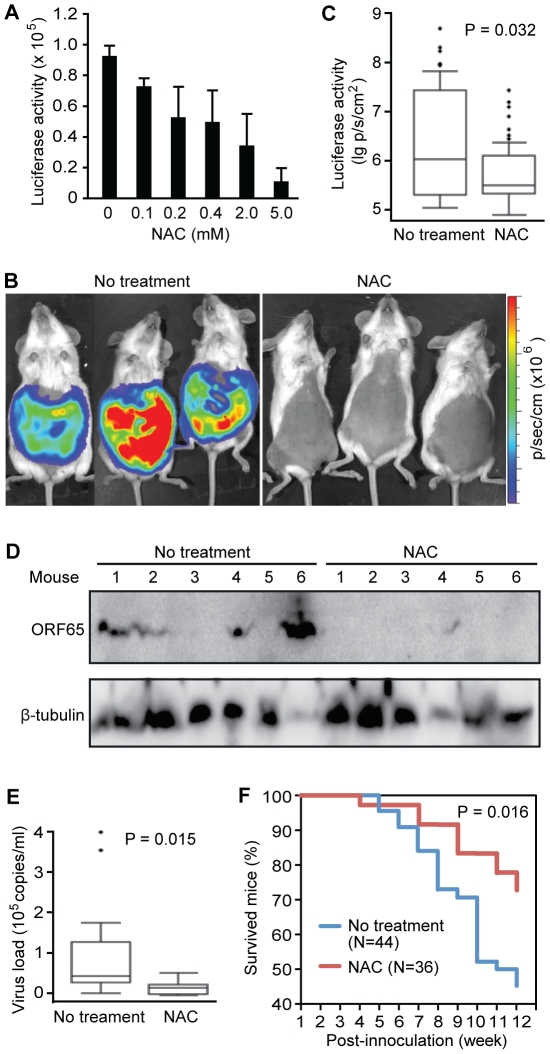
Kaposi's sarcoma-associated herpesvirus (KSHV) establishes a latent infection in the host following an acute infection. Reactivation from latency contributes to the development of KSHV-induced malignancies, which include Kaposi's sarcoma (KS), the most common cancer in untreated AIDS patients, primary effusion lymphoma and multicentric Castleman's disease. However, the physiological cues that trigger KSHV reactivation remain unclear. Here, we show that the reactive oxygen species (ROS) hydrogen peroxide (H₂O₂) induces KSHV reactivation from latency through both autocrine and paracrine signaling. Furthermore, KSHV spontaneous lytic replication, and KSHV reactivation from latency induced by oxidative stress, hypoxia, and proinflammatory and proangiogenic cytokines are mediated by H₂O₂. Mechanistically, H₂O₂ induction of KSHV reactivation depends on the activation of mitogen-activated protein kinase ERK1/2, JNK, and p38 pathways. Significantly, H₂O₂ scavengers N-acetyl-L-cysteine (NAC), catalase and glutathione inhibit KSHV lytic replication in culture. In a mouse model of KSHV-induced lymphoma, NAC effectively inhibits KSHV lytic replication and significantly prolongs the lifespan of the mice. These results directly relate KSHV reactivation to oxidative stress and inflammation, which are physiological hallmarks of KS patients. The discovery of this novel mechanism of KSHV reactivation indicates that antioxidants and anti-inflammation drugs could be promising preventive and therapeutic agents for effectively targeting KSHV replication and KSHV-related malignancies.
卡波西肉瘤相关疱疹病毒(KSHV)在急性感染后在宿主中建立潜伏感染。潜伏激活有助于 KSHV 诱导的恶性肿瘤的发展,包括卡波西肉瘤(KS),这是未经治疗的 AIDS 患者中最常见的癌症、原发性渗出性淋巴瘤和多中心卡斯特曼病。然而,触发 KSHV 激活的生理线索仍不清楚。在这里,我们表明活性氧(ROS)过氧化氢(H₂O₂)通过自分泌和旁分泌信号诱导 KSHV 从潜伏中激活。此外,KSHV 自发裂解复制,以及由氧化应激、缺氧、促炎和促血管生成细胞因子诱导的 KSHV 潜伏激活,都由 H₂O₂介导。在机制上,H₂O₂诱导 KSHV 激活依赖于丝裂原激活的蛋白激酶 ERK1/2、JNK 和 p38 途径的激活。重要的是,H₂O₂清除剂 N-乙酰-L-半胱氨酸(NAC)、过氧化氢酶和谷胱甘肽抑制培养中的 KSHV 裂解复制。在 KSHV 诱导的淋巴瘤小鼠模型中,NAC 有效抑制 KSHV 裂解复制并显著延长小鼠的寿命。这些结果直接将 KSHV 激活与氧化应激和炎症相关联,这是 KS 患者的生理特征。这种新型 KSHV 激活机制的发现表明,抗氧化剂和抗炎药物可能是有前途的预防和治疗药物,可有效靶向 KSHV 复制和 KSHV 相关恶性肿瘤。