Department of Biology and Biotechnology Charles Darwin, Sapienza University, Rome, Italy.
PLoS One. 2011;6(5):e19970. doi: 10.1371/journal.pone.0019970. Epub 2011 May 18.
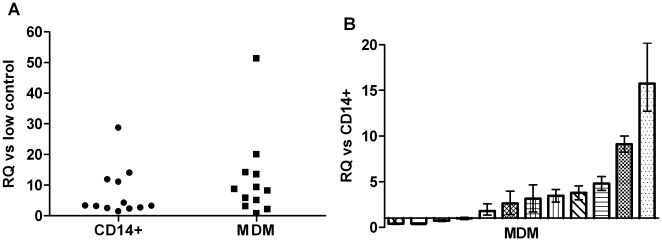
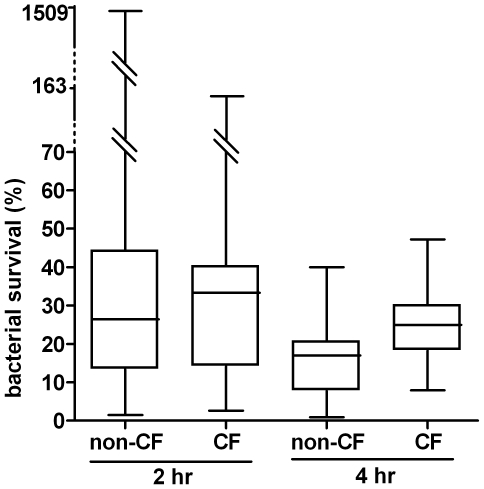
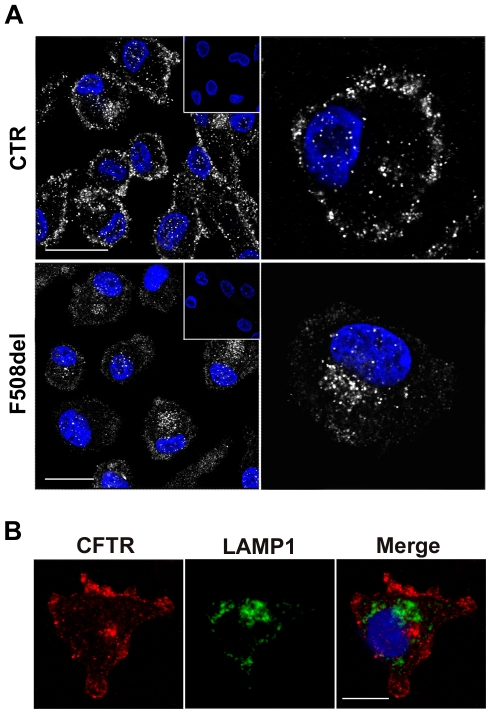
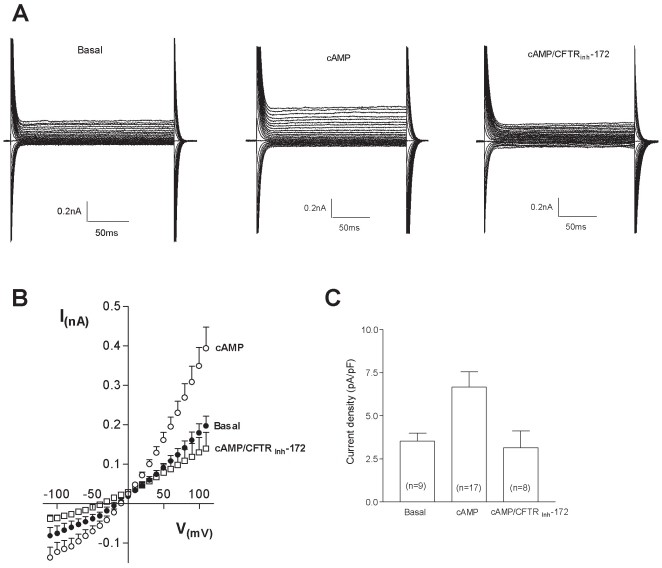
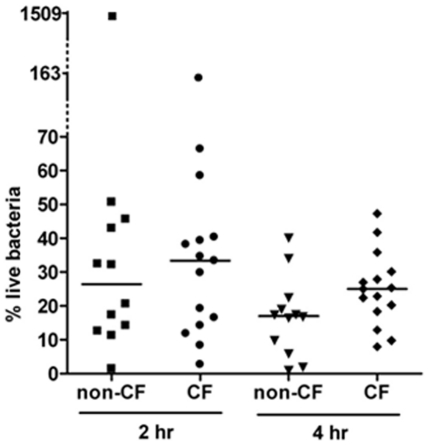
Chronic inflammation of the lung, as a consequence of persistent bacterial infections by several opportunistic pathogens represents the main cause of mortality and morbidity in cystic fibrosis (CF) patients. Mechanisms leading to increased susceptibility to bacterial infections in CF are not completely known, although the involvement of cystic fibrosis transmembrane conductance regulator (CFTR) in microbicidal functions of macrophages is emerging. Tissue macrophages differentiate in situ from infiltrating monocytes, additionally, mature macrophages from different tissues, although having a number of common activities, exhibit variation in some molecular and cellular functions. In order to highlight possible intrinsic macrophage defects due to CFTR dysfunction, we have focused our attention on in vitro differentiated macrophages from human peripheral blood monocytes. Here we report on the contribution of CFTR in the bactericidal activity against Pseudomonas aeruginosa of monocyte derived human macrophages. At first, by real time PCR, immunofluorescence and patch clamp recordings we demonstrated that CFTR is expressed and is mainly localized to surface plasma membranes of human monocyte derived macrophages (MDM) where it acts as a cAMP-dependent chloride channel. Next, we evaluated the bactericidal activity of P. aeruginosa infected macrophages from healthy donors and CF patients by antibiotic protection assays. Our results demonstrate that control and CF macrophages do not differ in the phagocytic activity when infected with P. aeruginosa. Rather, although a reduction of intracellular live bacteria was detected in both non-CF and CF cells, the percentage of surviving bacteria was significantly higher in CF cells. These findings further support the role of CFTR in the fundamental functions of innate immune cells including eradication of bacterial infections by macrophages.
肺部慢性炎症是由几种机会性病原体持续感染引起的,这是囊性纤维化 (CF) 患者死亡和发病的主要原因。导致 CF 患者易受细菌感染的机制尚不完全清楚,尽管囊性纤维化跨膜电导调节蛋白 (CFTR) 参与巨噬细胞的杀菌功能正在显现。组织巨噬细胞在原位从浸润的单核细胞中分化而来,此外,不同组织的成熟巨噬细胞虽然具有许多共同的活性,但在一些分子和细胞功能上存在差异。为了突出 CFTR 功能障碍导致的可能固有巨噬细胞缺陷,我们将注意力集中在体外分化的人外周血单核细胞来源的巨噬细胞上。在这里,我们报告了 CFTR 对铜绿假单胞菌杀菌活性的贡献单核细胞来源的人巨噬细胞 (MDM)。首先,通过实时 PCR、免疫荧光和膜片钳记录,我们证明 CFTR 在人单核细胞来源的巨噬细胞 (MDM) 中表达,并主要定位于表面质膜上,在那里它作为 cAMP 依赖性氯离子通道发挥作用。接下来,我们通过抗生素保护试验评估了来自健康供体和 CF 患者的感染铜绿假单胞菌的巨噬细胞的杀菌活性。我们的结果表明,当感染铜绿假单胞菌时,对照和 CF 巨噬细胞在吞噬活性方面没有差异。然而,尽管在非 CF 和 CF 细胞中都检测到了细胞内活菌的减少,但 CF 细胞中存活细菌的百分比明显更高。这些发现进一步支持 CFTR 在先天免疫细胞基本功能中的作用,包括巨噬细胞对细菌感染的清除。