Key Laboratory of Gene Engineering of the Ministry of Education, State Key Laboratory for Biocontrol, Sun Yat-sen University, Guangzhou, China.
Oncogene. 2012 Jan 5;31(1):80-92. doi: 10.1038/onc.2011.208. Epub 2011 Jun 6.
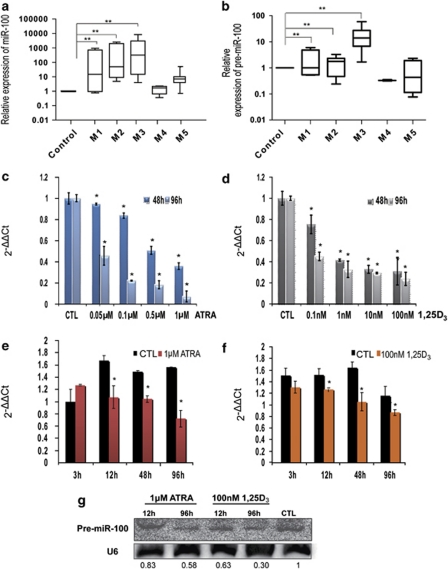
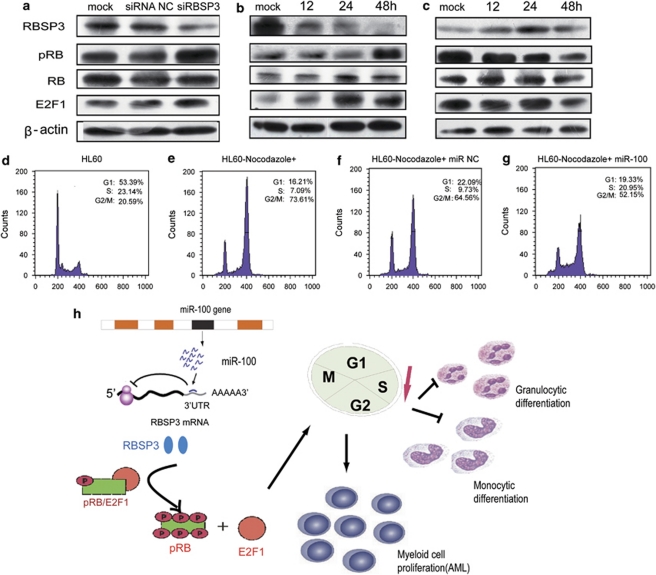
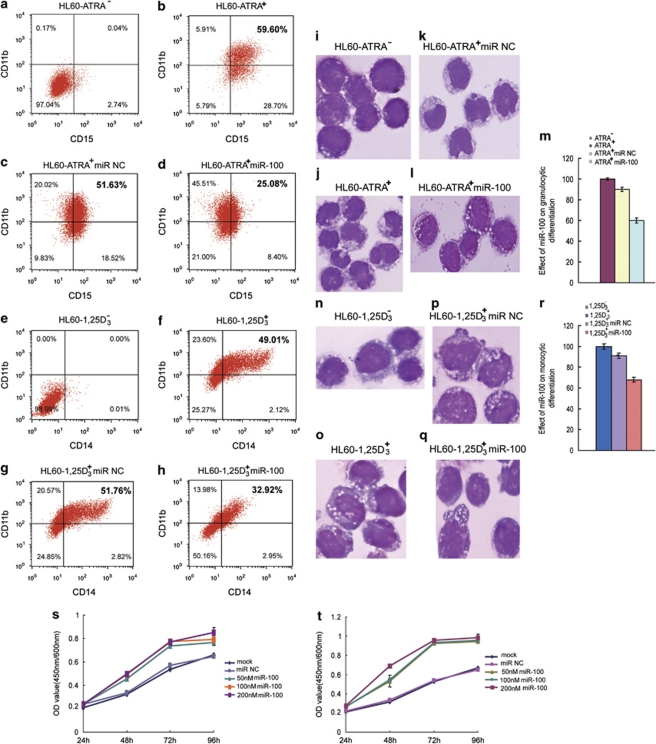
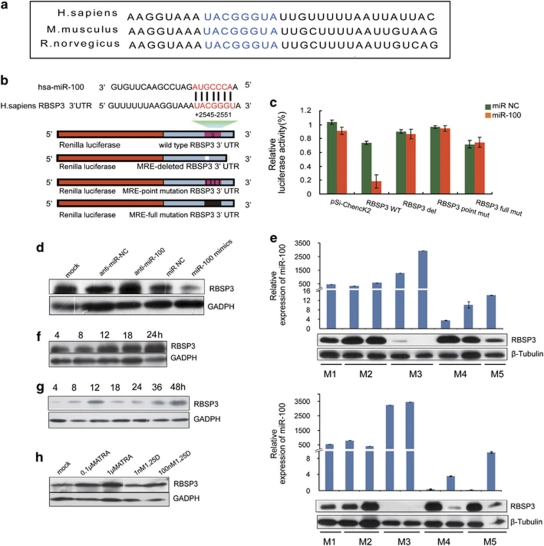
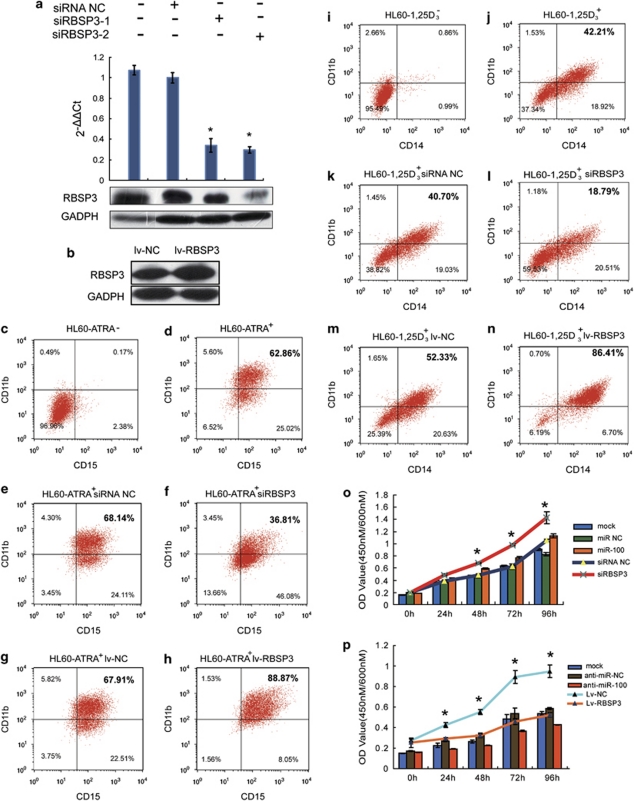
Acute myeloblastic leukemia (AML) is characterized by the accumulation of abnormal myeloblasts (mainly granulocyte or monocyte precursors) in the bone marrow and blood. Though great progress has been made for improvement in clinical treatment during the past decades, only minority with AML achieve long-term survival. Therefore, further understanding mechanisms of leukemogenesis and exploring novel therapeutic strategies are still crucial for improving disease outcome. MicroRNA-100 (miR-100), a small non-coding RNA molecule, has been reported as a frequent event aberrantly expressed in patients with AML; however, the molecular basis for this phenotype and the statuses of its downstream targets have not yet been elucidated. In the present study, we found that the expression level of miR-100 in vivo was related to the stage of the maturation block underlying the subtypes of myeloid leukemia. In vitro experiments further demonstrated that miR-100 was required to promote the cell proliferation of promyelocytic blasts and arrest them differentiated to granulocyte/monocyte lineages. Significantly, we identified RBSP3, a phosphatase-like tumor suppressor, as a bona fide target of miR-100 and validated that RBSP3 was involved in cell differentiation and survival in AML. Moreover, we revealed a new pathway that miR-100 regulates G1/S transition and S-phase entry and blocks the terminal differentiation by targeting RBSP3, which partly in turn modulates the cell cycle effectors pRB/E2F1 in AML. These events promoted cell proliferation and blocked granulocyte/monocyte differentiation. Our data highlight an important role of miR-100 in the molecular etiology of AML, and implicate the potential application of miR-100 in cancer therapy.
急性髓系白血病(AML)的特征是骨髓和血液中异常髓样母细胞(主要是粒细胞或单核细胞前体)的积累。尽管在过去几十年中,临床治疗方面取得了很大进展,但只有少数 AML 患者能够长期生存。因此,进一步了解白血病发生的机制并探索新的治疗策略对于改善疾病预后仍然至关重要。微小 RNA-100(miR-100)是一种小的非编码 RNA 分子,已被报道为 AML 患者中异常表达的频繁事件;然而,这种表型的分子基础及其下游靶标的状态尚未阐明。在本研究中,我们发现 miR-100 的体内表达水平与髓样白血病亚型的成熟阻滞阶段有关。体外实验进一步表明,miR-100 是促进早幼粒细胞白血病细胞增殖并阻止其向粒细胞/单核细胞谱系分化所必需的。重要的是,我们确定了 RBSP3,一种磷酸酶样肿瘤抑制因子,是 miR-100 的真正靶标,并验证了 RBSP3 参与了 AML 中的细胞分化和存活。此外,我们揭示了 miR-100 通过靶向 RBSP3 调节 G1/S 转换和 S 期进入并阻断终末分化的新途径,这部分反过来又调节 AML 中的细胞周期效应物 pRB/E2F1。这些事件促进了细胞增殖并阻断了粒细胞/单核细胞分化。我们的数据强调了 miR-100 在 AML 分子发病机制中的重要作用,并暗示了 miR-100 在癌症治疗中的潜在应用。