Yee Michael, Konopka Krystyna, Balzarini Jan, Düzgüneş Nejat
Department of Biomedical Sciences, University of the Pacific Arthur A. Dugoni School of Dentistry, San Francisco, CA 94115, USA.
Open Virol J. 2011;5:44-51. doi: 10.2174/1874357901105010044. Epub 2011 May 12.
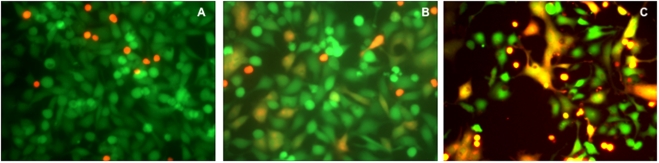
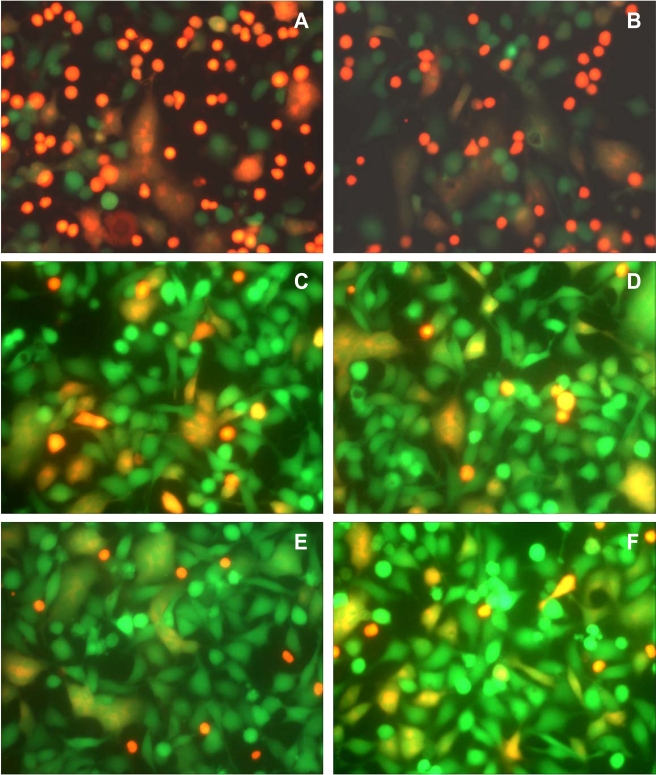
Broadly cross-reactive, neutralizing human monoclonal antibodies, including 2F5, 2G12, 4E10 and IgG1 b12, can inhibit HIV-1 infection in vitro at very low concentrations. We examined the ability of these antibodies to inhibit cell-cell fusion between Clone69TRevEnv cells induced to express the viral envelope proteins, gp120/gp41 (Env), and highly CD4-positive SupT1 cells. The cells were loaded with green and red-orange cytoplasmic fluorophores, and fusion was monitored by fluorescence microscopy.
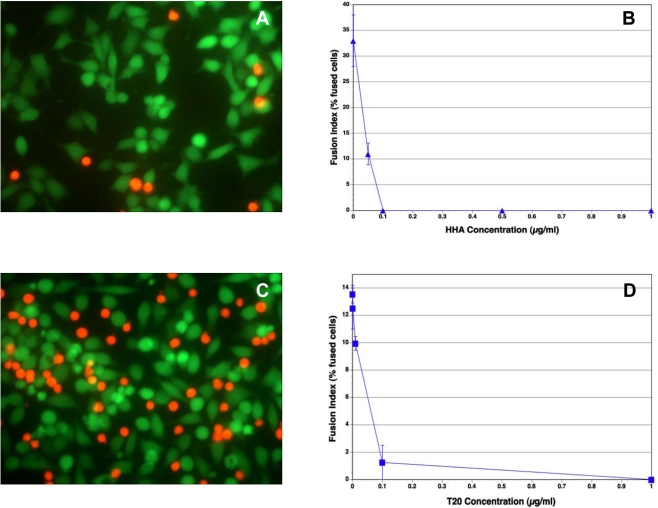
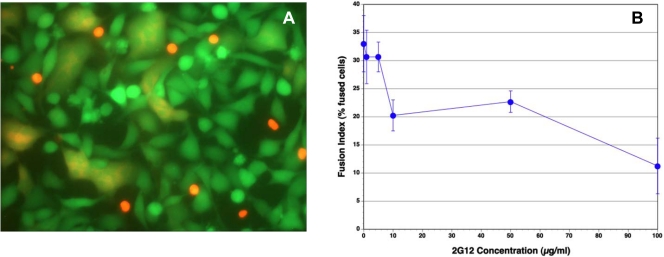
Cell-cell fusion was inhibited completely by the carbohydrate binding proteins (CBPs), Hippeastrum hybrid (Amaryllis) agglutinin (HHA), and Galanthus nivalis (Snowdrop) agglutinin (GNA), and by the peptide, T-20, at relatively low concentrations. Anti-gp120 and anti-gp41 antibodies, at concentrations much higher than those required for neutralization, were not particularly effective in inhibiting fusion. Monoclonal antibodies b12, m14 IgG and 2G12 had moderate inhibitory activity; the IC(50) of 2G12 was about 80 µg/ml. Antibodies 4E10 and 2F5 had no inhibitory activity at the concentrations tested.
These observations raise concerns about the ability of neutralizing antibodies to inhibit the spread of viral genetic material from infected cells to uninfected cells via cell-cell fusion. The interaction of gp120/gp41 with cell membrane CD4 may be different in cell-cell and virus-cell membrane fusion reactions, and may explain the differential effects of antibodies in these two systems. The fluorescence assay described here may be useful in high throughput screening of potential HIV fusion inhibitors.
广泛交叉反应的中和性人单克隆抗体,包括2F5、2G12、4E10和IgG1 b12,能在极低浓度下体外抑制HIV - 1感染。我们检测了这些抗体抑制诱导表达病毒包膜蛋白gp120/gp41(Env)的Clone69TRevEnv细胞与高CD4阳性的SupT1细胞之间细胞 - 细胞融合的能力。细胞加载了绿色和红橙色细胞质荧光团,通过荧光显微镜监测融合情况。
碳水化合物结合蛋白(CBP),即朱顶红(孤挺花)凝集素(HHA)和雪花莲凝集素(GNA),以及肽T - 20在相对低浓度下就能完全抑制细胞 - 细胞融合。抗gp120和抗gp41抗体在浓度远高于中和所需浓度时,对抑制融合并非特别有效。单克隆抗体b12、m14 IgG和2G12具有中等抑制活性;2G12的半数抑制浓度(IC50)约为80μg/ml。抗体4E10和2F5在测试浓度下无抑制活性。
这些观察结果引发了对于中和抗体通过细胞 - 细胞融合抑制病毒遗传物质从感染细胞传播至未感染细胞能力的担忧。gp120/gp41与细胞膜CD4的相互作用在细胞 - 细胞和病毒 - 细胞膜融合反应中可能不同,这或许可以解释抗体在这两个系统中的不同作用效果。此处描述的荧光测定法可能有助于高通量筛选潜在的HIV融合抑制剂。