Department of Pharmacology, Wayne State University, Detroit, Michigan, USA.
J Cell Physiol. 2011 Sep;226(9):2316-28. doi: 10.1002/jcp.22570.
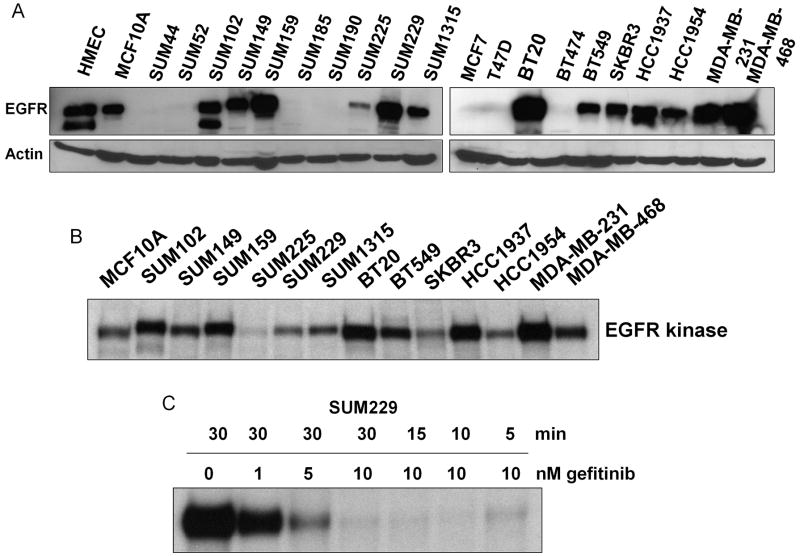
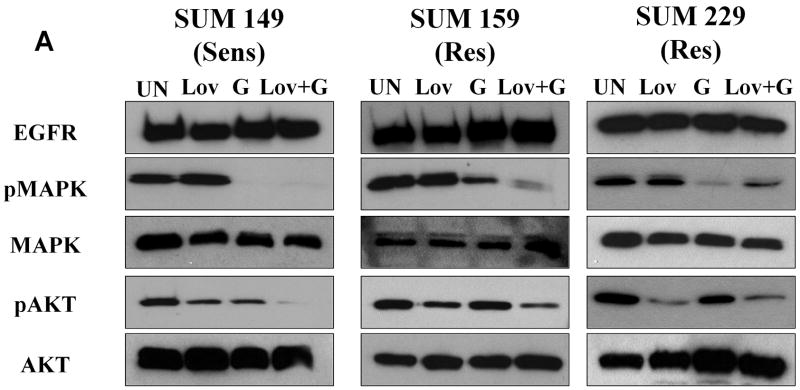
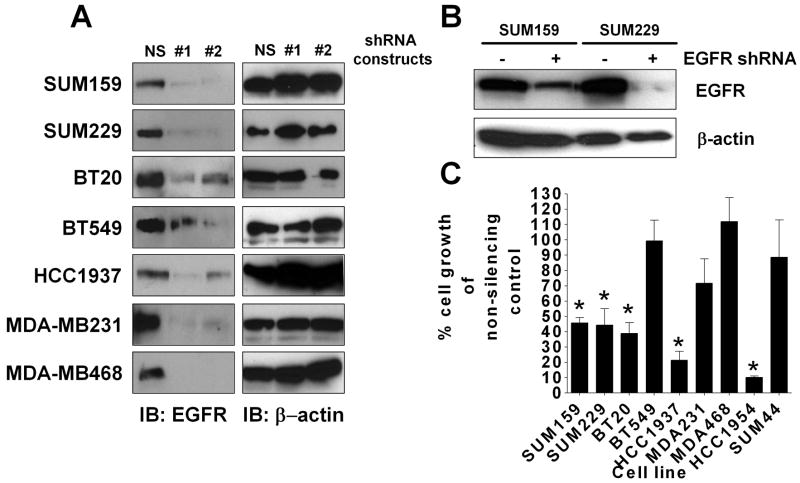
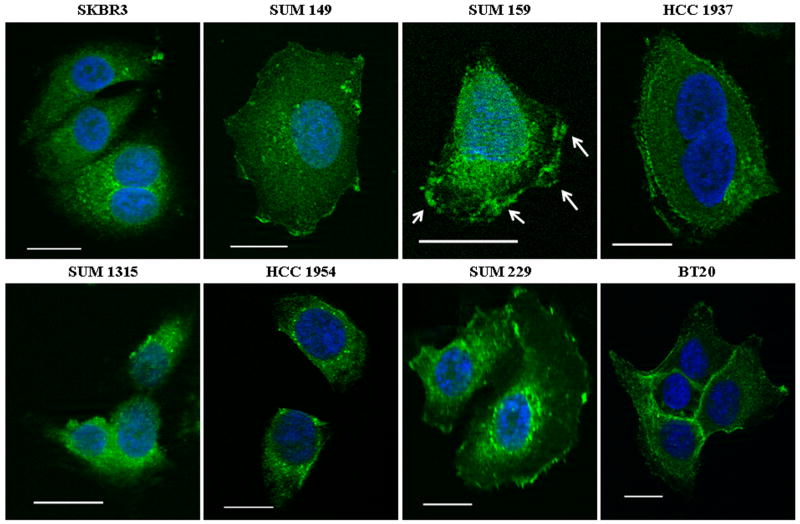
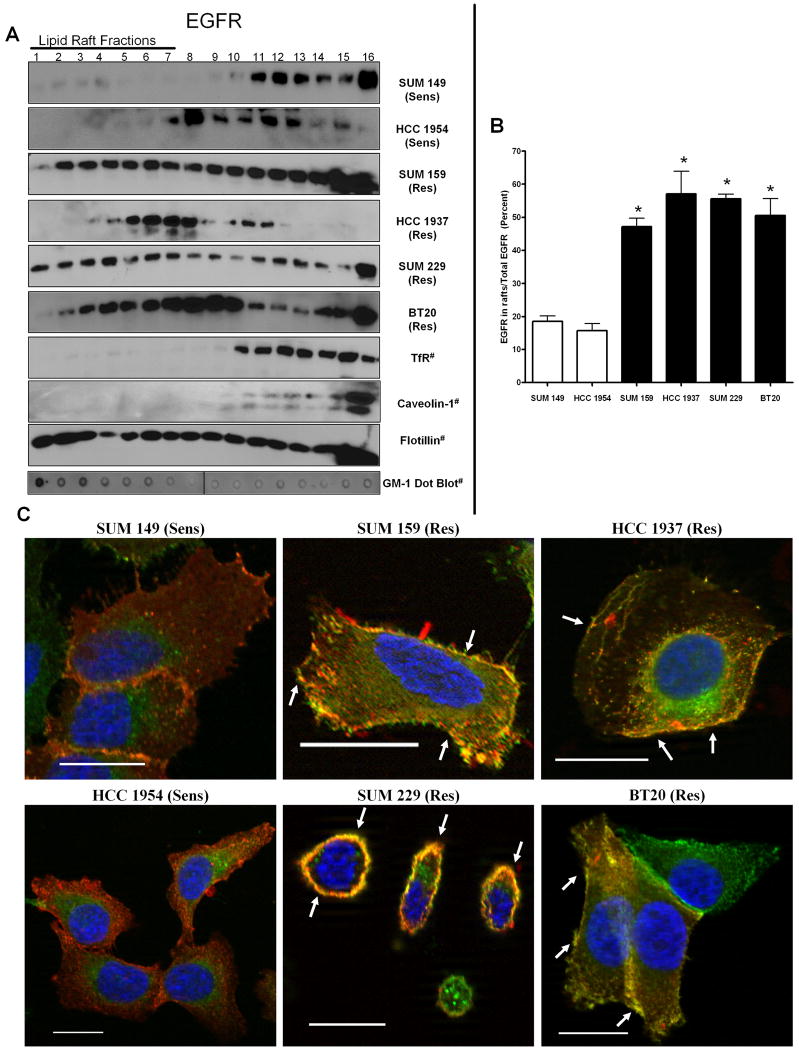
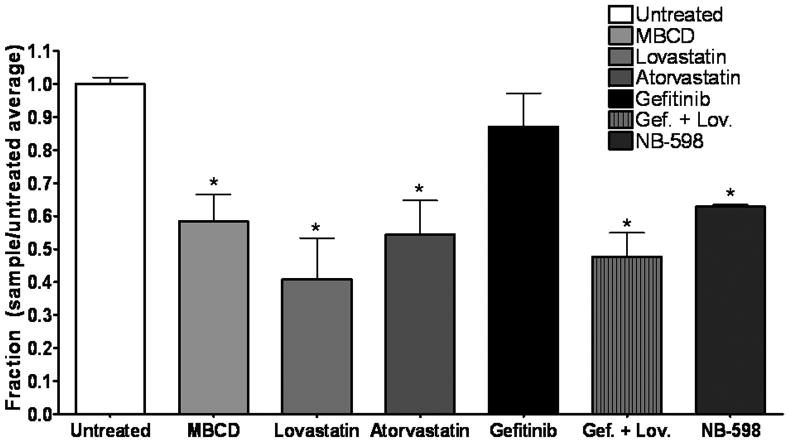
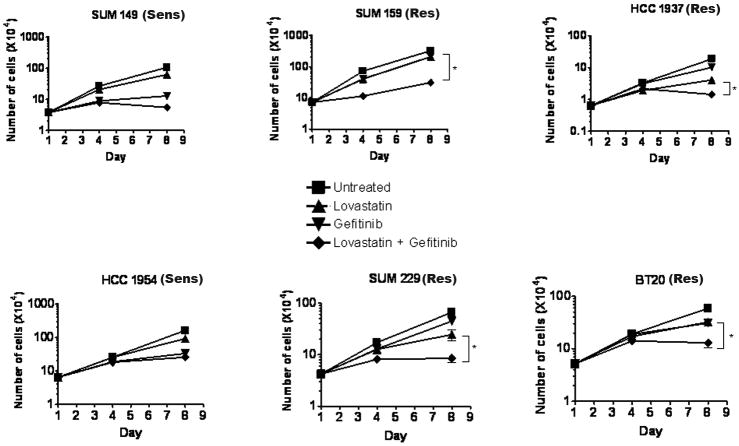
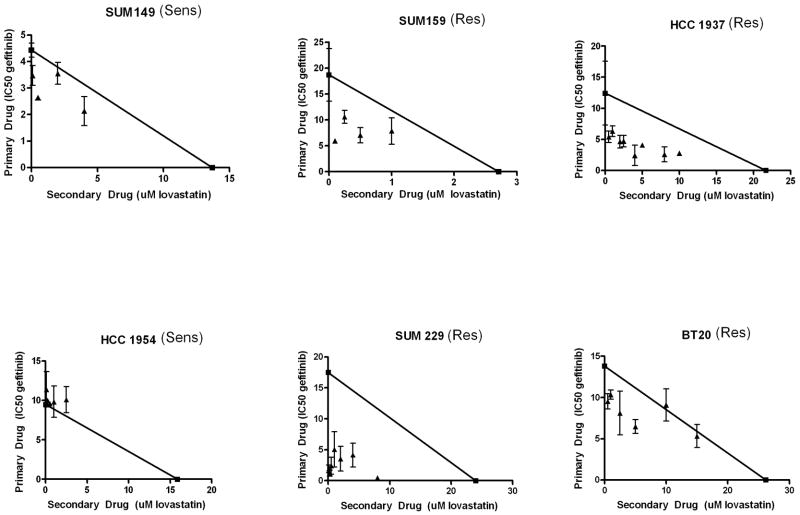
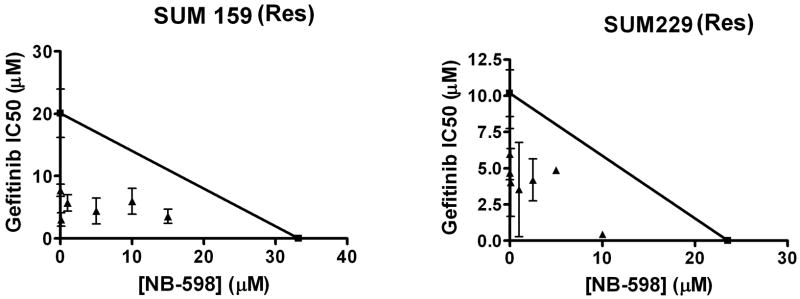
Epidermal growth factor receptor (EGFR) is overexpressed in many cancer types including ~30% of breast cancers. Several small molecule tyrosine kinase inhibitors (TKIs) targeting EGFR have shown clinical efficacy in lung and colon cancers, but no benefit has been noted in breast cancer. Thirteen EGFR expressing breast cancer cell lines were analyzed for response to EGFR TKIs. Seven were found to be EGFR TKI resistant; while shRNA knockdown of EGFR determined that four of these cell lines retained the requirement of EGFR protein expression for growth. Interestingly, EGFR localized to plasma membrane lipid rafts in all four of these EGFR TKI-resistant cell lines, as determined by biochemical raft isolation and immunofluorescence. When lipid rafts were depleted of cholesterol using lovastatin, all four cell lines were sensitized to EGFR TKIs. In fact, the effects of the cholesterol biosynthesis inhibitors and gefitinib were synergistic. While gefitinib effectively abrogated phosphorylation of Akt- and mitogen-activated protein kinase in an EGFR TKI-sensitive cell line, phosphorylation of Akt persisted in two EGFR TKI-resistant cell lines, however, this phosphorylation was abrogated by lovastatin treatment. Thus, we have shown that lipid raft localization of EGFR correlates with resistance to EGFR TKI-induced growth inhibition and pharmacological depletion of cholesterol from lipid rafts decreases this resistance in breast cancer cell lines. Furthermore, we have presented evidence to suggest that when EGFR localizes to lipid rafts, these rafts provide a platform to facilitate activation of Akt signaling in the absence of EGFR kinase activity.
表皮生长因子受体(EGFR)在许多癌症类型中过表达,包括约 30%的乳腺癌。几种针对 EGFR 的小分子酪氨酸激酶抑制剂(TKI)在肺癌和结肠癌中显示出临床疗效,但在乳腺癌中没有获益。分析了 13 种表达 EGFR 的乳腺癌细胞系对 EGFR TKI 的反应。发现其中 7 种对 EGFR TKI 具有耐药性;而通过 EGFR shRNA 敲低确定这 4 种细胞系仍然需要 EGFR 蛋白表达才能生长。有趣的是,通过生化筏分离和免疫荧光检测,发现所有这 4 种 EGFR TKI 耐药细胞系中的 EGFR 都定位于质膜脂筏中。当使用洛伐他汀耗尽胆固醇时,所有这 4 种细胞系都对 EGFR TKI 敏感。事实上,胆固醇生物合成抑制剂和吉非替尼的作用具有协同性。虽然吉非替尼能有效阻断 EGFR TKI 敏感细胞系中 Akt 和丝裂原活化蛋白激酶的磷酸化,但在两种 EGFR TKI 耐药细胞系中,Akt 的磷酸化仍然存在,但用洛伐他汀处理后可消除这种磷酸化。因此,我们已经表明,EGFR 的脂筏定位与 EGFR TKI 诱导的生长抑制耐药性相关,并且从脂筏中耗尽胆固醇可以降低乳腺癌细胞系的这种耐药性。此外,我们提供的证据表明,当 EGFR 定位于脂筏时,这些脂筏为在没有 EGFR 激酶活性的情况下激活 Akt 信号提供了一个平台。