Ebert S N, Shtrom S S, Muller M T
Department of Molecular Genetics, Ohio State University, Columbus 43210-1292.
J Virol. 1990 Sep;64(9):4059-66. doi: 10.1128/JVI.64.9.4059-4066.1990.
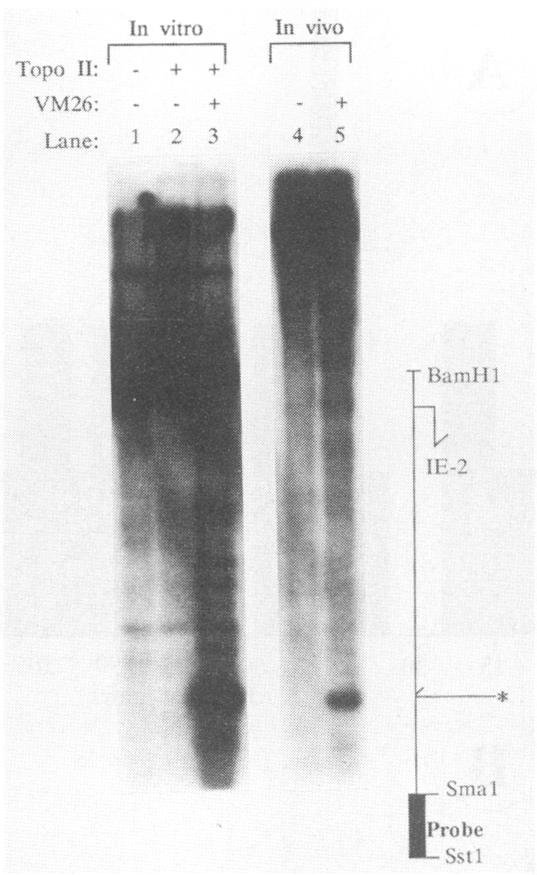
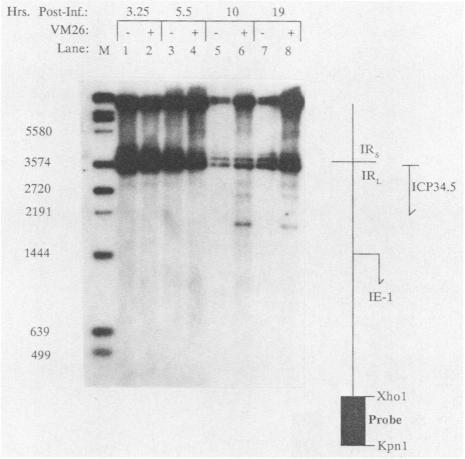
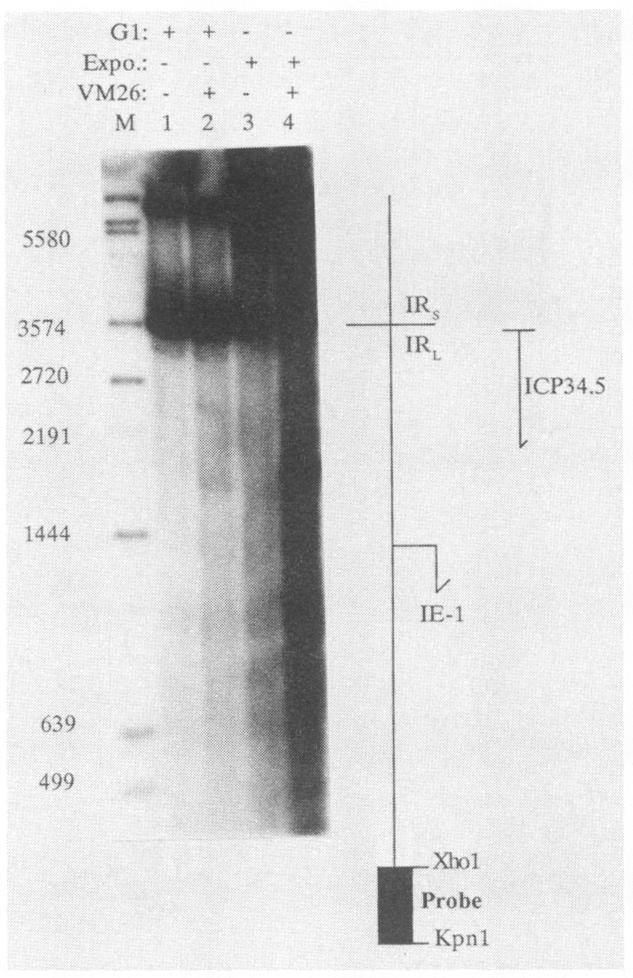
The genome of herpes simplex virus type 1 contains a large number of recognition sites for eucaryotic DNA type II topoisomerase. Topoisomerase II sites were identified by means of the consensus sequence described previously (J.R. Spitzner and M.T. Muller, Nucleic Acids Res. 16:5553-5556, 1988) and then confirmed by sequencing DNA cleavages introduced by purified topoisomerase II. In vivo, host topoisomerase II also introduced double-stranded DNA breaks in the viral genome at sites predicted by the consensus sequence. Host topoisomerase II acted on all immediate-early genes as well as on genes from other temporal classes; however, cleavages were not detected until 4 to 5 h postinfection and were most intense at 10 h postinfection. Topoisomerase II cleavages were not detected when viral DNA replication was prevented with phosphonoacetic acid. These data indicate that, although progeny viral genomes are acted upon by host topoisomerase II, this enzyme either does not act on parental viral genomes before DNA replication or acts on them with such low efficiency that cleavages are beyond our limit of detection. The findings suggest that host topoisomerase II is involved in aspects of viral replication at late times in the infectious cycle.
单纯疱疹病毒1型的基因组含有大量真核生物DNA II型拓扑异构酶的识别位点。拓扑异构酶II位点通过先前描述的共有序列得以鉴定(J.R. 斯皮茨纳和M.T. 米勒,《核酸研究》16:5553 - 5556,1988),随后通过对纯化的拓扑异构酶II引入的DNA切割进行测序得以证实。在体内,宿主拓扑异构酶II也在共有序列预测的位点在病毒基因组中引入双链DNA断裂。宿主拓扑异构酶II作用于所有立即早期基因以及其他时间类别的基因;然而,切割直到感染后4至5小时才被检测到,并且在感染后10小时最为强烈。当用膦甲酸阻止病毒DNA复制时,未检测到拓扑异构酶II切割。这些数据表明,尽管子代病毒基因组受到宿主拓扑异构酶II的作用,但该酶要么在DNA复制之前不作用于亲代病毒基因组,要么以如此低的效率作用于它们以至于切割超出了我们的检测极限。这些发现表明宿主拓扑异构酶II在感染周期后期参与病毒复制的各个方面。