Division of Pediatric Surgery, Children's Hospital of Pittsburgh, Pittsburgh, PA 15213, USA.
Dis Model Mech. 2011 Jul;4(4):447-56. doi: 10.1242/dmm.007252. Epub 2011 Jun 13.
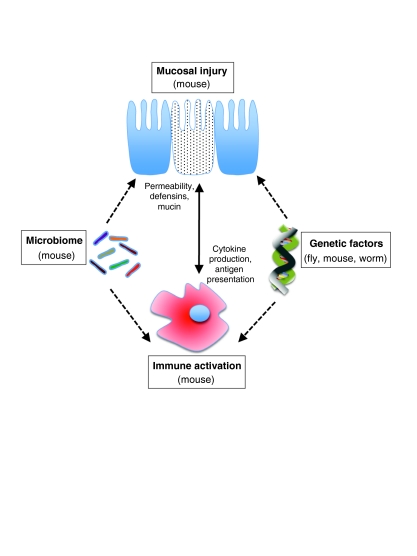
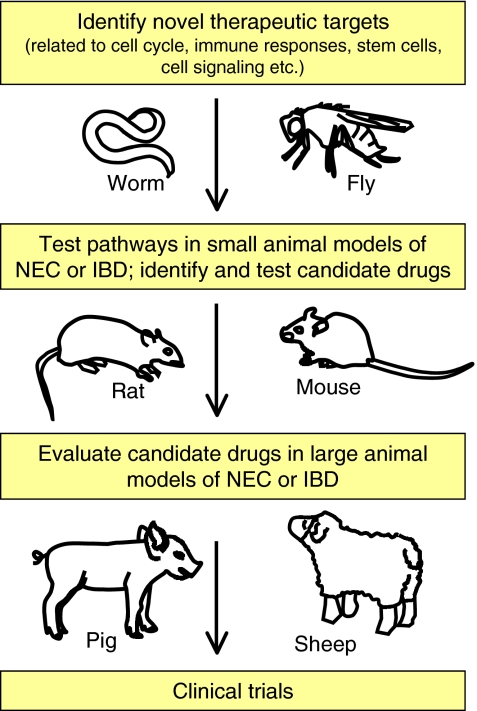
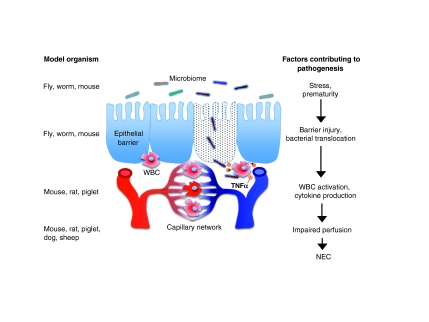
Diseases of intestinal inflammation, including Crohn's disease, ulcerative colitis and necrotizing enterocolitis, cause substantial acute and chronic disability in a large proportion of the population. Crohn's disease and ulcerative colitis, which are collectively referred to as inflammatory bowel disease (IBD), lead to recurrent episodes of intestinal dysfunction and systemic illness, whereas necrotizing enterocolitis is characterized by the development of dramatic and all too often fatal intestinal necrosis in infants. To determine the molecular underpinnings of these disorders, investigators have explored a variety of animal models that vary widely in their complexity. These experimental systems include the invertebrate nematode Caenorhabditis elegans, the more complex invertebrate Drosophila melanogaster, and vertebrate systems including mice, rats and other mammals. This review explores the experimental models that are used to mimic and evaluate the pathogenic mechanisms leading to these diseases of intestinal inflammation. We then highlight, as an example, how the use of different experimental models that focus on the role of Toll-like receptor 4 (TLR4) signaling in the gut has revealed important distinctions between the pathogenesis of IBD and necrotizing enterocolitis. Specifically, TLR4-mediated signaling plays a protective role in the development of Crohn's disease and ulcerative colitis, whereas this signaling pathway plays a causative role in the development of necrotizing enterocolitis in the newborn small intestine by adversely affecting intestinal injury and repair mechanisms.
肠道炎症性疾病,包括克罗恩病、溃疡性结肠炎和坏死性小肠结肠炎,在很大一部分人群中导致大量的急性和慢性残疾。克罗恩病和溃疡性结肠炎统称为炎症性肠病(IBD),导致肠道功能反复出现障碍和全身疾病,而坏死性小肠结肠炎的特征是婴儿肠道发生急剧且往往致命的坏死。为了确定这些疾病的分子基础,研究人员探索了各种在复杂性上差异很大的动物模型。这些实验系统包括无脊椎动物秀丽隐杆线虫、更复杂的无脊椎动物黑腹果蝇,以及包括小鼠、大鼠和其他哺乳动物在内的脊椎动物系统。这篇综述探讨了用于模拟和评估导致这些肠道炎症性疾病的发病机制的实验模型。然后,我们重点介绍了一个例子,即如何使用不同的实验模型来关注 Toll 样受体 4(TLR4)信号在肠道中的作用,揭示了 IBD 和坏死性小肠结肠炎发病机制之间的重要区别。具体来说,TLR4 介导的信号在克罗恩病和溃疡性结肠炎的发展中发挥保护作用,而在新生儿小肠中,该信号通路通过不良影响肠道损伤和修复机制,在坏死性小肠结肠炎的发展中发挥致病作用。