Calpain Project, Department of Advanced Science for Biomolecules, Tokyo Metropolitan Institute of Medical Science, Tokyo, Japan.
Proc Jpn Acad Ser B Phys Biol Sci. 2011;87(6):287-327. doi: 10.2183/pjab.87.287.
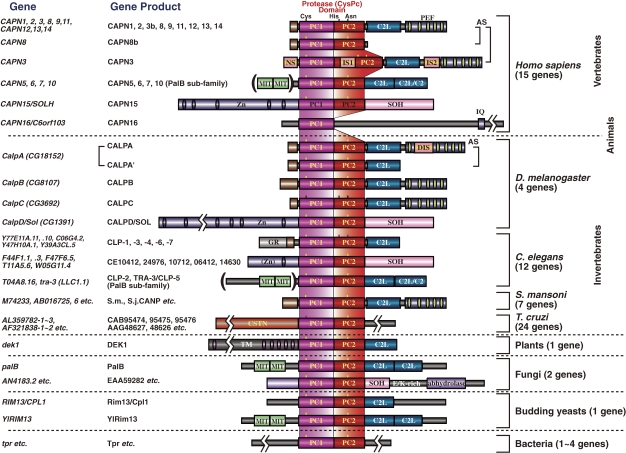
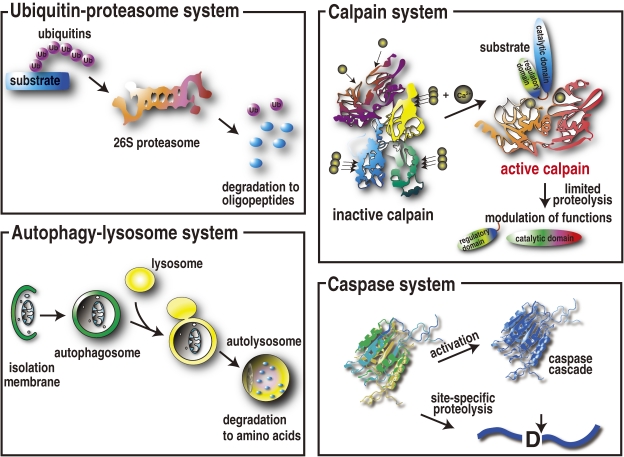
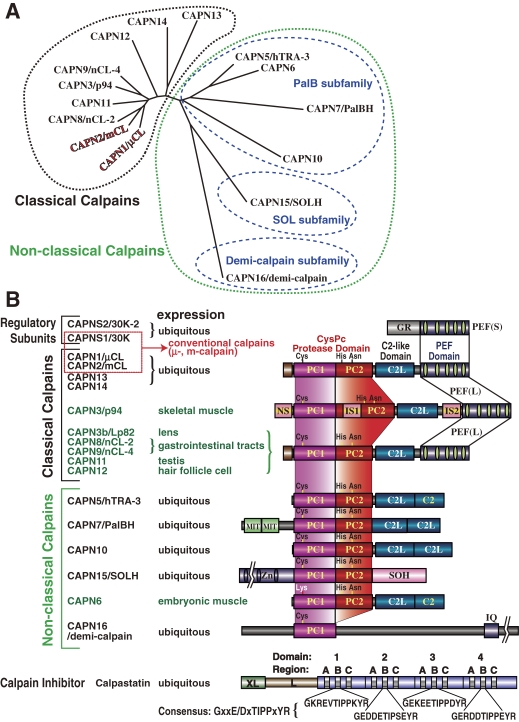
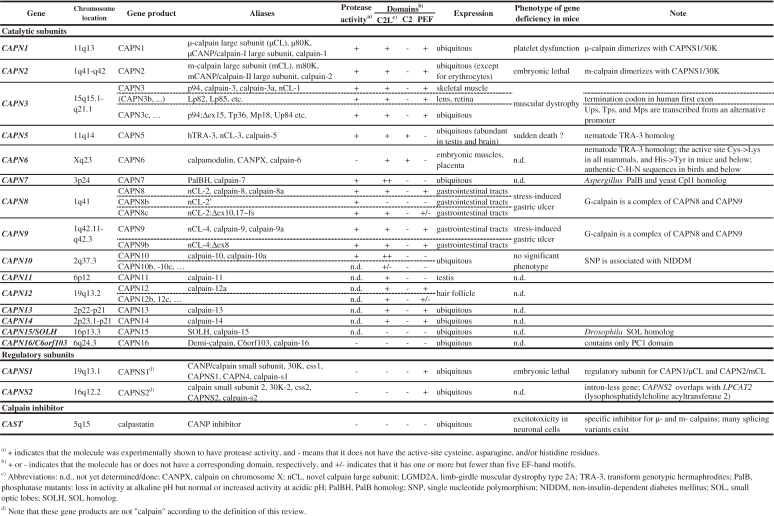
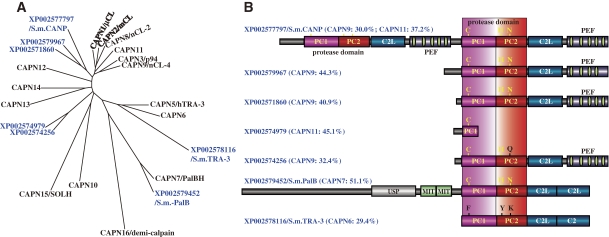
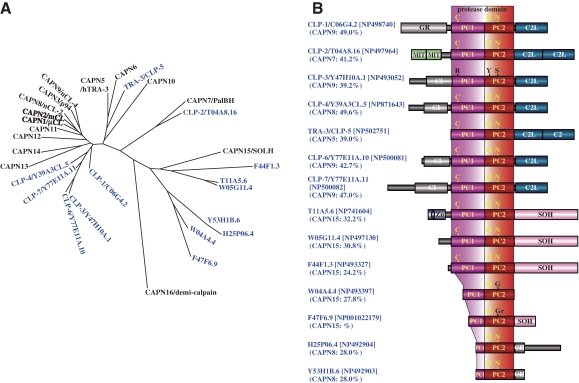
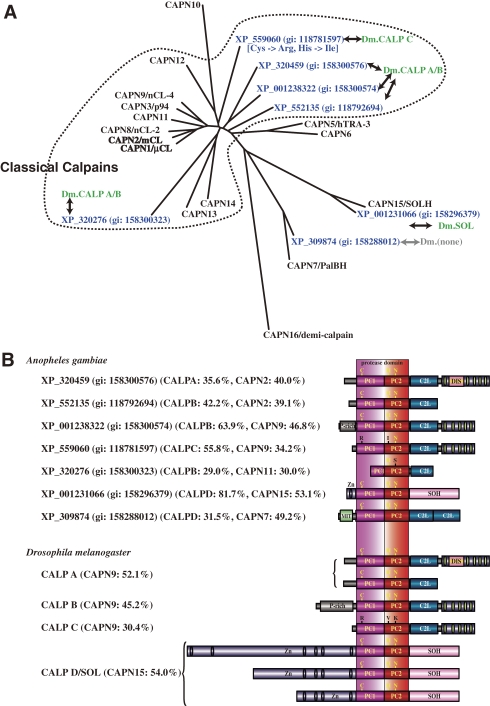
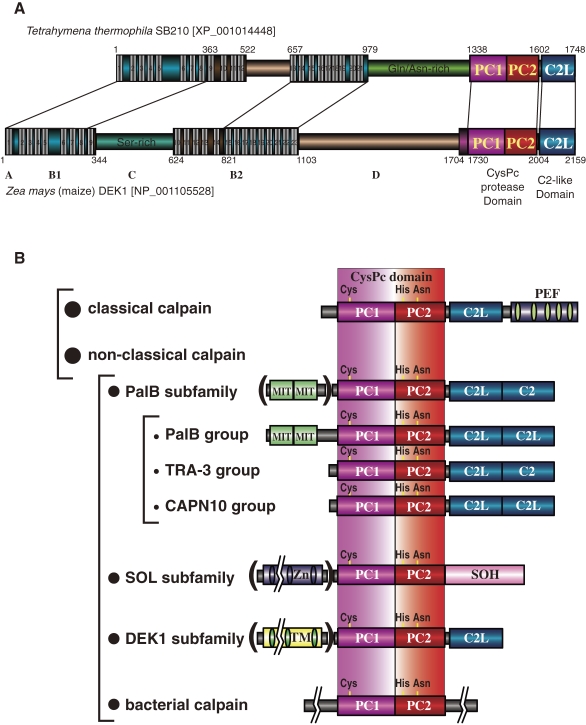
Calpain is an intracellular Ca2+-dependent cysteine protease (EC 3.4.22.17; Clan CA, family C02) discovered in 1964. It was also called CANP (Ca2+-activated neutral protease) as well as CASF, CDP, KAF, etc. until 1990. Calpains are found in almost all eukaryotes and a few bacteria, but not in archaebacteria. Calpains have a limited proteolytic activity, and function to transform or modulate their substrates' structures and activities; they are therefore called, "modulator proteases." In the human genome, 15 genes--CAPN1, CAPN2, etc.--encode a calpain-like protease domain. Their products are calpain homologs with divergent structures and various combinations of functional domains, including Ca2+-binding and microtubule-interaction domains. Genetic studies have linked calpain deficiencies to a variety of defects in many different organisms, including lethality, muscular dystrophies, gastropathy, and diabetes. This review of the study of calpains focuses especially on recent findings about their structure-function relationships. These discoveries have been greatly aided by the development of 3D structural studies and genetic models.
钙蛋白酶是一种细胞内 Ca2+依赖的半胱氨酸蛋白酶(EC 3.4.22.17;Clan CA,家族 C02),于 1964 年发现。它也被称为 CANP(Ca2+激活的中性蛋白酶)以及 CASF、CDP、KAF 等,直到 1990 年。钙蛋白酶几乎存在于所有真核生物和一些细菌中,但不存在于古细菌中。钙蛋白酶具有有限的蛋白水解活性,其功能是改变或调节其底物的结构和活性;因此,它们被称为“调节剂蛋白酶”。在人类基因组中,有 15 个基因——CAPN1、CAPN2 等——编码钙蛋白酶样蛋白酶结构域。它们的产物是具有不同结构和各种功能域组合的钙蛋白酶同源物,包括 Ca2+结合和微管相互作用域。遗传研究将钙蛋白酶的缺乏与许多不同生物体的多种缺陷联系起来,包括致死性、肌肉营养不良、胃病和糖尿病。本综述特别关注钙蛋白酶结构-功能关系的最新研究发现。这些发现得益于 3D 结构研究和遗传模型的发展。