Duke Comprehensive Cancer Research Center, Department of Medicine, Duke University School of Medicine, Durham, NC 27710, USA.
Mol Cancer Ther. 2011 Aug;10(8):1367-74. doi: 10.1158/1535-7163.MCT-10-0991. Epub 2011 Jun 14.
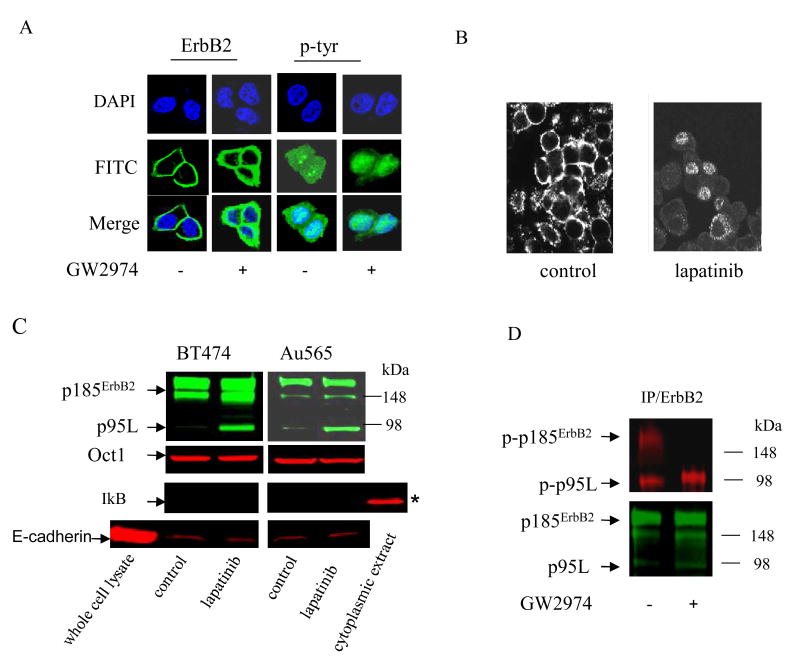
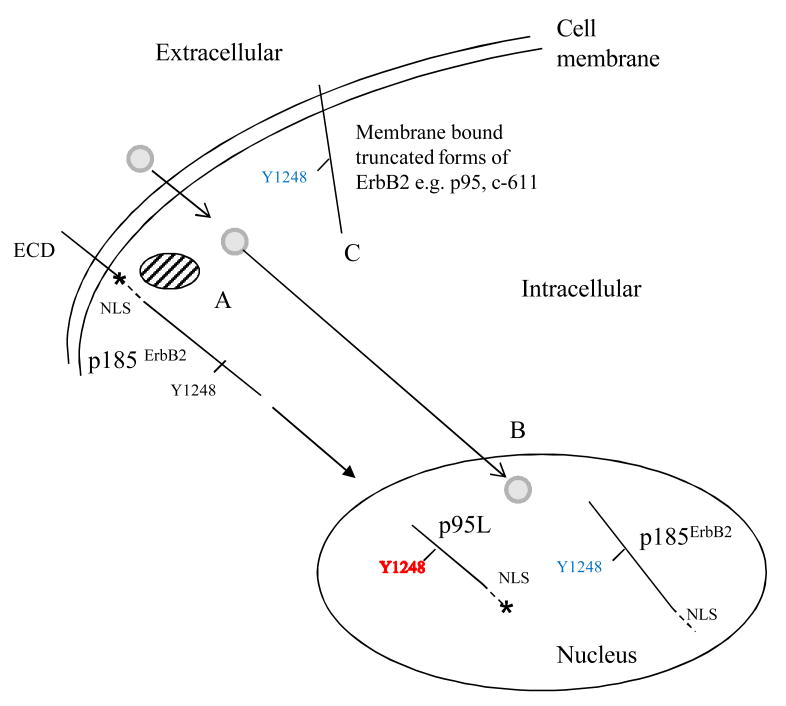
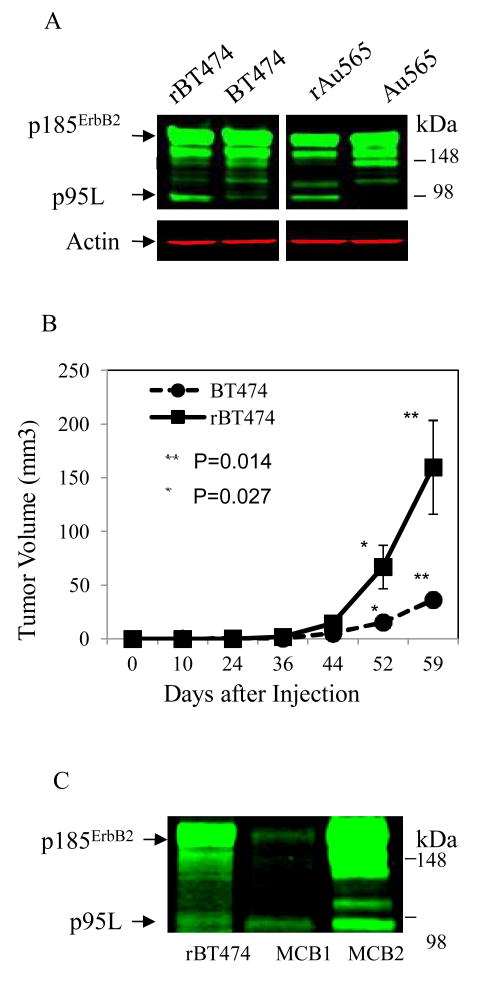
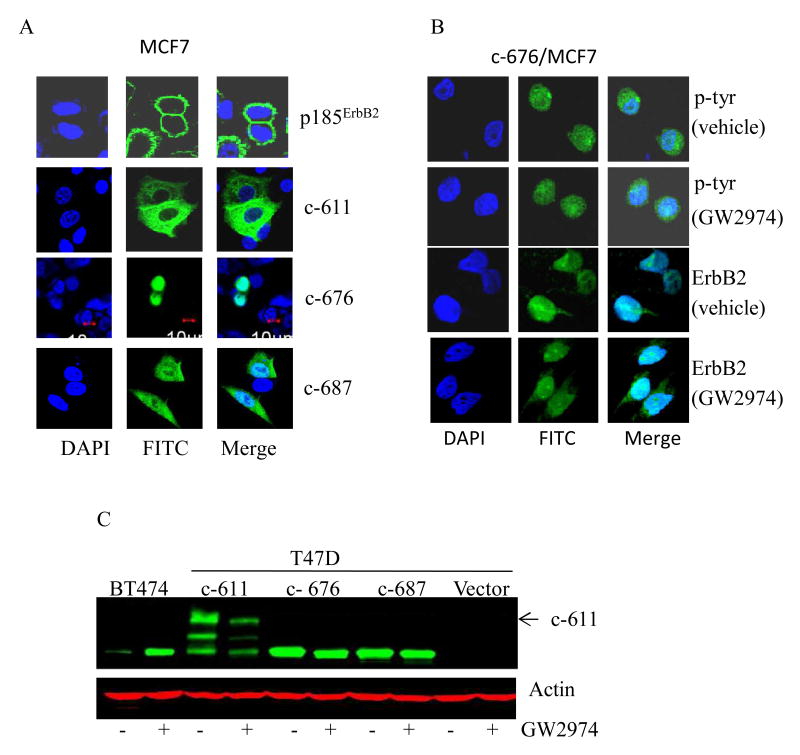
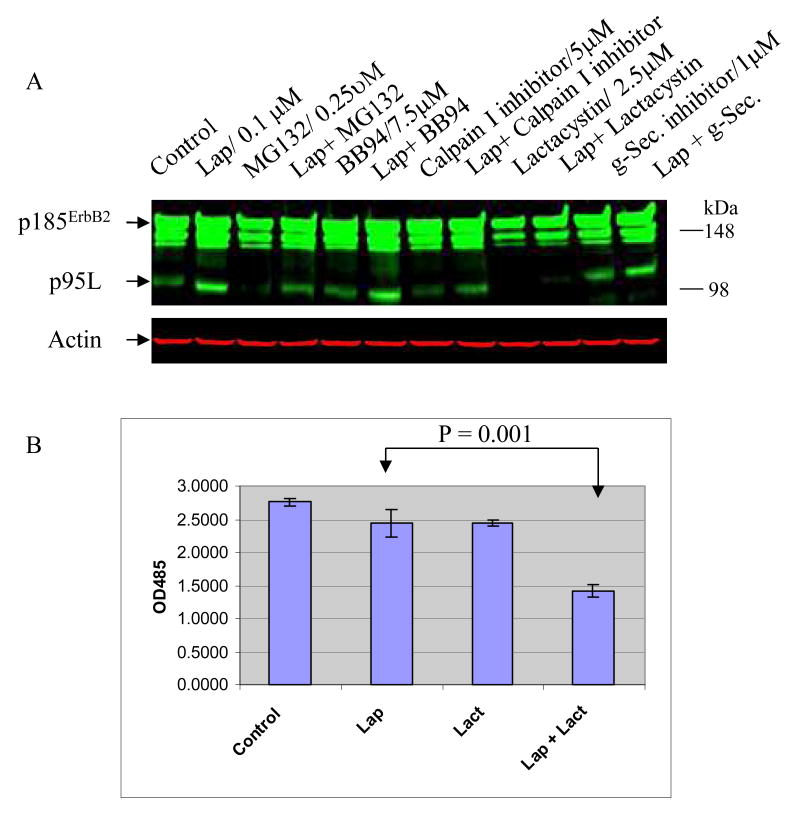
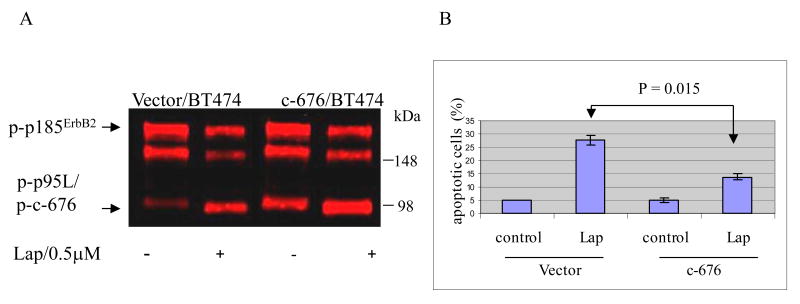
ErbB2 tyrosine kinase inhibitors (TKI) block tyrosine autophosphorylation and activation of the full-length transmembrane ErbB2 receptor (p185(ErbB2)). In addition to p185(ErbB2), truncated forms of ErbB2 exist in breast cancer cell lines and clinical tumors. The contribution of these truncated forms, specifically those expressed in tumor cell nuclei, to the development of therapeutic resistance to ErbB2 TKIs has not been previously shown. Here, we show that expression of a 95-kDa tyrosine phosphorylated form of ErbB2, herein referred to as p95L (lapatinib-induced p95) was increased in ErbB2(+) breast cancer cells treated with potent ErbB2 TKIs (lapatinib, GW2974). Expressed in tumor cell nuclei, tyrosine phosphorylation of p95L was resistant to inhibition by ErbB2 TKIs. Furthermore, the expression of p95L was increased in ErbB2(+) breast cancer models of acquired therapeutic resistance to lapatinib that mimic the clinical setting. Pretreatment with proteasome inhibitors blocked p95L induction in response to ErbB2 TKIs, implicating the role of the proteasome in the regulation of p95L expression. In addition, tyrosine phosphorylated C-terminal fragments of ErbB2, generated by alternate initiation of translation and similar in molecular weight to p95L, were expressed in tumor cell nuclei, where they too were resistant to inhibition by ErbB2 TKIs. When expressed in the nuclei of lapatinib-sensitive ErbB2(+) breast cancer cells, truncated ErbB2 rendered cells resistant to lapatinib-induced apoptosis. Elucidating the function of nuclear, truncated forms of ErbB2, and developing therapeutic strategies to block their expression and/or activation may enhance the clinical efficacy of ErbB2 TKIs.
表皮生长因子受体 2 酪氨酸激酶抑制剂(TKI)可阻断酪氨酸自身磷酸化以及全长跨膜表皮生长因子受体 2(p185(ErbB2))的激活。除了 p185(ErbB2)之外,乳腺癌细胞系和临床肿瘤中还存在 ErbB2 的截断形式。这些截断形式,特别是在肿瘤细胞核中表达的那些,对 ErbB2 TKI 治疗耐药性的发展的贡献以前尚未被证明。在这里,我们表明,在使用强效 ErbB2 TKI(拉帕替尼、GW2974)处理的 ErbB2(+)乳腺癌细胞中,表达了一种 95kDa 的酪氨酸磷酸化形式的 ErbB2,在此称为 p95L(拉帕替尼诱导的 p95)。在肿瘤细胞核中表达的 p95L 的酪氨酸磷酸化对 ErbB2 TKI 的抑制具有抗性。此外,在对拉帕替尼获得性治疗耐药的 ErbB2(+)乳腺癌模型中,p95L 的表达增加,该模型模拟了临床环境。用蛋白酶体抑制剂预处理可阻断 ErbB2 TKI 对 p95L 诱导的作用,表明蛋白酶体在调节 p95L 表达中的作用。此外,通过翻译起始的替代而产生的 ErbB2 的 C 末端酪氨酸磷酸化片段,分子量与 p95L 相似,在肿瘤细胞核中表达,它们也对 ErbB2 TKI 的抑制具有抗性。当表达在 lapatinib 敏感的 ErbB2(+)乳腺癌细胞的核中时,截断的 ErbB2 使细胞对 lapatinib 诱导的细胞凋亡具有抗性。阐明核内截断形式的 ErbB2 的功能,并开发阻止其表达和/或激活的治疗策略,可能会提高 ErbB2 TKI 的临床疗效。