Department of Psychological Science, Northern Kentucky University, Highland Heights, KY 41099, USA.
Alcohol Clin Exp Res. 2011 Jul;35(7):1282-92. doi: 10.1111/j.1530-0277.2011.01464.x. Epub 2011 Apr 19.
There has been a dramatic rise in the consumption of alcohol mixed with energy drinks (AmED) in young people. AmED have been implicated in risky drinking practices and greater accidents and injuries have been associated with their consumption. Despite the increased popularity of these beverages (e.g., Red Bull and vodka), there is little laboratory research examining how the effects of AmED differ from alcohol alone. This experiment was designed to investigate if the consumption of AmED alters neurocognitive and subjective measures of intoxication compared with the consumption of alcohol alone.
Participants (n=56) attended 1 session where they were randomly assigned to receive one of 4 doses (0.65 g/kg alcohol, 3.57 ml/kg energy drink, AmED, or a placebo beverage). Performance on a cued go/no-go task was used to measure the response of inhibitory and activational mechanisms of behavioral control following dose administration. Subjective ratings of stimulation, sedation, impairment, and level of intoxication were recorded.
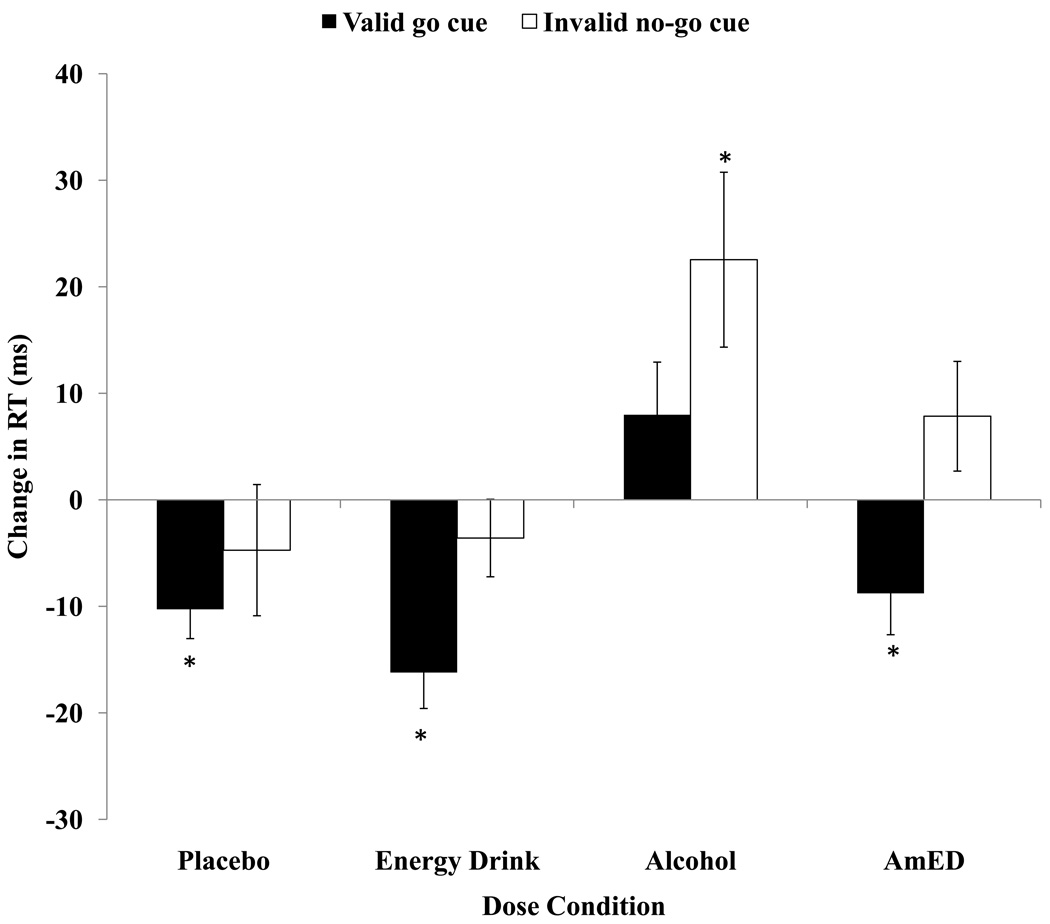
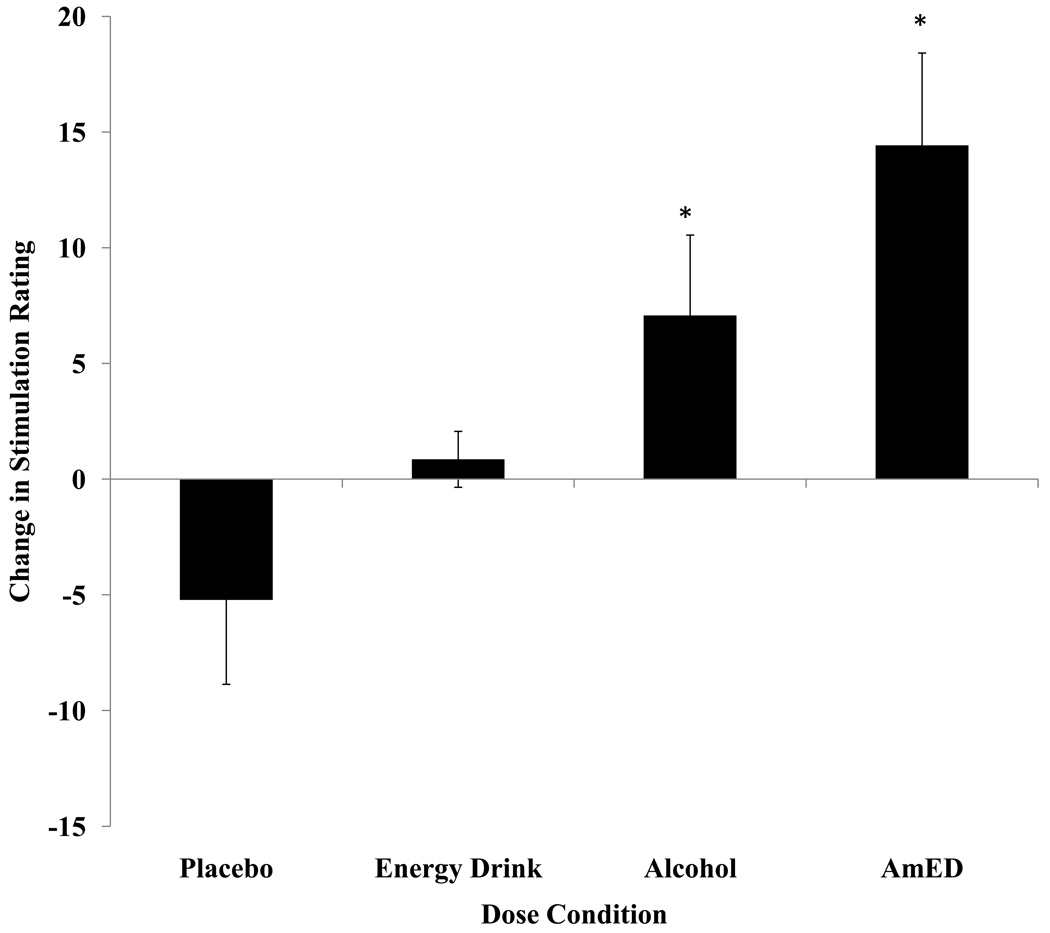
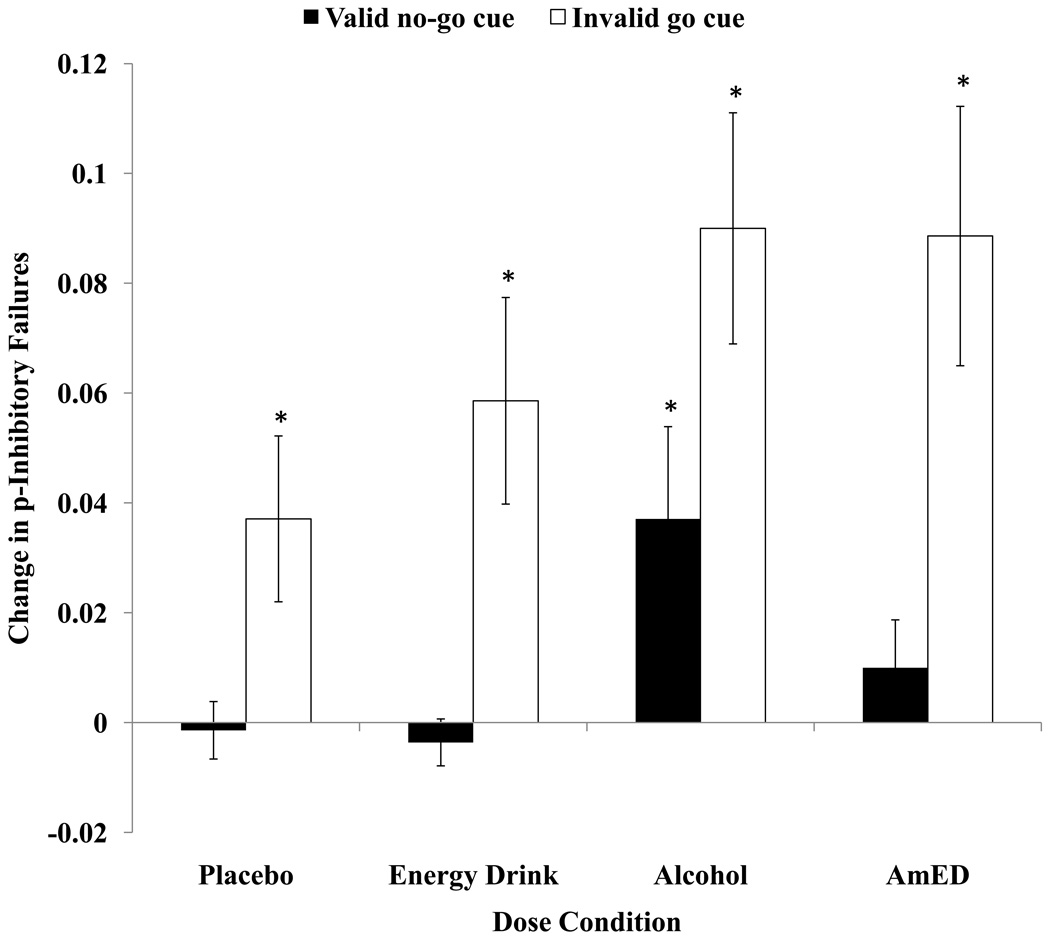
Alcohol alone impaired both inhibitory and activational mechanisms of behavioral control, as evidenced by increased inhibitory failures and increased response times compared to baseline performance. Coadministration of the energy drink with alcohol counteracted some of the alcohol-induced impairment of response activation, but not response inhibition. For subjective effects, alcohol increased ratings of stimulation, feeling the drink, liking the drink, impairment, and level of intoxication, and alcohol decreased the rating of ability to drive. Coadministration of the energy drink with alcohol increased self-reported stimulation, but resulted in similar ratings of the other subjective effects as when alcohol was administered alone.
An energy drink appears to alter some of the objective and subjective impairing effects of alcohol, but not others. Thus, AmED may contribute to a high-risk scenario for the drinker. The mix of impaired behavioral inhibition and enhanced stimulation is a combination that may make AmED consumption riskier than alcohol consumption alone.
年轻人中酒精混合能量饮料(AmED)的消费急剧上升。AmED 与危险的饮酒行为有关,并且与它们的消费相关的事故和伤害也有所增加。尽管这些饮料(例如红牛和伏特加)越来越受欢迎,但很少有实验室研究检查 AmED 的影响与单独饮酒有何不同。本实验旨在研究与单独饮酒相比,饮用 AmED 是否会改变神经认知和醉酒的主观测量。
参与者(n=56)参加了 1 次会议,他们被随机分配接受 4 种剂量(0.65 g/kg 酒精、3.57 ml/kg 能量饮料、AmED 或安慰剂饮料)之一。在剂量给药后,使用提示 Go/No-Go 任务来衡量抑制和激活行为控制的反应机制。记录刺激、镇静、损伤和醉酒程度的主观评分。
单独的酒精会损害行为控制的抑制和激活机制,这表现为与基线表现相比,抑制失败增加和反应时间增加。与酒精同时给予能量饮料可抵消一些酒精引起的反应激活损伤,但不能抵消反应抑制损伤。对于主观效应,酒精增加了刺激、感觉饮料、喜欢饮料、损伤和醉酒程度的评分,降低了驾驶能力的评分。与酒精同时给予能量饮料会增加自我报告的刺激,但导致与单独给予酒精时相似的其他主观效应评分。
能量饮料似乎会改变酒精的一些客观和主观的损伤作用,但不是全部。因此,AmED 可能会导致饮酒者处于高风险状态。行为抑制受损和刺激增强的混合可能使 AmED 消费比单独饮酒更具风险。